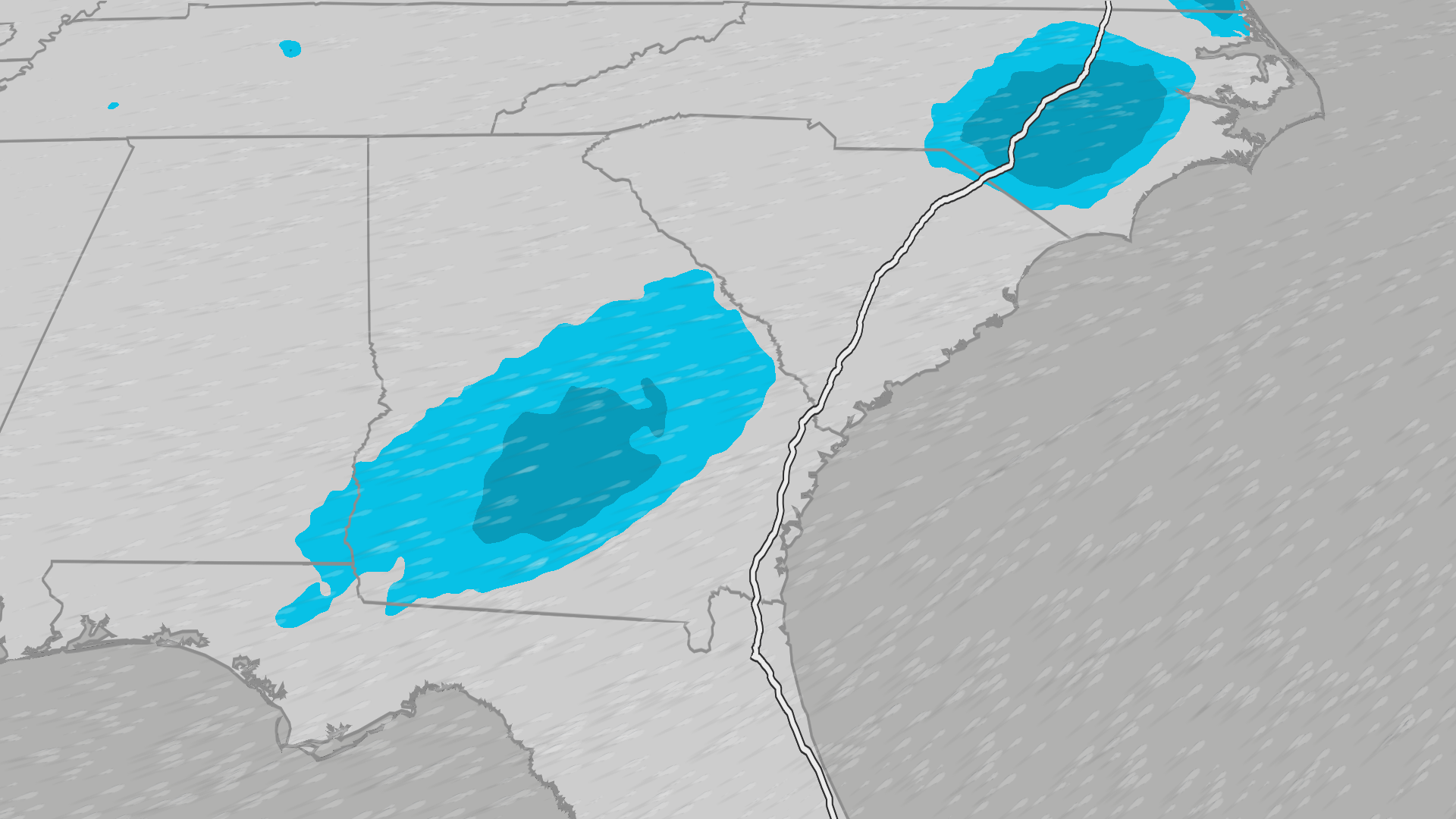
A coastal low moving up the East Coast is expected to produce light snow from north Florida through New England on Sunday, with winter weather advisories and localized winter storm warnings in central Georgia where 1–3 inches are possible. Most of the Southeast and Mid‑Atlantic are forecast for trace to sub‑inch accumulation, while New York City and Boston could see 1–3 inches; the event is likely to be a nuisance for travel rather than a major disruptive storm. A strong cold front will bring widespread frigid, drier continental air into the South, increasing heating demand and local infrastructure risk (pipes, travel) but limiting precipitation potential.
Market structure: A brief East Coast cold shot favors short-term winners: natural gas futures/ETFs (higher heating demand), propane distributors (UGI), and de-icing suppliers (Compass Minerals, CMP) from immediate municipal/state purchases; losers are regional carriers and weekend-heavy leisure travel exposures (JetBlue, JBLU) and short-haul ground logistics where 1–3" creates outsized bridge/overpass slipperiness. Pricing power is transitory — inventories and seasonality cap upside (expect single-digit moves: 3–8% in gas, 5–12% for small-cap weather suppliers over 1–2 weeks). Cross-asset: near-term lift to prompt NG futures and power forwards; negligible FX or long-term Treasury impact unless storm intensifies into multi-week cold.
Risk assessment: Tail scenarios include a rare intensification producing >6" in I-95 cities (high operational disruption, multi-day airline/rail impacts) or model bust where dry continental air yields no demand spike (losses for weather-sensitive longs). Time horizons: immediate (48–72 hours) for position entry/exit, short-term (2–8 weeks) for seasonal inventory/earnings effects, long-term (quarters) negligible. Hidden dependencies: pipeline constraints, local propane inventory logistics, and EIA weekly storage prints that can reverse moves; key catalysts are updated NWS model runs and the next EIA storage report.
Trade implications: Tactical, size-limited plays: buy short-dated NG exposure (2-week calls or 1–2% portfolio UNG) to capture a 3–8% move; initiate 1–2% long in UGI for propane margin upside through the end of heating season (~3 months); hedge travel risk with 0.5% portfolio 1-week puts on JBLU or a pair trade (short JBLU 0.5%, long DAL 0.5%). Use tight triggers: take profits if forecasts back off in 48–72h or if NG rallies >8%/drops >6% from entry.
Contrarian angles: Consensus may overprice disruption — many models flip and dry air often kills southern accumulation, so be ready to fade early spikes. Historical parallels (short cold snaps) show NG and small weather suppliers often mean-revert within 7–14 days; plan to trim if UNG >+8% in 48h or CMP rallies >10% in 2 weeks. Unintended consequence: forced municipal purchasing could lift small-cap supplier multiples briefly but leave inventories and Q2 sales lumpy; size positions accordingly.
AI-powered research, real-time alerts, and portfolio analytics for institutional investors.
Request DemoOverall Sentiment
neutral
Sentiment Score
-0.10
