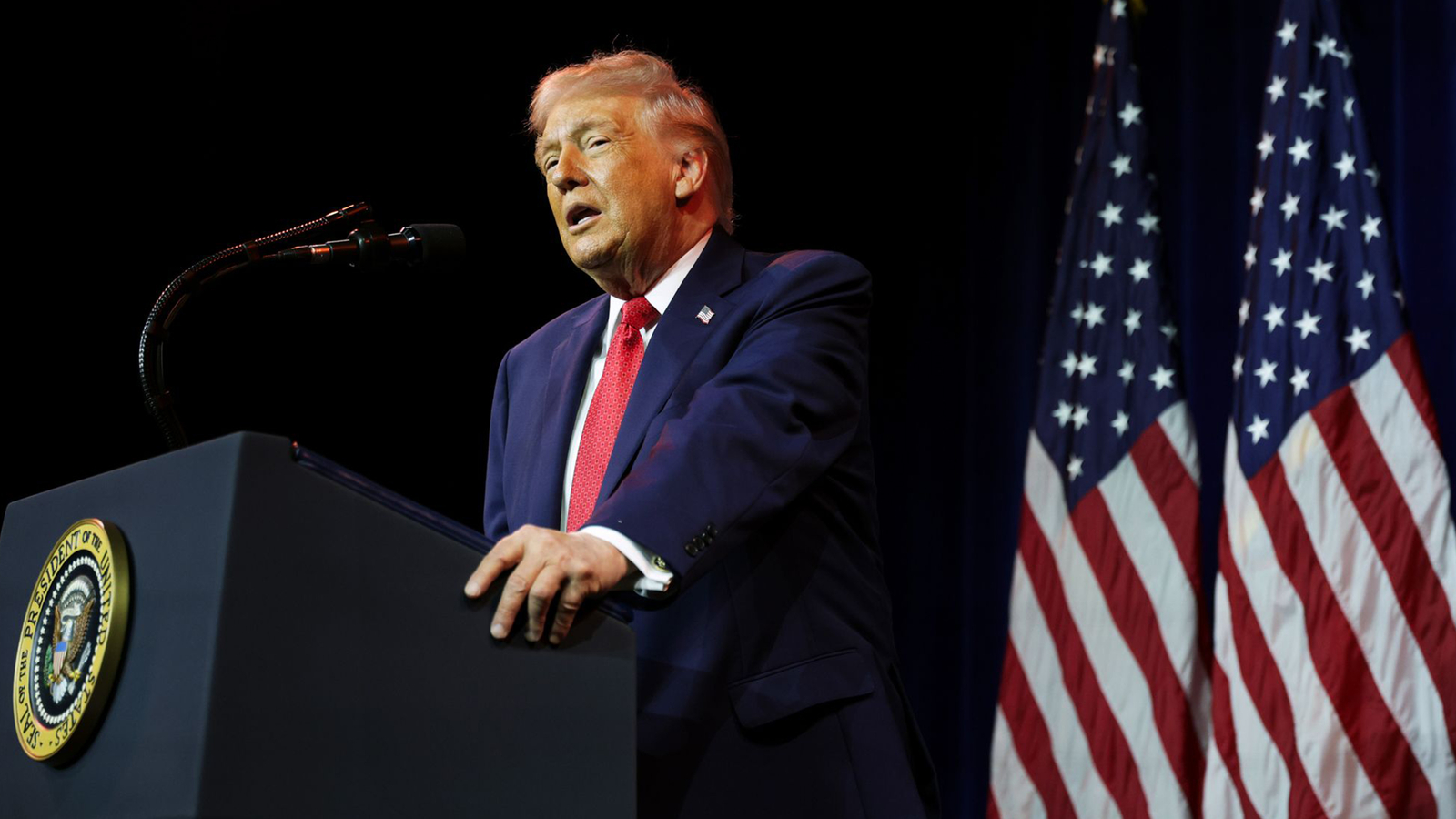
President Trump announced he will move to ban large institutional investors from buying additional single-family homes and will ask Congress to codify the measure, prompting shares of Blackstone to fall as much as 9% after his social media post. The proposal targets firms such as Blackstone and large banks that have grown single-family rental holdings—GAO data show institutional ownership rose to as many as 300,000 homes by 2015 and exceeded 15% of the single-family market in several Sun Belt metros by 2022—at a time when U.S. home prices climbed nearly 55% from early 2020 to Q3 2025 and mortgage rates are above 6%. Analysts warn the policy could reduce single-family rental supply and damp investment in the sector, creating policy risk for listed real-estate and asset-management firms.
Market structure: A near-term ban on institutional SFR purchases (announced rhetoric already sent BX -9% intraday) directly hurts large landlords (BX, private equity managers) and residential mortgage originators linked to rental financing, while likely benefiting owner-occupier buyers and new-home builders in specific metros where institutions held >15% (Atlanta, Jacksonville, Charlotte). Pricing power shifts away from capital-rich consolidators toward dispersed buyers; expect weaker bid support for turnover inventory and potential 5–15% repricing pressure in high-investor-share ZIP codes over 6–12 months if enacted.
Risk assessment: Tail risks include Congress codifying a nation-wide ban (low-probability but high-impact), forced distressed dispositions from institutions, or litigation delaying enforcement. Immediate (days) volatility will be event-driven (Davos speech in ~2 weeks); short-term (weeks–months) depends on bill text and state-level carve-outs; long-term (quarters–years) depends on replacement of investor capital with owner-occupiers or builders and interest-rate trajectory. Hidden dependencies: mortgage rate path, MBS demand, and localized rental market tightness could offset price moves.
Trade implications: Tactical shorts on concentrated institutional landlords and option protection are preferred near-term; pair trades long selective homebuilders/new-build names vs short BX on 3–12 month horizon. Cross-asset: buy MBS/Treasury protection in risk-off, and expect higher local rents boosting REIT rental yields where supply of institution-owned rentals shrinks. Use calendarized options to limit political headline risk around Davos and bill windows.
Contrarian angles: Consensus assumes a large structural hit to housing supply; it may be overdone—institutions were marginal buyers (GAO: up to ~300k homes by 2015) and many deals already financed via non-institutional channels. Historical parallel: post-2008 investor buying paused only briefly before private capital rotated back; if enforcement is narrow, BX downside beyond 20–30% is likely overstated. Unintended consequence: reduced institutional rental supply could lift rents, sustaining landlord returns via higher yields even with cap-rate compression.
AI-powered research, real-time alerts, and portfolio analytics for institutional investors.
Request DemoOverall Sentiment
moderately negative
Sentiment Score
-0.35
Ticker Sentiment
