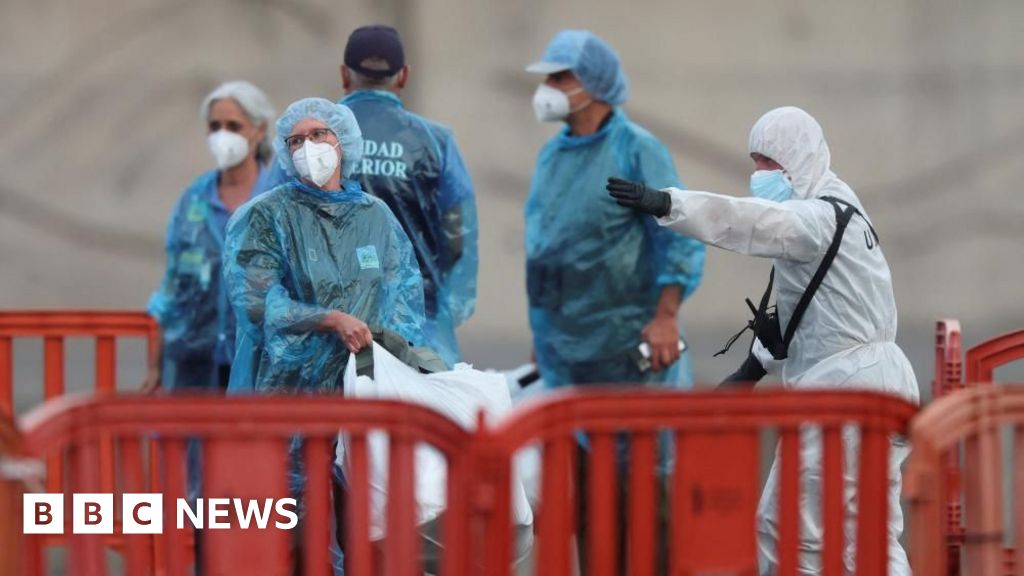
At least 3 passengers have died from a hantavirus outbreak linked to the MV Hondius, while US and French nationals repatriated from the ship have tested positive and more than 90 passengers are being evacuated. The WHO recommended 42 days of isolation, and authorities are tracing contacts and imposing quarantine measures across the US, France, Spain, the Netherlands and other destinations. The outbreak raises travel and public-health risks, though officials say the chance of a major spread remains low.
This is less a one-off bio-event than a short-duration stress test for the travel stack: cruise operators, charter airlines, airport services, and destination-facing leisure all face a temporary but measurable demand hit from the optics of repatriations and mandatory isolation. The immediate economic damage is concentrated in the next 1-3 weeks, but the larger second-order effect is policy tightening: health ministries will likely harden screening, quarantine, and disembarkation protocols for small-incident outbreaks, raising operating friction and per-passenger costs across the sector.
The market is likely to overreact in the cruise niche first, but the cleaner relative-value expression may be against the broader leisure complex. Cruise demand is more elastic than resort/hotel demand when the narrative shifts from “isolated ship incident” to “infeasible containment,” and insurers, port operators, and medical logistics vendors may actually see incremental revenue. If authorities extend isolation windows or broaden tracing requirements, the operational burden falls on carriers with the least scheduling flexibility, which can cascade into missed sailings, crew disruptions, and higher cancellation provisions over the next quarter.
The contrarian point is that public-health authorities are actively framing the event as contained, which can cap the downside once the initial repatriation wave is complete. That argues for trading the volatility, not the apocalypse: near-term weakness in cruise and travel names may prove shallow if no new clusters emerge within 10-14 days. The key catalyst is whether additional positive cases appear among repatriated passengers or secondary contacts; that would turn a reputational event into a broader booking shock and extend the trade horizon from days to months.
AI-powered research, real-time alerts, and portfolio analytics for institutional investors.
Request DemoOverall Sentiment
strongly negative
Sentiment Score
-0.60
