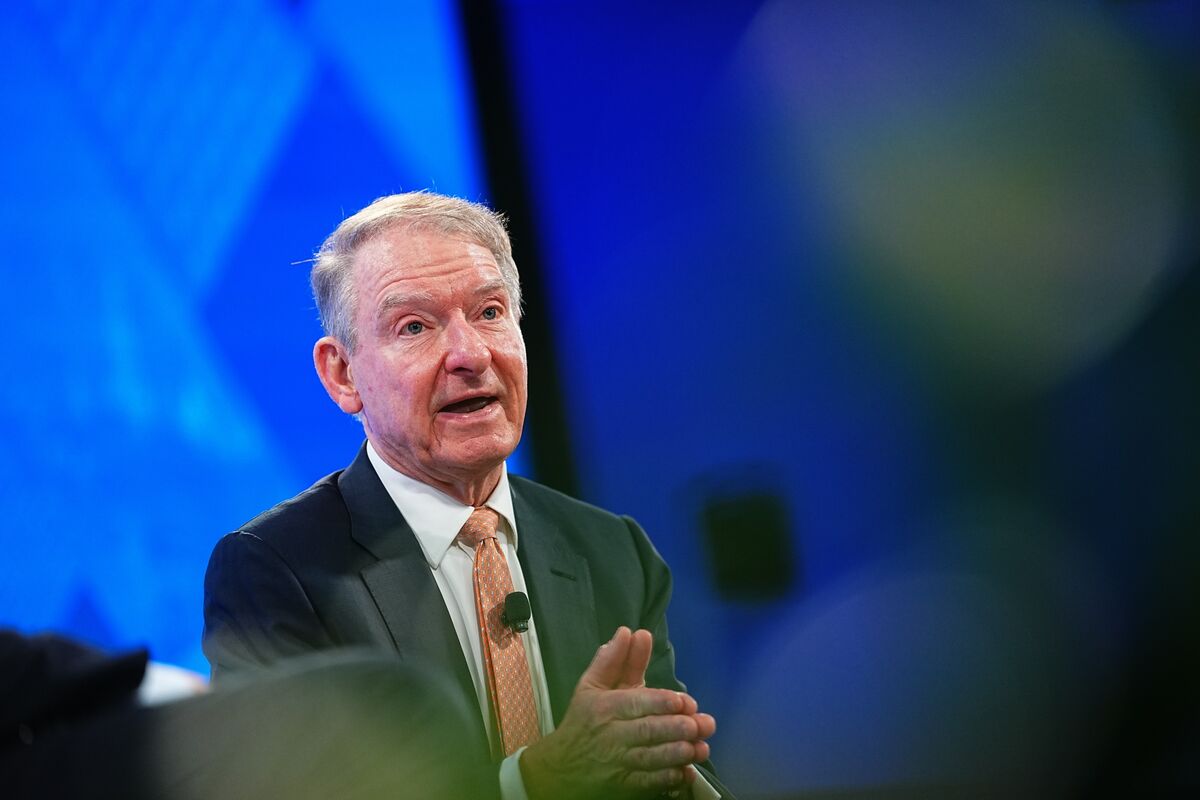
A year after Paul Atkins took over Wall Street’s top regulator, key priorities including crypto rules, revitalizing IPOs, and easing public-company reporting remain largely unfinished. The article highlights slow progress rather than a policy shift, leaving the near-term impact on markets limited but relevant for regulated sectors such as crypto and listings.
The market implication is not simply “lighter regulation,” but a widening gap between firms that can monetize regulatory ambiguity and those that need clean rulemaking to reopen product pipelines. The near-term winners are the private venues, offshore issuers, and well-capitalized exchanges that can keep operating under fragmented standards; the losers are smaller listed financials and fintechs that were counting on clearer disclosure/IPO rules to compress compliance costs and revive issuance volume. If the rulemaking backlog persists into the next 2-3 quarters, the opportunity cost compounds: fewer new listings means weaker underwriting fees, less secondary trading depth, and more capital staying in private markets.
For crypto, the key second-order effect is not just broader adoption, but the persistence of a bifurcated market where “regulatory-beta” assets trade on headline risk rather than fundamentals. That favors incumbents with balance-sheet strength and diversified custody/compliance revenue, while punishing marginal tokens and smaller broker-dealers that need a green light to access institutional flow. Any acceleration in enforcement clarity would be a catalyst, but absent that, the default state is prolonged option value embedded in the large platforms and a continued bleed of liquidity away from long-tail names.
The contrarian read is that delay may be partially bullish for incumbents: slower rule changes can entrench the largest public companies and the biggest exchanges because they have already absorbed the compliance burden and can outspend rivals on legal infrastructure. The consensus risk is assuming regulatory stasis is neutral; in practice, uncertainty taxes capital formation and keeps volatility elevated, which can hurt small-cap financials and IPO-reliant banks for months. The tail risk is a sudden policy pivot or political replacement that restarts the rulemaking clock, which would re-rate the entire “pending reform” basket quickly.
From a timing perspective, this is a months-to-years trade, not a days trade: the gap between rhetoric and implementation is the alpha source. Near term, any headline about stalled IPO reform should be treated as negative for public-market intermediaries, while a concrete crypto framework would be an asymmetric positive for large-scale listed infrastructure names and a negative for off-the-radar speculators.
AI-powered research, real-time alerts, and portfolio analytics for institutional investors.
Request TrialOverall Sentiment
neutral
Sentiment Score
-0.10
