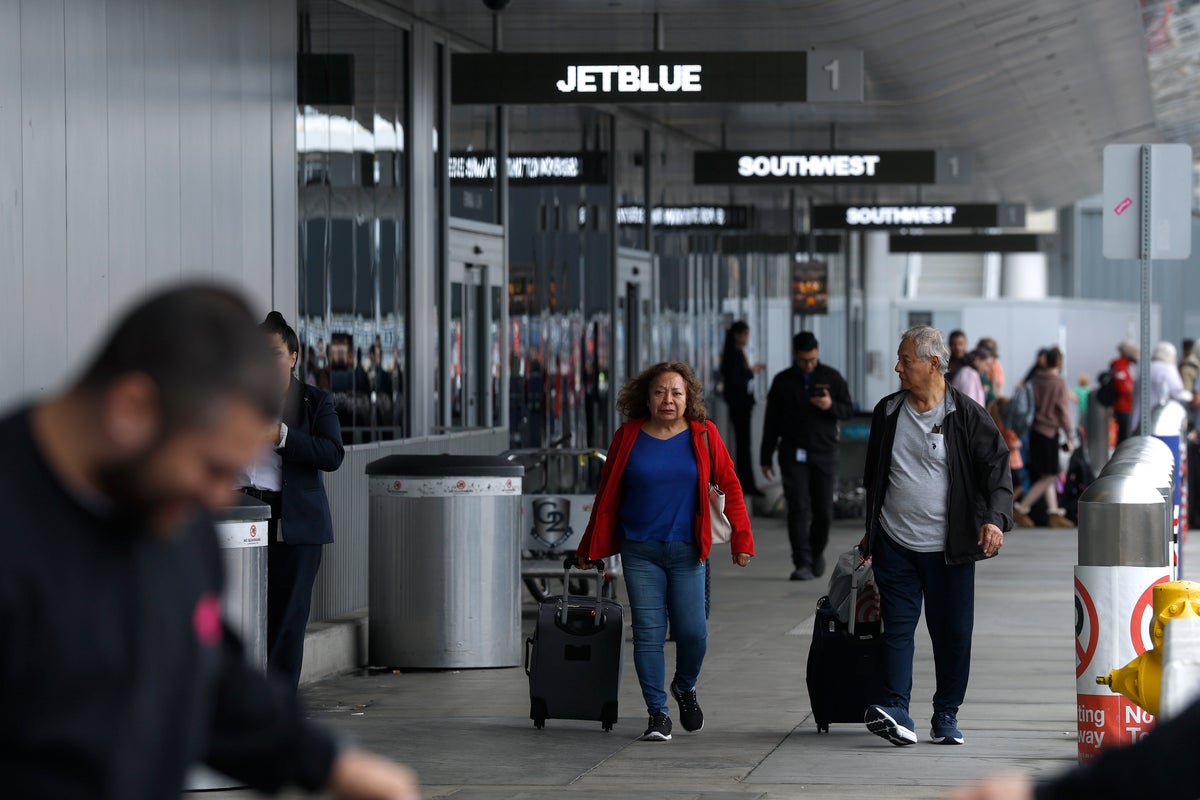
United Airlines raised checked bag fees by $10 for first and second bags (now $45 and $55) and by $50 for third bags in most markets for tickets purchased on or after April 3, 2026; customers who check bags <24 hours before departure pay an additional $5 and select customers (co-branded cardholders, elites, premium cabins, military) retain a free first bag. Jet fuel averages reached $4.88/gal (up from $2.50 before Feb. 28) amid the Iran war, which United CEO Scott Kirby says has added roughly $400m to operating costs; JetBlue has also hiked fees, indicating sector-wide margin pressure. Separately, the White House budget proposes cutting $52m from TSA funding and expanding privatized screening, creating potential operational shifts at U.S. airports.
Airlines will treat ancillary revenue as the pressure valve for volatile fuel-driven costs; because loyalty and co-branded cohorts are insulated, fee increases are a revenue transfer away from casual travelers toward core customers and card issuers, raising revenue variance across passenger cohorts. That segmentation increases the earnings sensitivity to mix shifts — a small drop in premium or loyalty load factors produces outsized unit revenue deterioration compared with uniform fare moves.
Operationally, carriers with flexible networks and stronger corporate/loyalty exposure can reallocate seats to higher-yield routes faster than point-to-point low-cost models, so expect a relative performance divergence where network carriers can protect unit revenues but still suffer margin compression from unhedged fuel. Non-U.S. carriers already adopting fuel surcharges have de-risked some exposure; U.S. majors that rely on ancillary raises have limited price elasticity before demand pullback in off-peak windows.
Key catalysts: the forward jet-fuel curve and hedge-roll dynamics over the next 3–6 months will dictate realized pain for airlines — if forward fuel remains elevated vs the recent 6-month average, expect a fresh round of capacity discipline and more aggressive ancillary monetization. A political or diplomatic de-escalation can compress spreads quickly; conversely, supply shocks or broader airspace restrictions remain asymmetric tail risks that could rapidly re-price both energy and transportation equities.
AI-powered research, real-time alerts, and portfolio analytics for institutional investors.
Request DemoOverall Sentiment
mildly negative
Sentiment Score
-0.35
Ticker Sentiment
