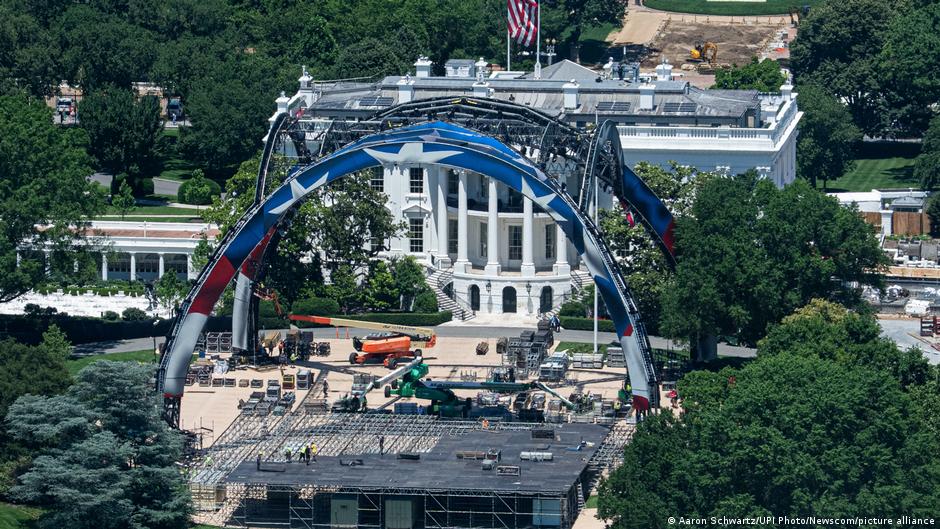
Multiple artists, including Martina McBride, Bret Michaels, Young MC and the Commodores, have withdrawn from the White House-backed 'Great American State Fair' ahead of its June 25-July 10, 2026 run. The cancellations reflect political concerns and safety worries, while Trump said he would replace the performers and organizers announced he will personally kick off the event on June 24. The story is primarily political and entertainment-oriented, with limited direct market impact.
This is less about the concert itself than about the durability of the broader 250th-anniversary entertainment package. The repeated artist exits increase the probability that the event becomes a political-content risk rather than a pure leisure draw, which raises the discount rate for sponsors, broadcasters, and vendors that want apolitical reach. If that perception sticks, the organizers may end up substituting with lower-tier talent, which preserves the schedule but degrades attendance quality and secondary spend per visitor.
The second-order beneficiary is likely not any single performer but adjacent live-events and ticketing ecosystems that can market themselves as safer, less politicized alternatives during the same summer window. Washington-area hospitality could still see a short-term boost from the sheer number of attendees, but that benefit is capped if cancellations keep press coverage focused on controversy rather than the festivities. The bigger operational risk is crowd-management and security: each high-profile withdrawal increases the chance of uneven attendance patterns, more last-minute rescheduling, and higher insured event costs.
The market implication is mostly in media and political-adjacent consumer brands, where management teams will be more selective about association risk over the next 1-2 quarters. The consensus may be underestimating how quickly a branding issue can turn into a sponsorship issue; once a headline event loses a few credible names, the marginal remaining participant gets more reputational beta and demands a higher fee or better indemnification. That dynamic can quietly compress margins for the event operator even if ticket volume looks intact.
Near term, the main catalyst is whether additional artists or sponsors follow the same pattern over the next 2-6 weeks. If the lineup stabilizes, the controversy fades into a localized optics problem; if it keeps unraveling, expect a broader chill on corporate participation in government-linked spectacle events through the summer. The tail risk is not demand collapse, but a persistent downgrade in event quality that converts a marquee celebration into a politically segmented audience product.
AI-powered research, real-time alerts, and portfolio analytics for institutional investors.
Request TrialOverall Sentiment
neutral
Sentiment Score
-0.10
