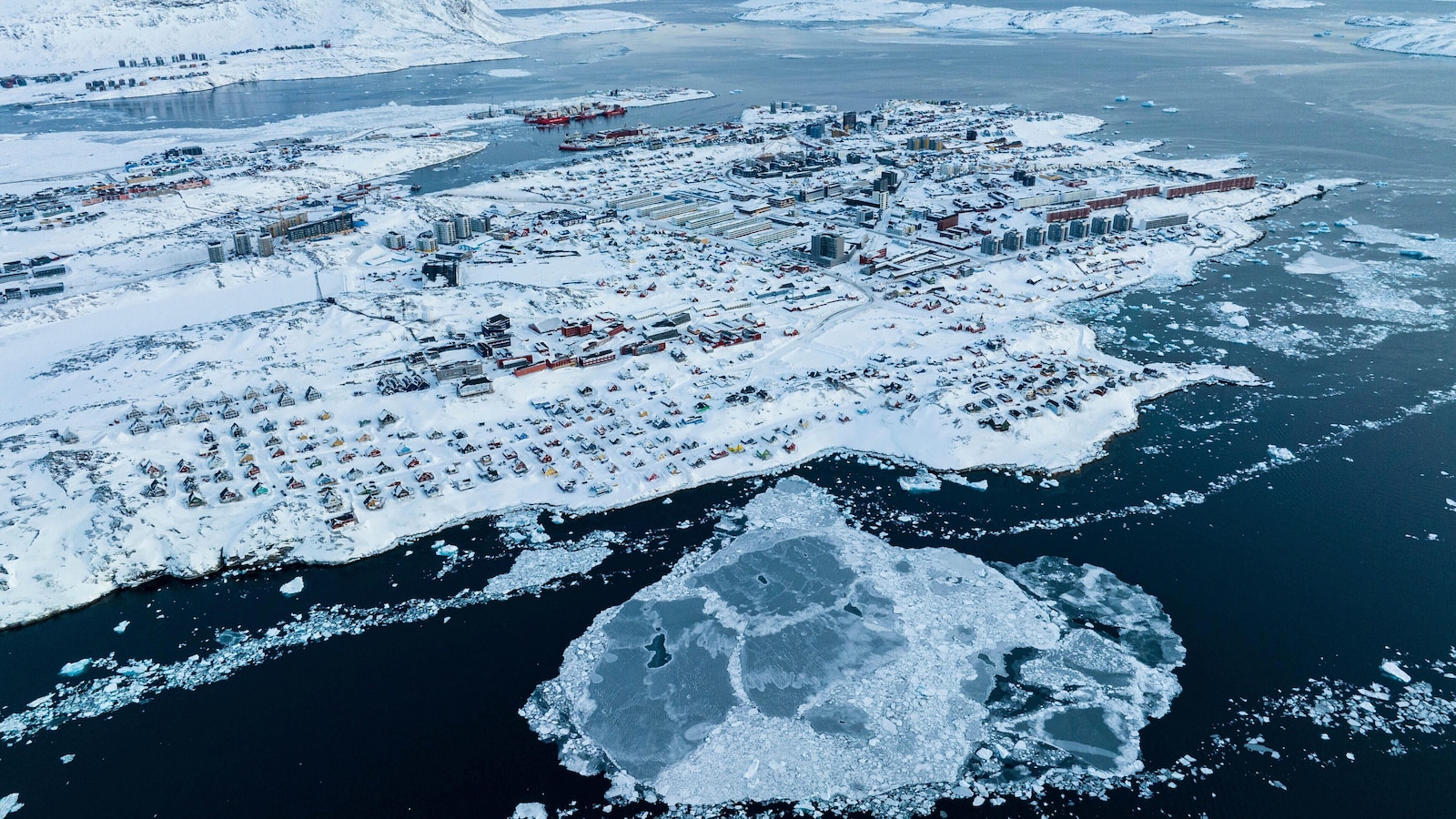
Denmark has accepted a meeting next week with the U.S. and Greenland after renewed U.S. interest — including comments from senior U.S. officials about potentially acquiring Greenland — raising questions over sovereignty and strategic Arctic access to the mineral-rich island (population ~56,000; ~80% above the Arctic Circle). Copenhagen is concurrently boosting regional defense capacity with a 14.6 billion-kroner ($2.3bn) program that funds three Arctic naval vessels, two long-range surveillance drones and satellite capacity, while recent legislation widening U.S. base access and the 1951 defense agreement could facilitate a deeper American military presence, creating modest upside for defense contractors but elevated geopolitical uncertainty in the North Atlantic.
Market structure: Renewed US interest in Greenland lifts the probability of higher US defense and ISR spending in the Arctic over the next 12–36 months. Direct winners: large defense primes (Lockheed Martin LMT, Raytheon/RTX, Northrop Grumman NOC) and space/ISR firms (Maxar MAXR, L3Harris LHX) which supply missile-warning, surveillance drones and satellite capability; commodity winners are strategic-mineral and rare-earth plays (REMX, MP Materials MP) as Greenland’s mineral prospectivity becomes economically interesting. Losers: small Greenland-focused juniors with permitting risk, and civilian Arctic tourism/shipping names that face heightened military restrictions and insurance costs.
Risk assessment: Tail risks include diplomatic escalation (China/Russia leveraging Arctic claims) or a Greenland independence move that changes asset control; both could trigger sanctions, rapid write-offs or asset seizures—probability low but impact high. Near-term (days–weeks) volatility is news-driven around the Denmark–US meeting; medium-term (3–12 months) contract awards and procurement budgets matter; long-term (2–5 years) is infrastructure buildout and mining development timelines (capex-heavy). Hidden dependencies: NATO politics, Danish domestic budget execution, and Greenland local consent thresholds that can stall projects.
Trade implications: Favor 6–18 month, size-limited exposure to large-cap defense and space: buy LMT/RTX/NOC and MAXR call spreads (see decisions). Add 6–24 month exposure to strategic-miner ETF REMX or MP (size small, due to project development risk). Short speculative Greenland-focused juniors and select Arctic logistics operators that will face higher insurance and regulatory costs; prefer ETF-level hedges rather than single-name shorts.
Contrarian angles: Consensus assumes smooth US/Danish cooperation; undervalued is the chance Denmark accelerates its own procurement (benefiting European suppliers) or Greenland resists foreign mining—both mute commodity upside. Reaction is likely underdone in large-cap defense equities (0–10% re-rating potential if procurement schedules materialize) and overdone for early-stage miners (binary downside). Historical parallel: Arctic infrastructure cycles (Cold War → drawdown → rebuild) show multi-year procurement waves — position sized, patient trades win.
AI-powered research, real-time alerts, and portfolio analytics for institutional investors.
Request DemoOverall Sentiment
neutral
Sentiment Score
-0.10
