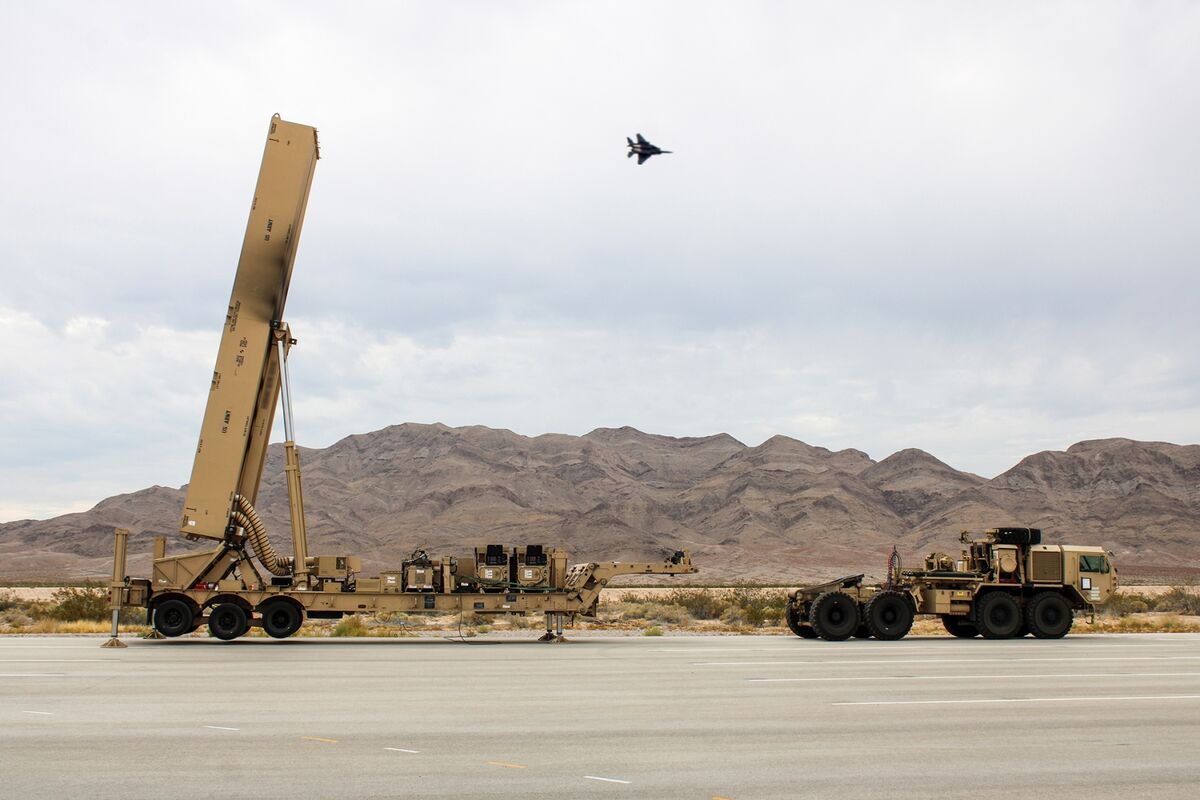
Army leadership says the US is "very close" to fully fielding the military's first hypersonic missile, with the first battery expected to be equipped "within a few weeks," Lt. Gen. Frank Lozano told an industry conference. That assertion conflicts with recent Pentagon assessments that more testing is needed before deployment, creating execution and procurement uncertainty that could affect defense contractors and program timelines.
The immediate market implication is not just a binary winner-takes-all for prime contractors but a reallocation of spend toward specialized upstream components: high-temperature composites, propulsion modules, hardened guidance/IMUs, and thermal protection systems. Expect $200m–$1bn program follow-ons to concentrate revenue growth in small- to mid-cap suppliers who have limited backlog today; that creates asymmetric upside if they win subcontracts but also single-contract concentration risk. A key second-order effect is test-and-sustainment spend that compounds materially over years — each incremental deployment step multiplies demand for telemetry, instrumentation, range time, and spare subsystems. Bottlenecks will show up sooner in high-spec microelectronics and proprietary alloys rather than in prime systems integration; those choke points are the likely gating items that can delay fielding by quarters if not addressed. Tail risks are dominated by negative independent test outcomes, GAO or Congressional pushback, or export-control frictions that restrict critical materials — any of which can push timelines out from weeks to 6–18 months. Positive catalysts include a clean, independently validated test report or a multi-year procurement line in the FY+1 budget; both would re-rate suppliers quickly. The near-term info flow to watch is DoD test statements, GAO/OTD reports, and FY budget amendments over the next 3–12 months. Contrarian view: market narratives that treat this as an immediate, large-ticket program understate sustainment costs and test attrition; initial buys are likely limited in scale and focused on capability proof rather than mass fielding, meaning the winners are more likely specialized component suppliers with flexible capacity rather than the largest primes that already trade on long-cycle backlog.
AI-powered research, real-time alerts, and portfolio analytics for institutional investors.
Request DemoOverall Sentiment
neutral
Sentiment Score
0.05
