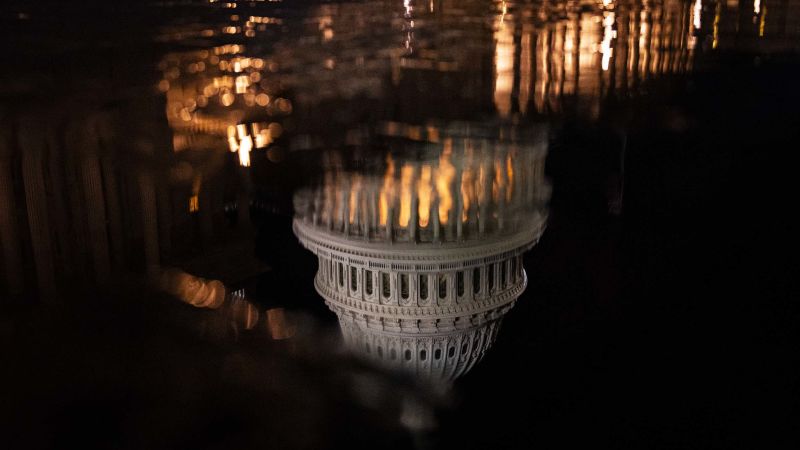
The ongoing government shutdown is marked by intense partisan strategies, with the White House threatening mass federal worker firings and freezing infrastructure funds to pressure Democrats, who are blaming President Trump and demanding an extension of Affordable Care Act subsidies. While both sides initially sought political advantage, early signs of internal party strain are emerging, particularly among some Republicans over the administration's hardline tactics. The unpredictable nature of the standoff, coupled with potential public backlash from prolonged service disruptions, suggests an uncertain resolution, with healthcare identified as a likely key negotiating point.
The ongoing government shutdown is defined by escalating partisan strategies, moving beyond typical political posturing. The White House is employing an aggressive hardball approach, threatening unprecedented mass firings of federal workers and halting $18 billion in funding for key New York infrastructure projects to exert maximum pressure on Democratic leadership. In response, Democrats are framing the event as the "Trump shutdown," focusing their demands on extending Affordable Care Act (ACA) subsidies, and betting that public opinion will shift in their favor as healthcare premium hikes loom. Despite the hardened stances, early signs of internal party friction are visible, particularly among some Republicans expressing unease with the administration's tactics. This political calculus is further complicated by the President's 43% approval rating and a documented history of unpredictable deal-making. The standoff's moderate market impact score of 0.6 reflects the rising fiscal uncertainty, with healthcare policy identified as the central point of contention and the most likely off-ramp for an eventual resolution.
AI-powered research, real-time alerts, and portfolio analytics for institutional investors.
Overall Sentiment
moderately negative
Sentiment Score
-0.50
Ticker Sentiment
