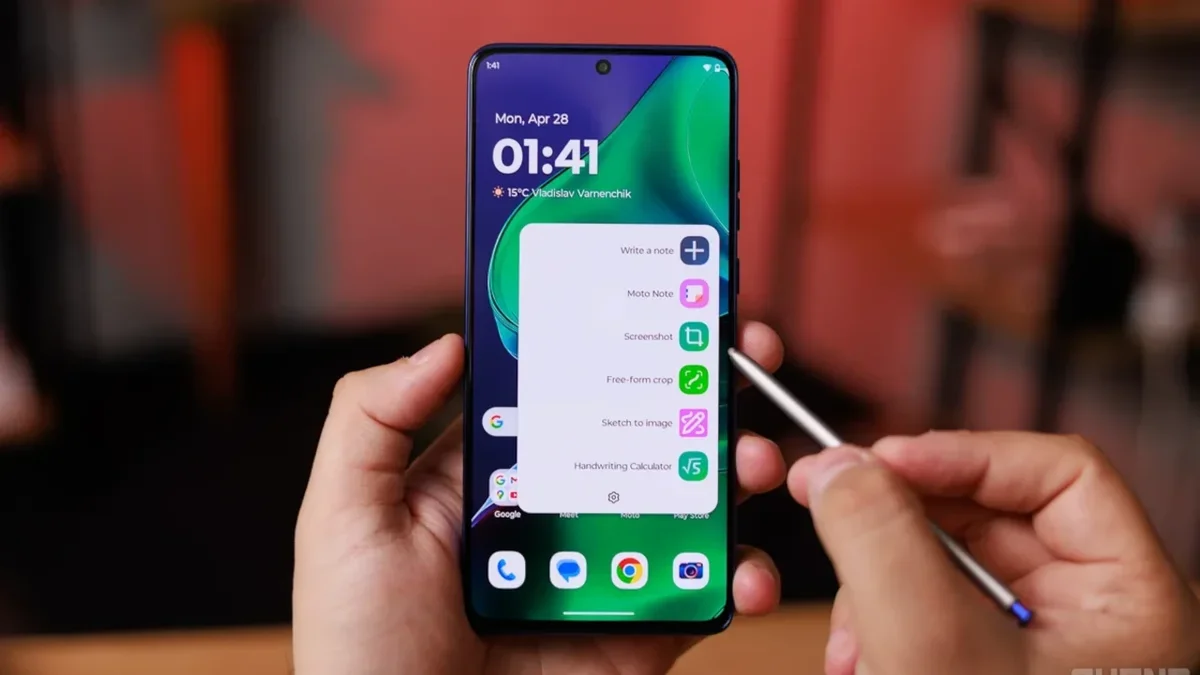
Motorola’s Moto G Stylus (2025) is being discounted by $50 to below $350, with an additional $120 trade-in credit available on eligible devices, bringing potential total savings to $170 and the effective price to $229.99. The article highlights solid value from a Snapdragon 6 Gen 3 chipset, 8GB RAM, and a 6.7-inch pOLED display, while noting camera limitations. The news is consumer-focused and promotional, so market impact should be limited.
This reads more like a monetization event than a handset thesis: Amazon is using an aging SKU and a visible discount threshold to harvest impulse demand from price-sensitive shoppers, which supports conversion without meaningfully changing the competitive landscape. The second-order winner is not Motorola’s hardware business but Amazon’s retail funnel—low-ticket electronics are classic basket-extenders that can lift attach rates in accessories, warranties, and future replenishment categories. For AMZN, the incremental margin from incremental units is small, but the behavioral value of keeping shoppers inside the ecosystem is high, especially when consumers are conditioned to expect “good enough” hardware at sub-$250 price points.
The broader implication is margin pressure across Android value devices, where OEMs are increasingly forced to compete on distribution and financing rather than product differentiation. That should compress pricing power for mid-tier handset makers and weaken any near-term uplift for component suppliers tied to premium upgrade cycles, because the trade-down buyer is explicitly choosing utility over camera quality or prestige. In the near term, this is neutral-to-slightly positive for retail traffic metrics, but mildly negative for higher-end Android ecosystem monetization if consumers decide last-year inventory is sufficient.
The contrarian angle is that these promotions can signal inventory management rather than demand strength. If the channel needs to clear prior-year devices before a new model ramps, the discount may be more defensive than opportunistic, which limits the read-through to sustained consumer appetite. Over a multi-month horizon, the key question is whether this is a one-off deal event or a repeatable cadence; if the latter, it reinforces the secular shift toward value-led replacement cycles and could cap OEM mix improvement.
For AMZN, the asymmetry is modestly positive because the company monetizes traffic even when hardware economics are thin. The main risk is that aggressive discounting trains consumers to delay upgrades, which can eventually reduce average order value and elongate replacement cycles across the category. In that sense, the near-term lift is real, but the longer-term effect may be to normalize lower margins in consumer tech retail.
AI-powered research, real-time alerts, and portfolio analytics for institutional investors.
Request TrialOverall Sentiment
mildly positive
Sentiment Score
0.30
Ticker Sentiment
