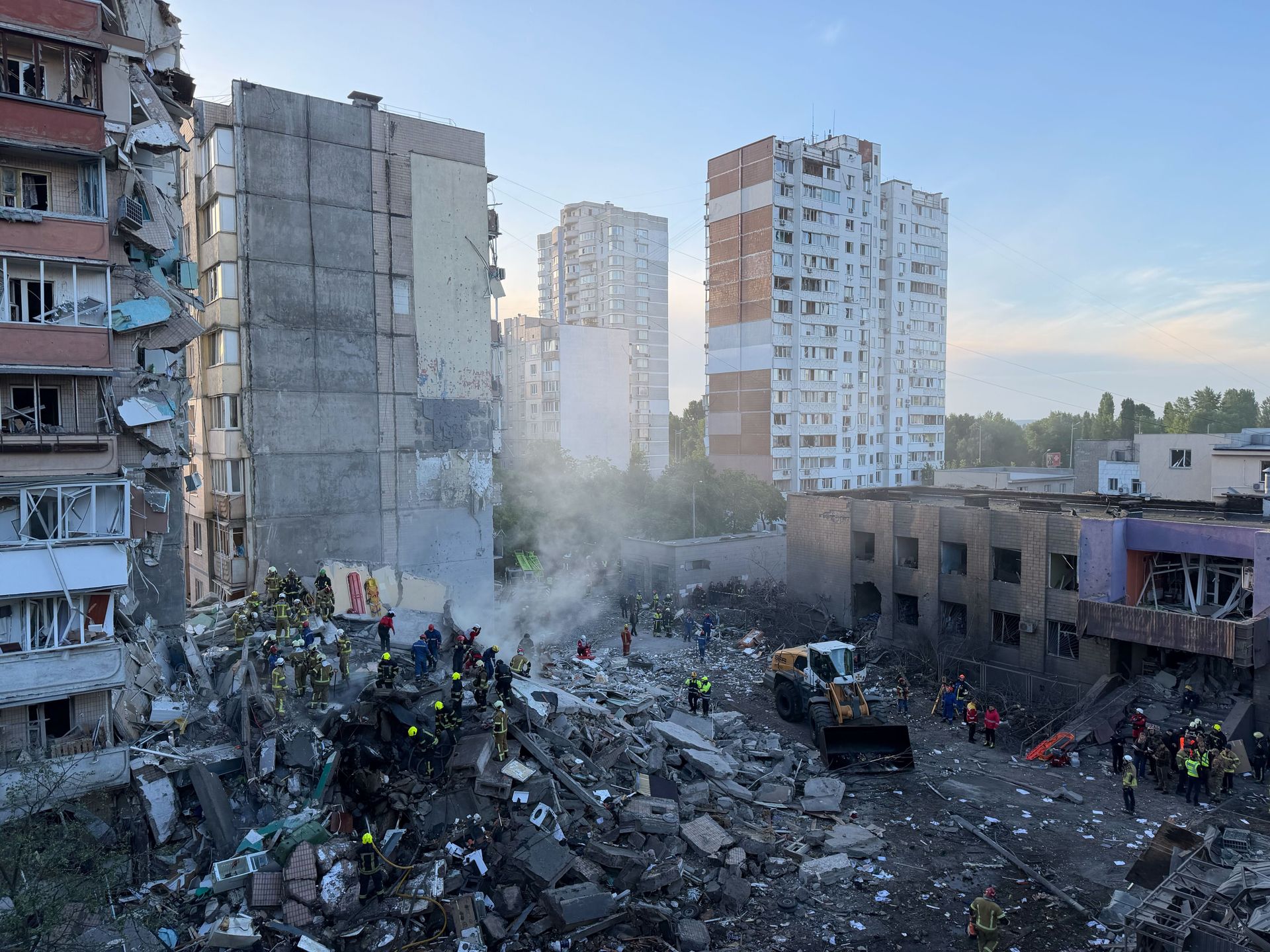
Russia launched 56 missiles and 675 attack drones in a mass overnight strike on Kyiv, killing 1 person and injuring 33 in the capital, with another 7 injured in Kyiv Oblast. A large apartment building in Darnytskyi partially collapsed, 18 apartments were destroyed, and 11 people were rescued as search operations continued. The attack also disrupted water service on Kyiv's left bank and caused multiple fires and debris damage across the city, underscoring elevated geopolitical and infrastructure risk.
The immediate market read is not about one city strike; it is about the regime shift toward sustained saturation attacks that force Ukraine to spend scarce interceptors on low-cost drones while reserving higher-end missiles for the hardest targets. That asymmetry is strategically favorable for the attacker and financially punishing for the defender, because every additional wave raises the expected replacement demand for air defense, EW, hardened infrastructure, generators, and repair materials. The second-order effect is that “resilience capex” becomes less discretionary and more recurring, which should support procurement budgets even if frontline military aid slows. The bigger underappreciated risk is that the attack pattern extends the economic damage beyond immediate casualties: disrupted utilities, housing damage, and emergency-response overload increase insurance, reconstruction, and municipal financing pressure while also elevating labor absenteeism in the capital. If this persists for weeks, it will increasingly impair urban services and business continuity in sectors that depend on uninterrupted power, logistics, and office occupancy. In that sense, the tradeable impact is less on headline war sentiment and more on companies exposed to elevated demand for hardening, backup power, and post-strike rebuilding. Consensus may underprice the persistence of the drone/missile mix because the low marginal cost of drones means Russia can keep probing defenses at scale even when missile inventory is constrained. The contrarian angle is that the near-term output shock is not one-off destruction but a rolling tax on capex and maintenance, which tends to benefit suppliers of air defense, communications, and power redundancy over multi-quarter horizons. The main reversal would be a materially improved ceasefire signal or a large incremental air-defense package that credibly changes the cost-benefit of repeated strikes, but absent that, the stress on infrastructure remains a durable theme.
AI-powered research, real-time alerts, and portfolio analytics for institutional investors.
Request DemoOverall Sentiment
extremely negative
Sentiment Score
-0.90
