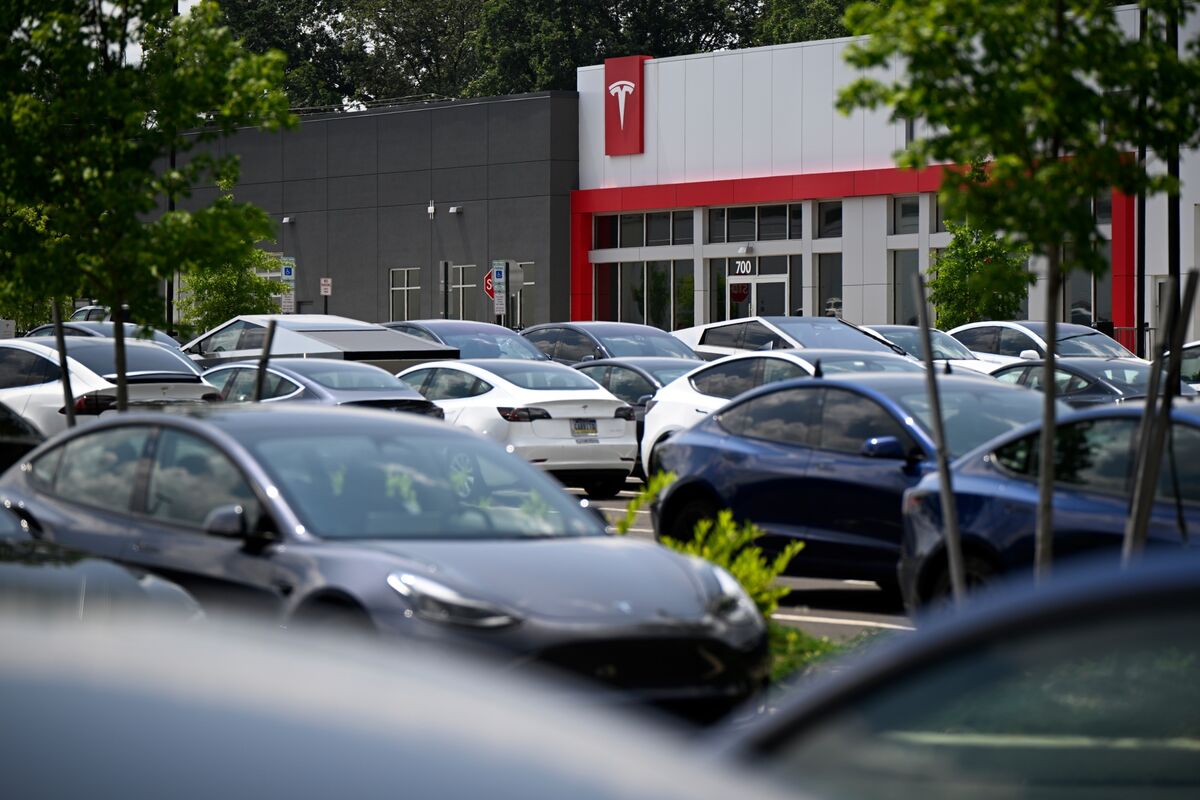
Tesla delivered 358,023 vehicles in Q1 versus a Bloomberg consensus of 372,160, missing by 14,137 units (≈3.8%). This marks the second consecutive quarter of shortfalls and signals weakening demand and execution challenges as Tesla attempts to stabilize its core EV business in a tougher market.
Shift in demand is amplifying a structural bifurcation: low-cost Chinese OEMs and vertically integrated players (battery + vehicle) are best positioned to win below-market price competition, while Western/Tier‑1 suppliers and higher-cost niche EV makers will face margin compression and order volatility. Expect a 3–12 month window where OEMs chase volume via localized price cuts and incentive programs; that will transmit upstream as lumpy order schedules for cells, precursors and semiconductor modules, creating inventory swings at tier‑1s and raw‑material oversupply that can depress chemical prices by multiples in months rather than years.
Second‑order winners include battery recyclers and LFP producers if demand pivots toward low‑cost chemistries — they can pick up incremental feedstock and recycling economics at a higher margin than miners. Losers aren’t just Tesla‑centric suppliers; independent Tier‑1s with concentrated Tesla exposure will see utilization hits, and public charging incumbents that rely on robust new‑car growth (non‑Tesla open networks) risk slower throughput and longer payback curves over 6–18 months.
Key catalysts and risk paths: near‑term headline volatility will be driven by retail sentiment, lease/finance spreads and China pricing announcements (days–weeks). Structural reversal needs either meaningful gross‑margin recovery via cost cuts/refreshed products or a material pickup in financing/lease affordability — expect either to take 6–12 months. Tail risks include aggressive subsidy rollbacks, a deep used‑EV price correction that accelerates depreciation, or a competitive price war initiated by state-backed OEMs that could compress industry margins for multiple years.
Contrarian lens: the market may be overpaying the optionality loss; Tesla still has asymmetric levers (software monetization, energy/storage, manufacturing learning curve). If management uses short‑term price flexibility to sustain share while protecting cost per unit, downside could be limited relative to headline volatility. That’s a conditional recovery path — not base case — and requires watching margin recovery, FSD revenue cadence, and competitive pricing in China over the next 2–4 quarters.
AI-powered research, real-time alerts, and portfolio analytics for institutional investors.
Request DemoOverall Sentiment
moderately negative
Sentiment Score
-0.55
Ticker Sentiment
