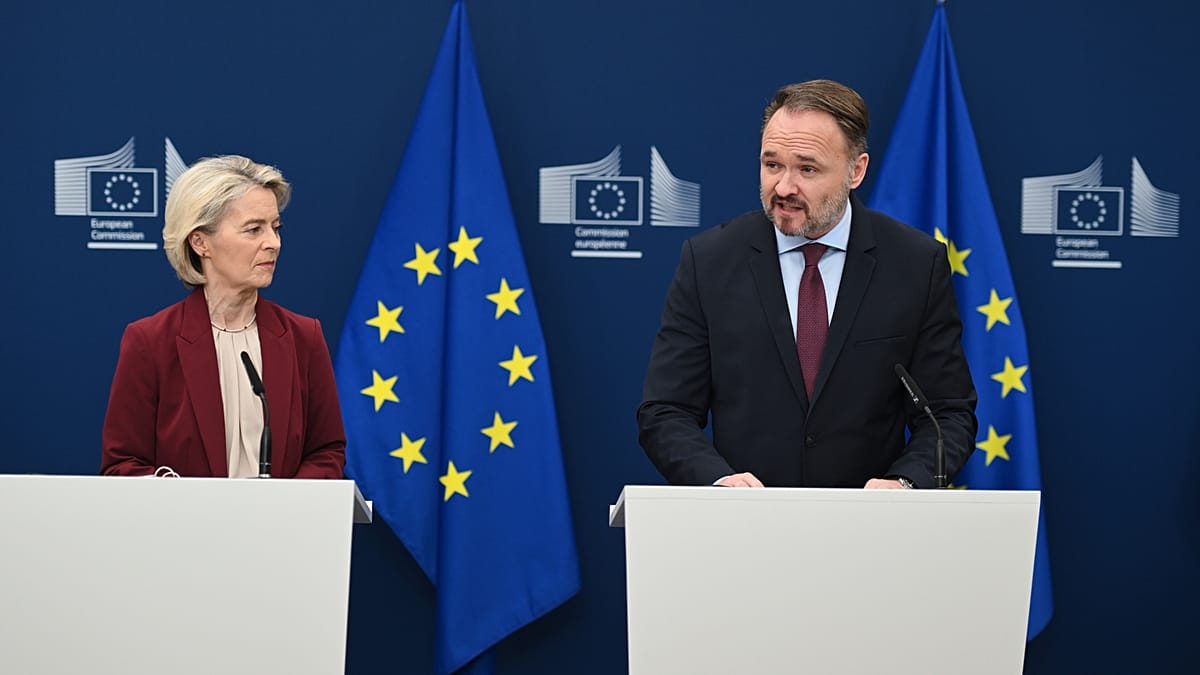
Oil prices are reported up ~70% and natural gas up ~50% amid the war in Iran and threats to the Strait of Hormuz, prompting EU Energy Commissioner Dan Jørgensen to urge coordinated action to curb consumption and optimize storage. The Commission recommended measures including possible fuel rationing, remote work, 'car-free Sundays', postponing refinery maintenance, and using biofuels, and said it will deliver a toolbox to shield families and businesses. The EU flagged limited alternative suppliers and insufficient refining capacity, increasing the risk of prolonged supply disruptions and elevated energy-driven inflationary pressure.
EU-level rationing and refinery-availability interventions change the usual trade-offs between producers, refiners and transport-intensive consumers. Pushing to keep refineries online raises throughput in the near-term but increases mechanical and regulatory risk: expect a higher probability of unplanned outages and quality-driven export restrictions 3–9 months out, which will widen middle-distillate cracks relative to crude and favour regional refiners with spare conversion capacity.
Coordinated demand measures (remote work, temporary fuel caps, biofuel blending mandates) create a structural floor under margins for heavy refiners and merchant storage players while compressing jet/diesel consumption on a multi-quarter horizon; this favours companies with export logistics and floating storage optionality. Conversely, integrated majors with large downstream exposure could see earnings volatility as wholesale cracks oscillate, while pure-play midstream/exporters capture steadier cashflows.
Geopolitical tail risks remain binary and fast: a diplomatically mediated reopening of chokepoints or rapid surge of alternative supply would compress prices within 30–90 days, whereas prolonged disruption amplifies spare-capacity and refinery-upgrade winners over 6–18 months. The near-term tradeable edge is volatility — price spikes argue for trading convexity (short-dated implied vol) and physical spreads rather than outright directional commodity long-only exposure.
Consensus underestimates the operational friction of postponing maintenance: expect a spike in force-majeure filings and shortened turnaround cycles that will temporarily raise third-party margins for asset-light refiners and traders. That creates a 3–12 month window to capture distillate crack dislocations via relative-value and logistics plays before capital investment rebalances refining capacity.
AI-powered research, real-time alerts, and portfolio analytics for institutional investors.
Request DemoOverall Sentiment
moderately negative
Sentiment Score
-0.60
