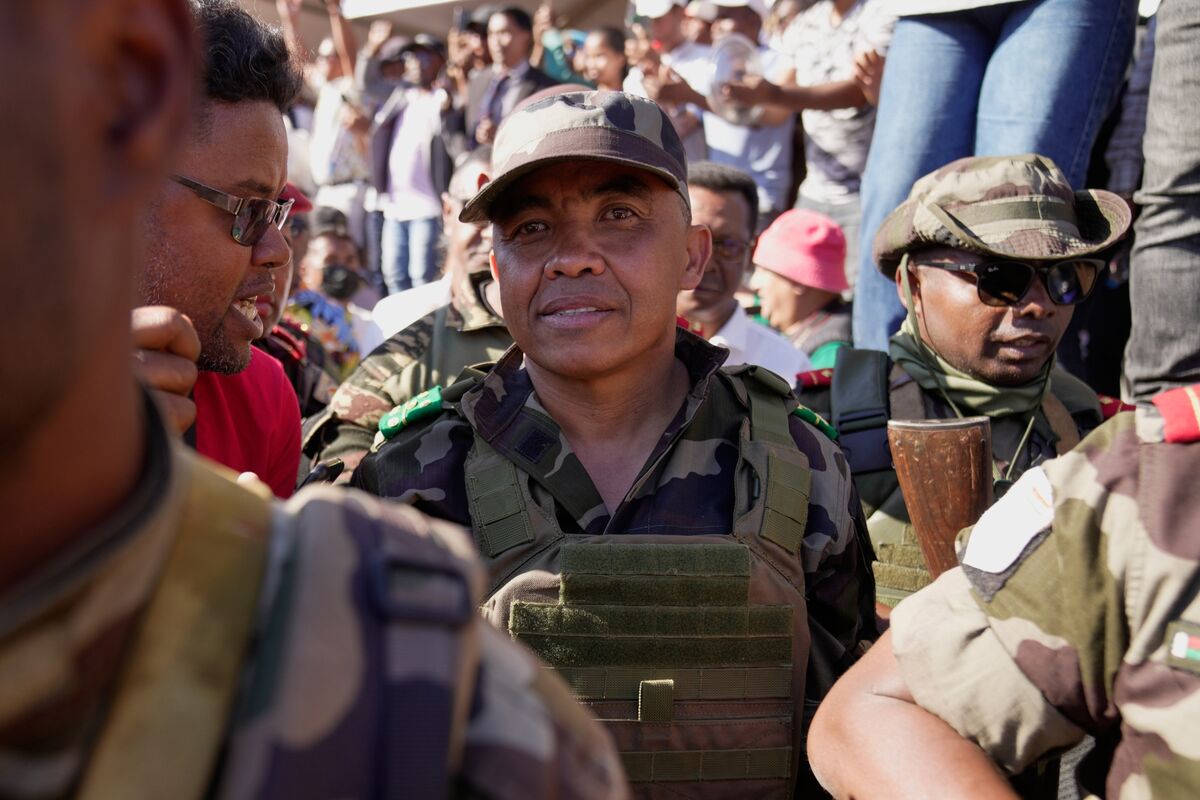
Russia has rapidly sent weapons and aid to Madagascar’s new military government, deepening Kremlin ties with a fragile African state. The move increases regional geopolitical risk and could complicate Western engagement and aid strategies, with potential downstream implications for investors exposed to Madagascan governance, security, or resource sectors.
A Russian tilt toward a small, strategically sited Indian Ocean state raises predictable near-term security and logistics frictions and less-obvious commodity-routing risk. Within days-to-weeks expect higher insurance premia and more volatile freight rates through the Mozambique Channel corridor; within 3–18 months expect mining exporters to face higher transport costs or to be forced into single-sourced offtake arrangements that compress margins by low-double-digit percentages.
Second-order winners include state-backed resource traders and security services that provide protected logistics — they can extract higher fees and lock in quasi-sovereign contracts; losers include independent miners and Western logistics incumbents who rely on stable, open-port access. The competitive dynamic also invites capital competition (China, Gulf funds) that will bid up concession values and accelerate contractual renationalization risk, increasing long-term capex uncertainty for juniors and mid-tier producers exposed to ilmenite, nickel and graphite.
Tail risks are asymmetric: a discrete naval or proxy escalation could spike local CDS and force short-term export stoppages, while diplomatic containment (EU/France/US coordinated sanctions or aid leverage) could reverse the trend in 3–9 months. Watch three concrete catalysts — shipping insurance notices, major offtake re-negotiations, and EU/US frozen aid decisions — as binary events that will move prices quickly and create trading windows.
AI-powered research, real-time alerts, and portfolio analytics for institutional investors.
Overall Sentiment
mildly negative
Sentiment Score
-0.25
