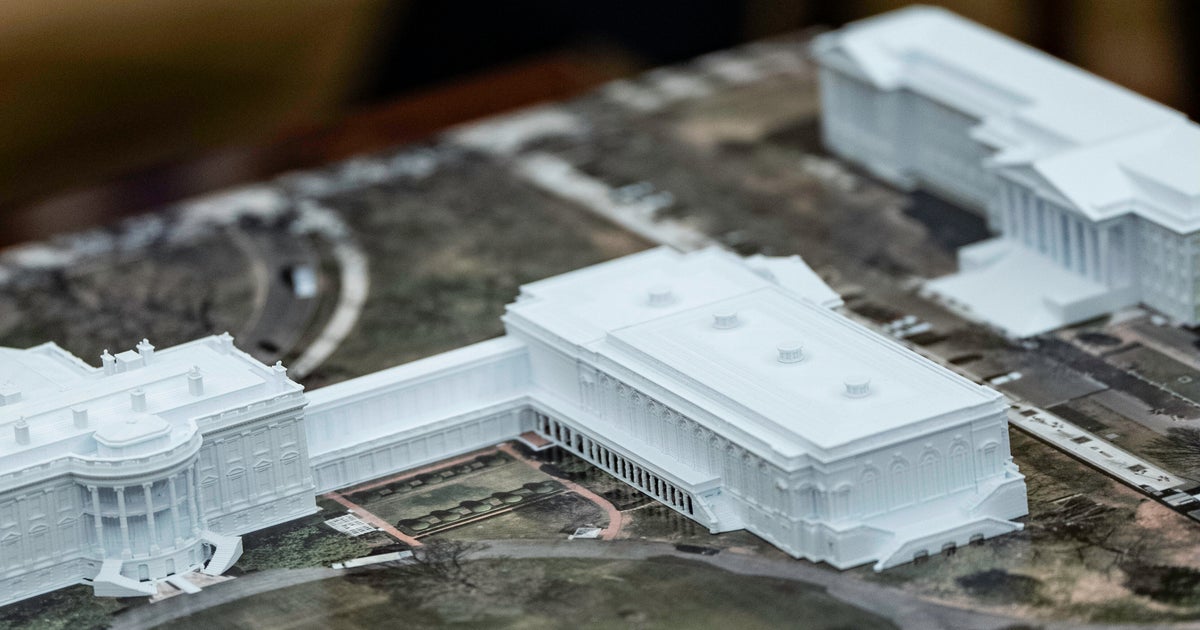
The National Park Service's environmental assessment says construction of the Trump-backed $300 million, 90,000-square-foot White House ballroom—which required demolition of the East Wing in October—is expected to be completed in summer 2028 and concludes the project will have “no significant impact” despite finding the new, larger annex will disrupt the historical continuity and visual balance of the east side of the grounds. The report notes practical benefits (eliminating temporary state-dinner tents and providing event support facilities) and preservation steps (removal and reinstallation of architectural elements, 3-D documentation, and artifact conservation), but flags permanent losses (mature trees and altered sightlines), potential construction vibrations affecting the Executive Mansion, and ongoing legal risk from a Trust for Historic Preservation lawsuit that could delay or complicate the program.
The National Park Service (NPS) environmental assessment states construction of the Trump-backed $300 million, 90,000-square-foot White House ballroom is expected to be completed in summer 2028 and notes the East Wing was deconstructed in late October. The assessment—prepared by NPS Deputy Director Frank Land and approved by acting director Jessica Bowron—concludes the project will have "no significant impact" while simultaneously finding the larger annex will disrupt the historical continuity and visual balance of the east side of the grounds.
The report records tangible mitigation and preservation steps: museum collections, artifacts and paintings were removed and preserved, key interior elements were saved for potential reinstallation, and the East Wing was documented with 3-D surveys and high-resolution photography. It also catalogues practical benefits (eliminating temporary state-dinner tents, providing event restrooms) alongside permanent losses including removal of mature trees (notably commemorative Southern Magnolias), altered sightlines from Lafayette Park and the Ellipse, required grass replacement, road repaving and warnings that construction vibrations could affect the Executive Mansion.
The project carries material legal and political risk: a Trust for Historic Preservation lawsuit alleges procedural violations and could delay or alter the program, and the timing—completion months before a presidential transition—heightens politicization. Sentiment metrics attached to the article are mildly negative with limited market-impact score (0.06), suggesting reputational and contractor-level risk is more relevant than broad market disruption absent further litigation or cost shock.
AI-powered research, real-time alerts, and portfolio analytics for institutional investors.
Request DemoOverall Sentiment
mildly negative
Sentiment Score
-0.25
