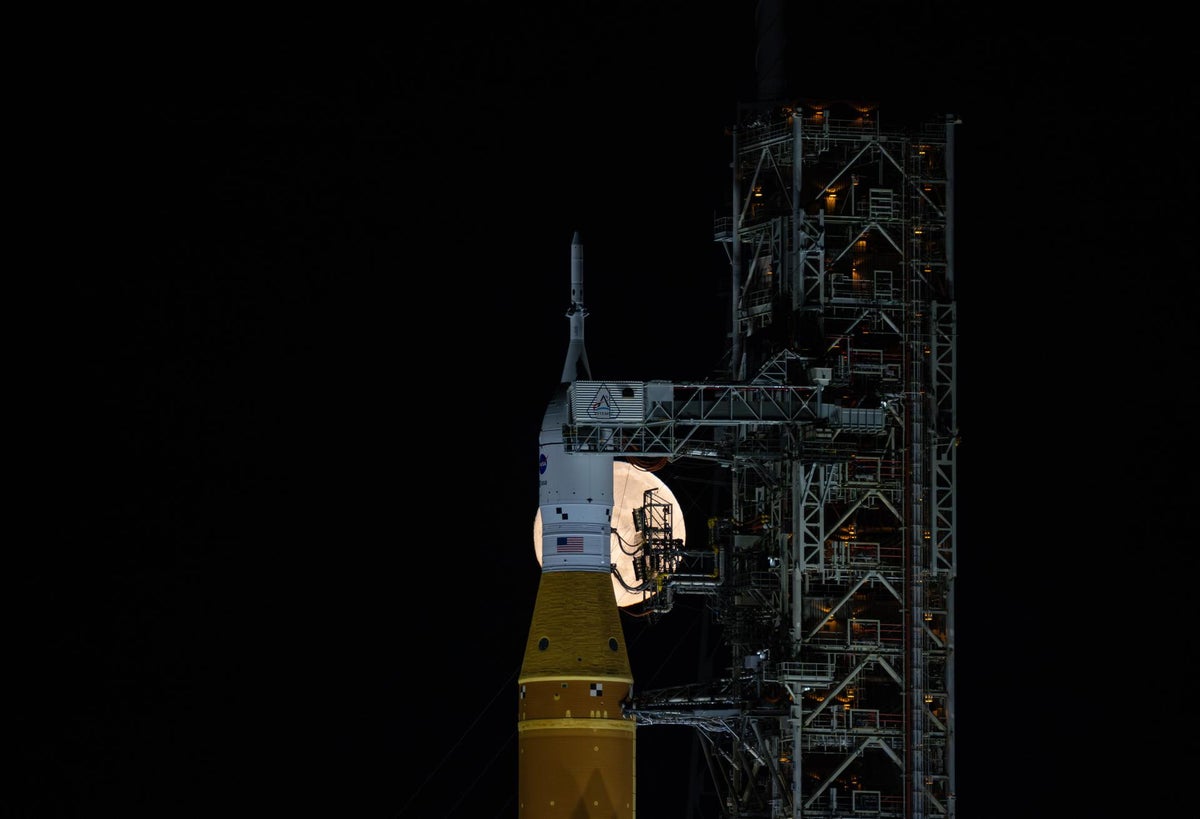
NASA is preparing to launch Artemis II — a crewed lunar flyby carrying Reid Wiseman, Victor Glover, Christina Koch and Jeremy Hansen — but the mission is under scrutiny after Artemis I returned with unexpectedly extensive damage to Orion’s Avcoat heat shield. Rather than replace the current 200-tile Avcoat design and accept schedule and budget hits, NASA adjusted the reentry trajectory to reduce exposure time; engineers and former astronauts warn this leaves a measurable risk of heat-shield failure and could carry programmatic, reputational and contractor-cost implications for future missions.
Market structure: The immediate beneficiaries are large, diversified aerospace/defense primes (Lockheed Martin LMT, Northrop Grumman NOC, RTX RTX) that hold long-term NASA and DoD backlogs and can absorb schedule risk; small- and mid-cap specialist suppliers tied to a single NASA program (thermal-protection or Avcoat single-sourcers) are the clear losers and will face higher bid/ask volatility and potential margin compression. Supply/demand: expect a 10–30% near-term uplift in demand for rework, test services and ablative/phenolic materials over 3–12 months as NASA and contractors increase inspections and retrofits, tightening niche supplier capacity and pushing short-term prices/lead times higher. Cross-asset: anticipate outperformance of defense equities vs. broad industrials, a bump in implied volatility for midcaps, modest downward pressure on short-dated Treasuries if congressional funding debates accelerate, and upticks in specialty commodity inputs (high-performance resins, composites).
Risk assessment: Tail risk includes a mission-critical heat-shield failure or publicized near-miss that could trigger program pauses, contract penalties and 10–30% downside for exposed contractors within days; regulatory/oversight actions by Congress or NASA could produce multi-quarter schedule slippage and >$1bn incremental costs across contractors. Time horizons: immediate (days) = sentiment volatility, short-term (weeks–months) = order rework, testing costs and supplier stress, long-term (years) = program design changes benefiting new TPS suppliers and commercial launch providers. Hidden dependencies: single-source Avcoat processing lines, insurance indemnities, and FY congressional appropriations are second-order levers that can amplify impacts. Catalysts: Artemis II reentry outcome (0–3 months), NASA IG updates, and FY2026 budget decisions.
Trade implications: Tactical: establish modest, conviction-weighted longs in LMT (1.5–2% NAV) and NOC (1% NAV) to play resilient backlog and potential contract rework revenue over 6–18 months, use 10% stop-loss; add 2–3% position in ITA (A&D ETF) for diversified exposure. Relative/value: pair trade long LMT vs. short small/mid-cap specialist suppliers (example short candidate: AJRD, 0.5% NAV) to capture likely margin divergence; hedge with bought 3–6 month OTM puts on AJRD (5–10% delta). Options: buy Jun-2026 10% OTM puts on ITA sized 0.25–0.5% NAV as a tactical tail hedge across the sector. Entry/exit: initiate positions 2–6 weeks before Artemis II; trim 50% within 48–72 hours after reentry outcome and reassess on NASA disclosures.
Contrarian angles: The market may underprice political inertia—historical precedents (post-Challenger/Columbia) show NASA programs survive with funding continuity even after public failures, suggesting long-term revenue for primes is likely intact; therefore a sharp sector selloff would be an opportunity to add to large-prime exposures. Consensus fear may overstate single-mission operational risk versus programmatic funding risk; if NASA pivots more work to commercial partners, look for re-rating candidates among commercial satellite/launch suppliers (Maxar MAXR, small-cap launch suppliers) if they secure >$200–500m in follow-on commercial contracts over 6–12 months. Unintended consequence: elevated scrutiny accelerates qualification of alternative TPS suppliers—long exposure to qualified niche materials/TEST service providers could compound returns over 12–36 months.
AI-powered research, real-time alerts, and portfolio analytics for institutional investors.
Request DemoOverall Sentiment
mildly negative
Sentiment Score
-0.30
