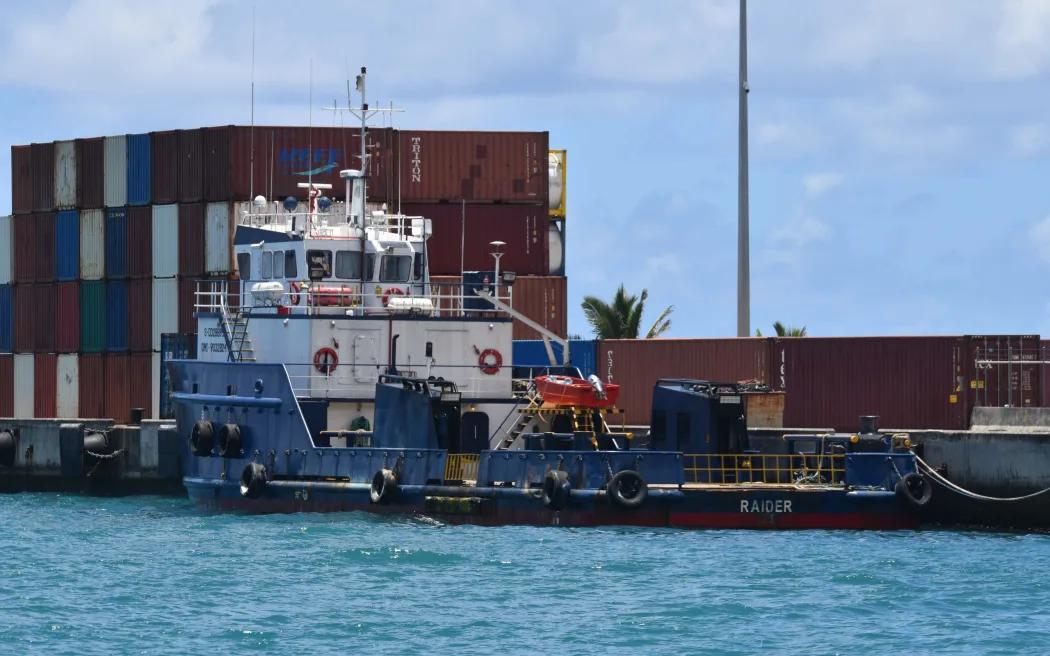
The Togo‑flagged MV Raider was intercepted by the French Navy in French Polynesian waters mid‑January carrying 4.87 tonnes of cocaine reportedly from Central America en route to the Southwest Pacific, but French authorities released the vessel and crew and handled the matter administratively under Article 17 of the Vienna Convention. The Raider has since docked at Avatiu Port in the Cook Islands under 24‑hour security, and experts warn the lack of a formal criminal investigation by French authorities complicates cross‑border surveillance, mapping of trafficking networks and broader regional law‑enforcement cooperation.
Market structure: This incident is a vertical shock to maritime security value chains — winners are defense contractors, maritime ISR/satellite providers, specialized security contractors and reinsurers that underwrite war/piracy risk; losers are spot-exposed ship owners, small offshore vessel operators and regional cruise/tourism operators facing higher inspection friction. Expect 6–24 month incremental contracting for ISR/patrol capacity (estimate +5–10% revenue tailwind for niche ISR vendors if regional budgets rise by $100–500m). FX and commodity impacts are negligible; shipping cost passthrough could raise freight rates 2–5% in affected lanes short-term.
Risk assessment: Tail risks include a diplomatic/regulatory escalation that triggers rapid insurance repricing (+15–30% premiums in Pacific “security overlay”), or conversely administrative non-prosecution emboldening traffickers and increasing interdictions (more headlines, policy responses). Immediate (days) market move = minimal; short-term (weeks–6 months) = insurance and logistics repricing; long-term (6–36 months) = persistent budget increases and higher recurring spend on maritime security systems. Hidden dependency: bilateral legal frameworks and France/Australia funding decisions are the control variable for outcomes.
Trade implications: Tactical trades favor long exposure to large defense primes (LMT, NOC) and ISR-capable satellite/sensor firms (MAXR, VSAT) and selective reinsurers (RNR, ALIZY) via modest sized core positions (1–3% each) or 6–12 month call spreads to limit downside. Pair trades: long defense/reinsurers vs short small-cap shipowners or volatile shipping equity (ZIM) to express security-led rotation; use options to size convexity — buy call spreads on LMT/NOC (9–12 month) and buy 6–9 month call options on MAXR/VSAT 15–25% OTM as asymmetric bets. Exit on concrete policy announcements or +20–30% move.
Contrarian angles: The market likely underprices multi-year structural uplift to Pacific maritime security — small but sustained budget additions (cumulative $200–800m over 3 years) would materially rerate suppliers. Conversely, the knee‑jerk negative read on shipping equities may be overdone: unless insurance premiums rise >20% or port dwell increases >12 hours persist, shipping earnings impact will be muted. Historical parallels (Caribbean interdiction cycle) saw 3–5 year procurement cycles benefiting defense/surveillance names; unintended consequence = higher port dwell times creating opportunistic shorting windows in cruise/port operators.
AI-powered research, real-time alerts, and portfolio analytics for institutional investors.
Request DemoOverall Sentiment
mildly negative
Sentiment Score
-0.33
