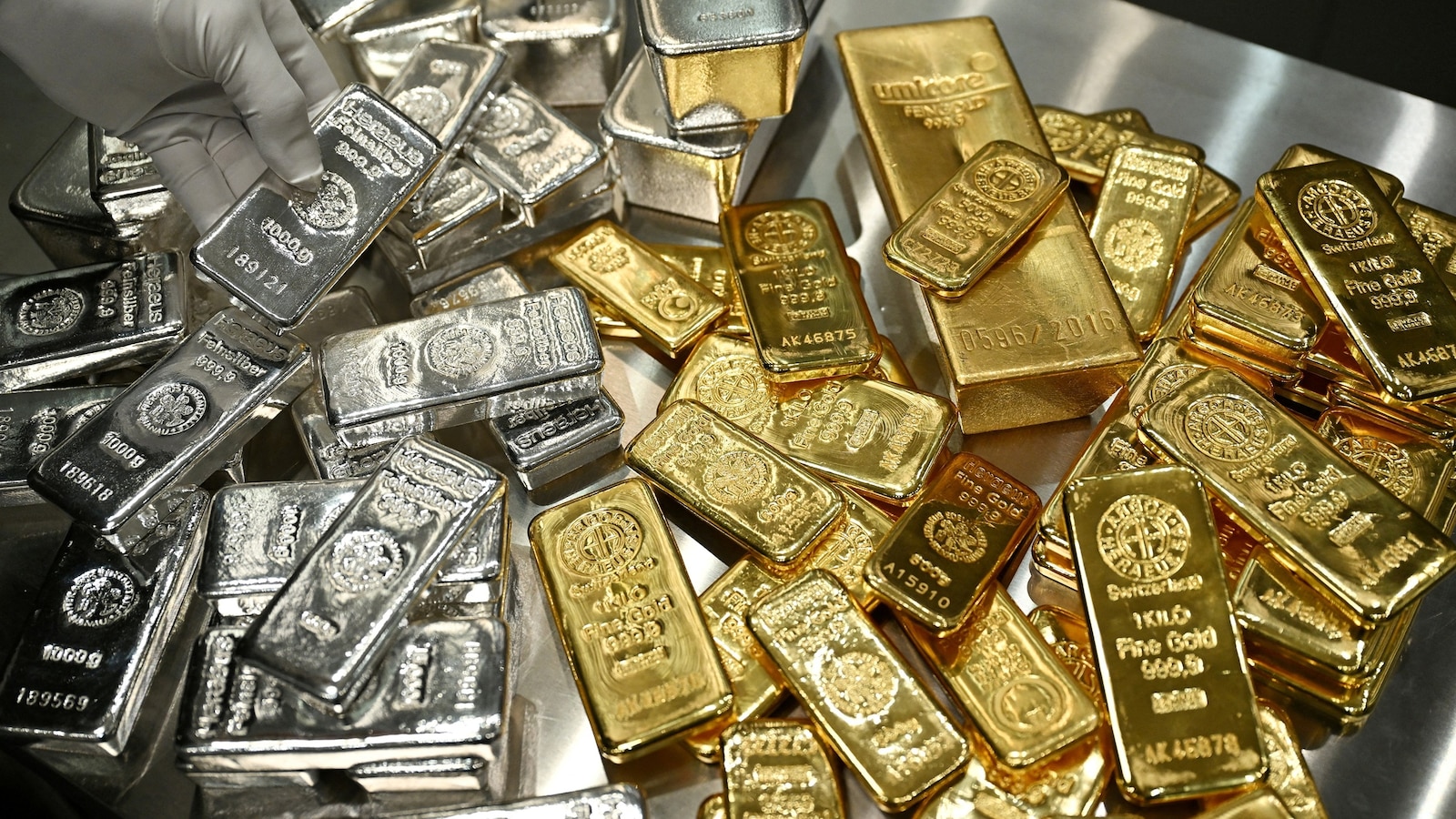
Gold has climbed ~66% year-to-date and silver ~160% while the S&P 500 is up ~17%; this week silver suffered its largest one-day drop in nearly five years before rebounding nearly 8% midday. The sell-off was amplified by CME Group raising futures margin requirements, which temporarily pushed prices lower, and broader drivers include safe-haven demand amid geopolitical/economic uncertainty, a weaker dollar and three Fed rate cuts this year (benchmark 3.5%–3.75%). Continued Fed policy uncertainty, tariff-driven cost pressures and heightened positioning in futures markets suggest persistent volatility for precious metals into 2026, creating both tactical trading opportunities and tail-risk for portfolio exposure to commodities and related sectors.
Market structure: Rapid, outsized moves in gold (+66% YTD) and silver (+160% YTD) have created a two-tier market — physical/miners and leveraged/speculative futures/ETFs. Winners: physical holders, producers (miners), jewelry hedgers; losers: retail speculators, jewelry retailers facing tariff-driven input-cost shocks, and exchanges that rely on high-frequency churn if margins damp volumes (CME exposure). The CME margin hike is a supply-of-leverage shock that temporarily removes marginal long/short flow, amplifying intraday volatility and shifting price discovery to OTC/physical channels.
Risk assessment: Tail risks include a shock CPI >4% or major geopolitical event that re-rates safe havens (big upside), and conversely an aggressive Fed pushback or stronger USD that triggers a fast 20–30% correction in precious metals. Time horizons: days — margin moves provoke >10% intraday swings; weeks–months — positioning and Fed guidance determine direction; quarters — structural demand (industrial silver, mine capex) rebalances supply. Hidden dependencies: concentrated ETF/redemption mechanics, COMEX position concentration, and China tariffs on lab-grown diamonds altering jewelry demand curves.
Trade implications: Use capital-efficient exposure: favored longs are GLD/IAU (core hedge) and selective miners (GDX) for leveraged upside; use option structures on SLV for asymmetric payoffs because silver remains mean-reverting risk-on/off. Short CME exposure is tactical if metals futures ADV and open interest fall >15% QoQ, pressuring transaction revenues. Cross-asset: expect lower real yields and FX pressure on USD to favor gold; options vols for GLD/SLV will remain elevated — monetize via calendar or strangle sales against funded core positions.
Contrarian angles: Consensus treats gold/silver as pure safe havens; markets under-appreciate silver’s industrial demand risk and miners’ ability to increase production in 12–24 months, which could cap prices. The CME margin move may be transient and ultimately positive for exchange economics (less counterparty risk, higher per-contract economics) — shorting CME beyond a 3–6 month horizon may be premature. Historical parallel: 2010–2013 precious metals blow-off then multi-year mean reversion — positioning should be phased and volatility-managed.
AI-powered research, real-time alerts, and portfolio analytics for institutional investors.
Request DemoOverall Sentiment
mixed
Sentiment Score
-0.10
Ticker Sentiment
