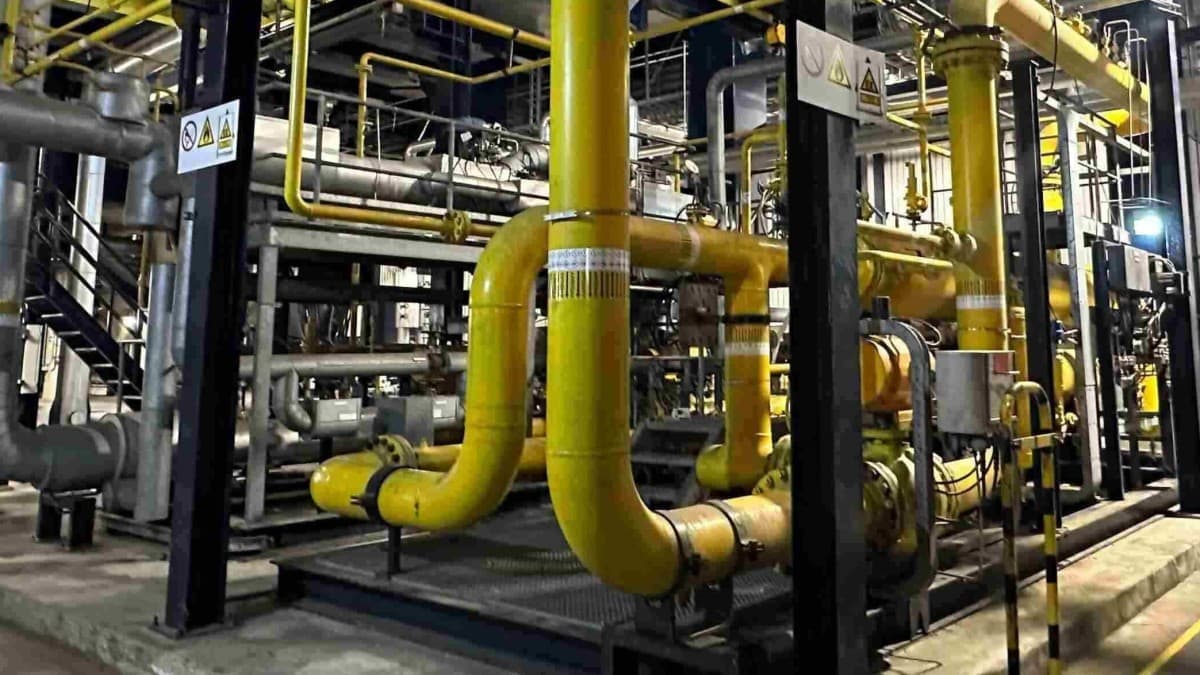
European natural gas futures climbed toward €55/MWh as Middle East ceasefire hopes faded and attacks shut roughly 40 Gulf energy assets, effectively closing the Strait of Hormuz and forcing rerouting. QatarEnergy says 17% of national LNG capacity (12.8 million tpa) is out for 3–5 years after damage (Ras Laffan: 2 of 14 LNG trains and 1 of 2 GTL units hit); Europe gas storage is at 28% of capacity (Netherlands <6%). Standard Chartered raised its 2026 Brent forecast to $85.50/bbl and warns TTF could exceed €80/MWh (~$92.4/MWh) if US–Iran conflict persists; IEA and project pipelines (notably US and Qatar, plus ~300 bcmpa new LNG by 2030) provide longer-term supply relief but do not mitigate near-term volatility.
The market is pricing a near-term regime of elevated European gas volatility rather than a permanent structural shortage; rerouting and damaged Gulf infrastructure amplify delivered-costs and compress flexible cargo availability this season, which can push prompt TTF/back-month spreads materially wider over the next 1–3 months. However, the pipeline to permanently higher European retail/industrial gas prices is moderated by a multi-year wave of LNG FIDs and US/Qatar capacity additions — that cap the tail risk of a 2022-style price blowout but do not eliminate pronounced intermediate-term backwardation and freight-induced premium.
Second-order winners include owners of regas capacity, LNG carriers and short-cycle merchant sellers who can flex cargoes into the highest bid; service/EPC contractors on repair and restart work will see lumpy but outsized cashflows through 2026–2029. Conversely, European buyers with low storage and limited forward hedges face margin compression and demand destruction risk for energy-intensive sectors, creating asymmetric counterparty credit exposure across utilities and industrials this summer.
Primary catalysts to watch: diplomatic ceasefire or rapid repair (days–weeks) which would slash front-month risk premia, versus phased FID-to-commissioning timelines (12–36 months) that sustain elevated forward curves. The consensus underprices the optionality embedded in near-term logistics (charter market and destination-flex clauses); that makes calendar- and freight-relative trades, not outright long-term commodity bets, the highest-expected-value plays.
AI-powered research, real-time alerts, and portfolio analytics for institutional investors.
Request DemoOverall Sentiment
strongly negative
Sentiment Score
-0.60
Ticker Sentiment
