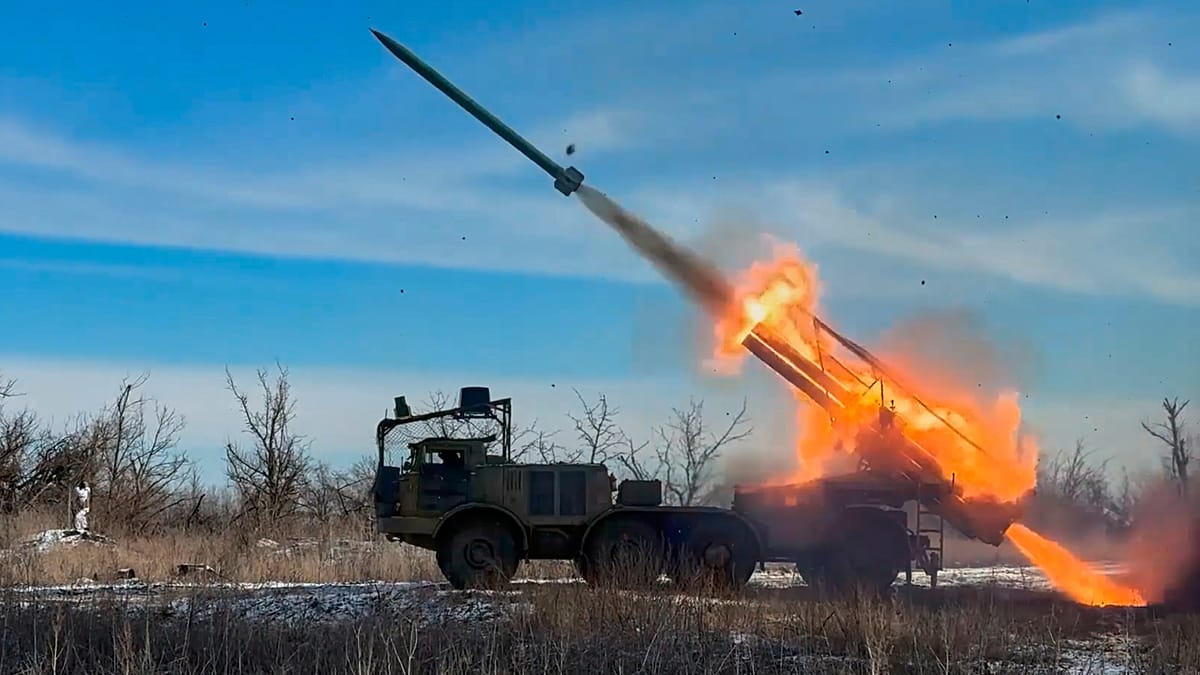
Russia launched more than 200 attack drones, over 80 aerial bombs, and 30+ air strikes against Ukraine shortly after the end of a 72-hour truce, killing one man and wounding at least four in the Dnipropetrovsk region. Kyiv and surrounding areas, including a 20-storey residential building and civilian infrastructure near Fastiv, were also hit. The escalation raises geopolitical risk and could weigh on regional risk assets and defense-related headlines.
The key market read is not the headline violence itself, but the signal that neither side is yet constrained enough to sustain a de-escalation regime. That keeps the conflict in a “high-frequency attrition” state, which is worse for regional risk assets than a one-off escalation because it extends uncertainty over logistics, insurance, and procurement rather than forcing a clean repricing. The immediate economic transmission is through European risk premia and any asset with exposure to Black Sea shipping, border infrastructure, or EM sovereign spreads. The second-order winner is the defense and counter-drone stack, especially companies selling expendables, sensors, electronic warfare, and air-defense interceptors rather than traditional platforms. A prolonged drone-heavy campaign increases replacement demand faster than legacy artillery-centric budgets, which tends to favor suppliers with shorter production cycles and high backlog visibility. The less obvious loser is any Europe-facing industrial with just-in-time supply chains; even when operations are not physically hit, transport rerouting and insurance costs can raise working capital needs and compress margins. The tactical risk is that markets may initially fade the news because it is now part of the baseline war regime. That creates a contrarian setup for a delayed move if attacks spill into critical energy, rail, or power nodes over the next 2-6 weeks, which would force a sharper re-rating in regional utilities, insurers, and logistics names. Conversely, any renewed ceasefire signaling from Washington or a visible reduction in long-range strikes would quickly unwind the geopolitical premium. The bigger medium-term implication is for sanctions and export-control enforcement: sustained escalation usually tightens Western political appetite for secondary restrictions, especially around drones, components, and dual-use electronics. That matters for EM supply chains and for firms exposed to grey-market re-export channels, where margin compression can occur even without direct sanctions. The market is likely underpricing the probability that a drone-centric war accelerates tighter enforcement on semiconductors, optics, and machine tools over the next quarter.
AI-powered research, real-time alerts, and portfolio analytics for institutional investors.
Request DemoOverall Sentiment
strongly negative
Sentiment Score
-0.78
