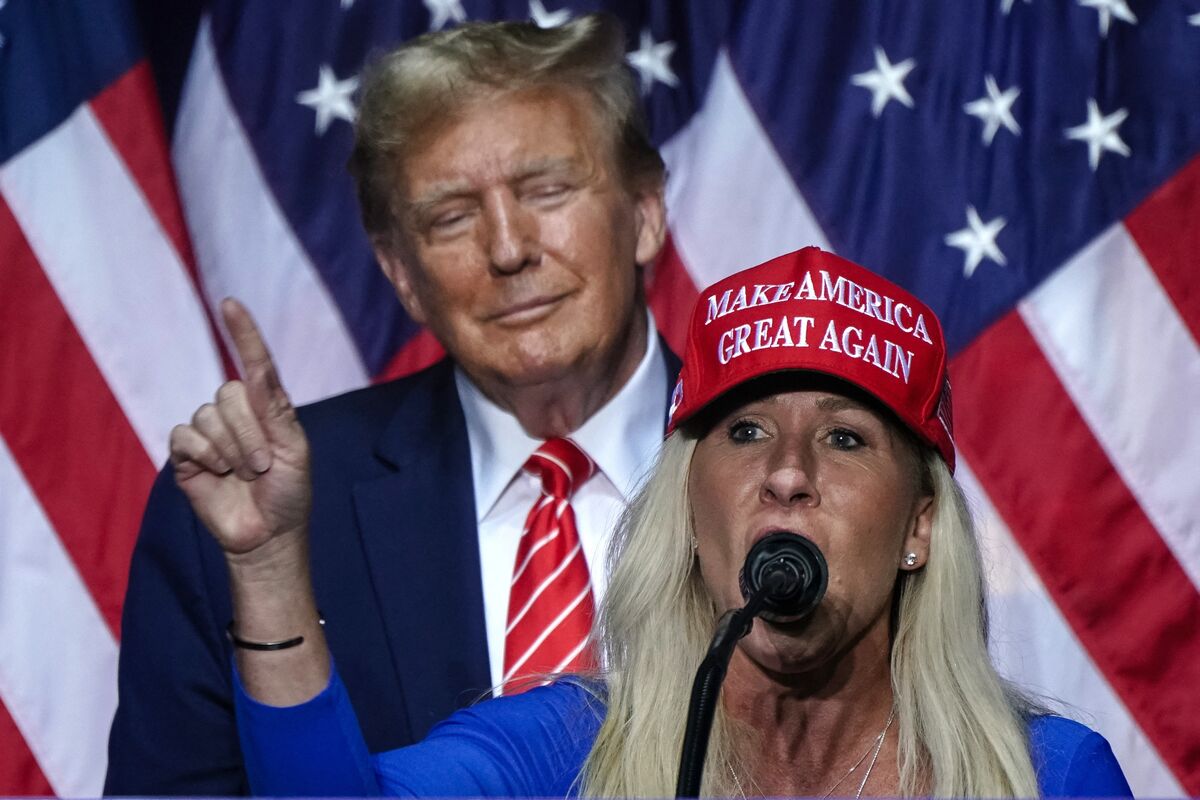
A special U.S. House election in a deeply conservative Georgia district to fill Marjorie Taylor Greene's seat is being watched as a test for Trump and the GOP; Republican Clay Fuller is the favorite. Trump carried the district by nearly 37 percentage points in 2024, so a strong showing by Democrat Shawn Harris would signal potential midterm trouble for Republicans in Georgia and nationally. The race is framed by rising economic unease and the risk of a rapidly escalating conflict with Iran, factors that could amplify political and market volatility if they intensify.
Treat the special-election result as a high-frequency sentiment barometer rather than a discrete policy event; a single-digit over-performance by the out-party in a deeply tilted district historically presages a 3–7 point swing in statewide polling within 4–8 weeks as donors and markets reprice. That swing mechanically shifts ad-buy algorithms, donor flows and market-implied political risk premia — expect near-term volatility in names sensitive to consumer confidence and discretionary spending as investors reweight midterm odds.
Overlaying geopolitics, even low-probability escalation with Iran raises asymmetric market exposures: a sustained 5–10% move higher in Brent historically translates into outsized re-rating for integrated and E&P producers and a 10–20% knee-jerk move in defense contractors in the first 30 days. Channels are direct (commodity and defense P&L) and indirect (risk-off flows into Treasuries and gold, compression in small-cap cyclicals reliant on discretionary demand), concentrating impact into a handful of sector bets over days-to-months rather than broad market reallocation immediately.
Primary reversal catalysts are straightforward and short-dated: a clear post-election consolidation by the GOP or a credible diplomatic de-escalation with Iran would unwind risk premia quickly (days–weeks). Tail risks remain: if electoral signals widen and geopolitical noise persists, expect a persistent volatility regime for 2–3 months that compounds funding costs for levered strategies and forces defensive positioning across fixed income and FX markets.
AI-powered research, real-time alerts, and portfolio analytics for institutional investors.
Overall Sentiment
neutral
Sentiment Score
0.00
