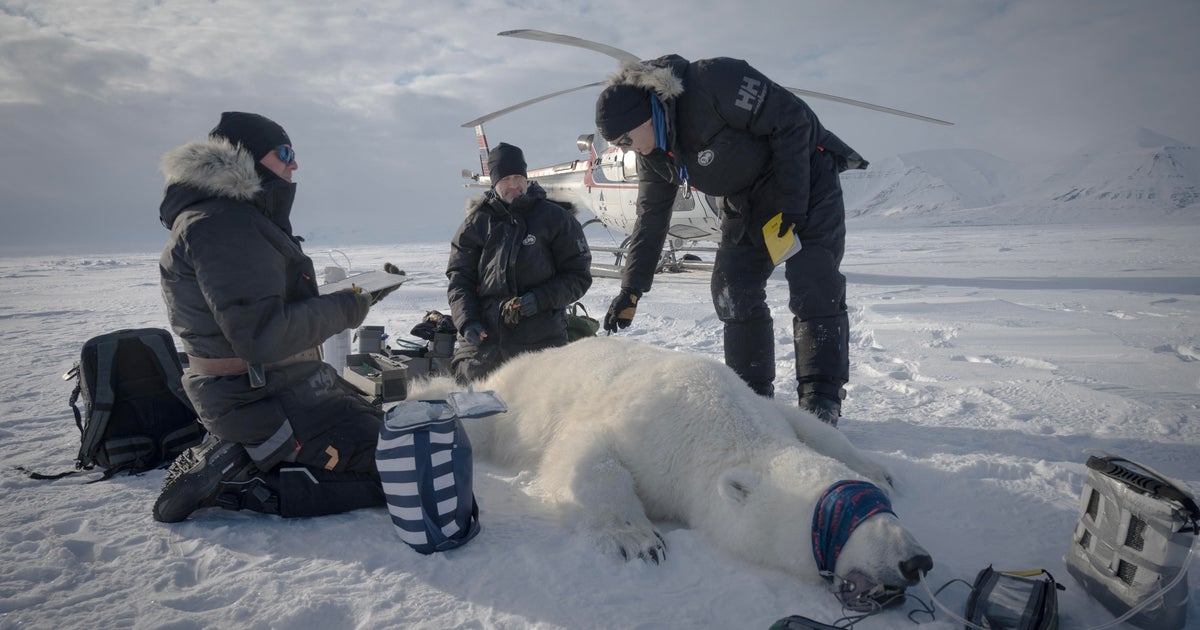
Researchers led by Jon Aars at the Norwegian Polar Institute tracked nearly 800 polar bears in Svalbard from 1992–2019 and found the local population in good condition, with individuals packing on weight and some spending as much as 90% of their time on land while supplementing diets with reindeer and walrus. The findings indicate these bears are adapting to reduced sea ice—possibly by hunting in more concentrated areas—but scientists caution the gains may be temporary given projections of rapid future sea-ice loss, a consideration for ESG and climate-risk assessments though of minimal immediate market relevance.
Market structure: This finding is a localized narrative shock, not a structural climate pivot — direct economic beneficiaries are niche: Norwegian Arctic operators (offshore services, shipping, local tourism) and resource developers with Arctic capability. If policymakers interpret adaptive wildlife as reduced social license risk, Arctic-capable names (Equinor EQNR, Aker ASA AKER-B) could see a modest re-rating of ~1–3% over 6–12 months; broad energy and ESG indices are unlikely to move materially.
Risk assessment: Tail risks include rapid ecosystem collapse (sea‑ice tipping), an aggressive regulatory clampdown or high‑profile activist victories; each could erase any short‑term gains and cause >20% volatility in exposed names. Immediate market impact is negligible; watch the next 3–12 months for IPCC updates, Norwegian licensing rounds and summer sea‑ice extent — these are high‑information catalysts that will materially change probabilities.
Trade implications: Size trades small and event‑driven: prefer directional exposure via equity and defined‑risk options, hedged by strict stops. Favor tactical 6–12 month call spreads on EQNR (buy lower strike ≈+10% / sell upper ≈+40%) sized 1–2% of portfolio; consider a 1% long in AKER‑B vs 0.5% short in SHEL.L to express relative Arctic operational optionality; buy 6‑12 month puts on reinsurers (e.g., MUV2) at 0.5% as asymmetric tail hedges.
Contrarian angles: Consensus treats polar bears as uniform climate casualties; Svalbard is an outlier — markets may underprice the political risk/benefit swing (small licensing liberalizations or PR wins). Reaction is underdone for specific Arctic operators and overdone for headline ESG narratives; set explicit scaling triggers (e.g., scale to 3–4% if Norwegian Arctic permits rise >20% or if IPCC language softens on species projections).
AI-powered research, real-time alerts, and portfolio analytics for institutional investors.
Request DemoOverall Sentiment
neutral
Sentiment Score
0.10
