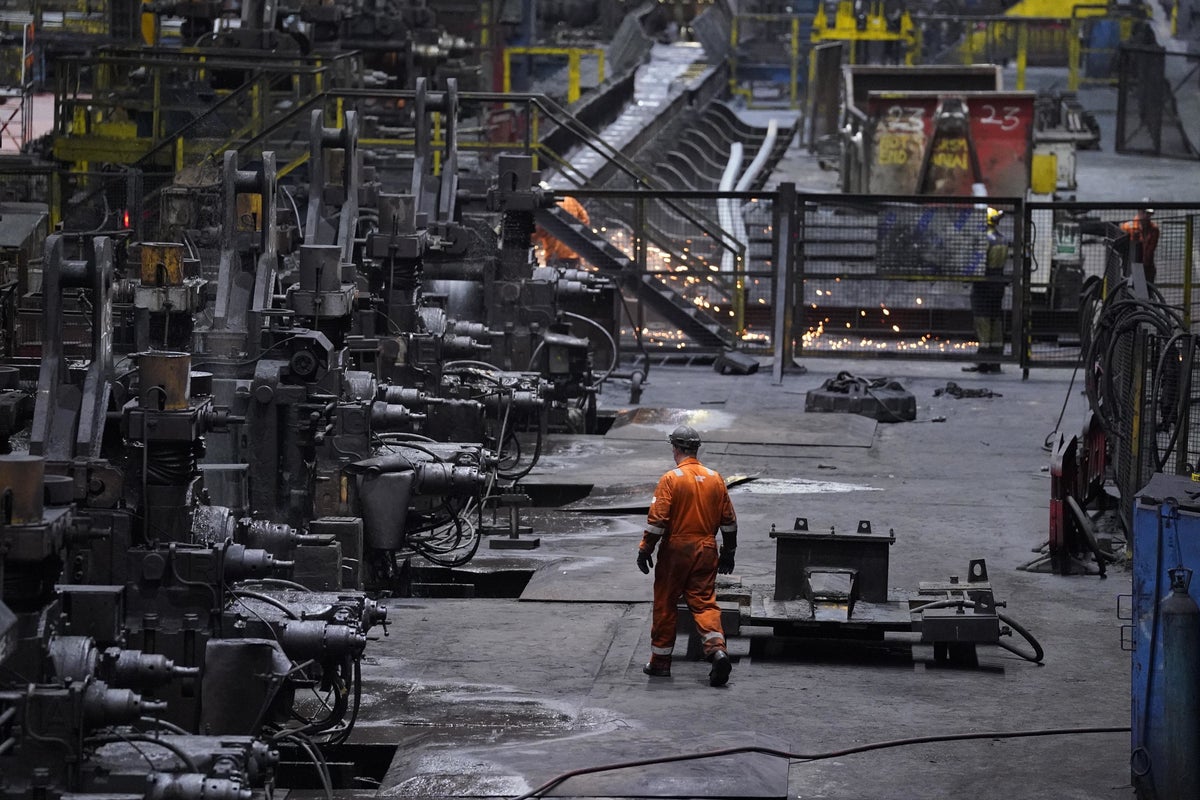
The UK government plans to bring forward legislation this week to enable full public ownership of British Steel, after failing to agree a commercial sale with Jingye. The move is aimed at protecting 38 years after privatization, stabilizing operations in Scunthorpe, and safeguarding workers, suppliers, customers, and critical supply chains. Market impact is meaningful for the UK steel sector and related industrial supply chains, though broader market effects are likely limited.
This is less a one-off rescue than a signal that the UK is willing to socialize strategic heavy-industry losses while preserving optionality for a private-sector recap later. The immediate beneficiary is not just the steel site itself but downstream industrial users that hate interruption risk: rail, defense, infrastructure contractors, and capital-goods names with UK exposure should see a lower probability of supply shock and emergency procurement pricing. The bigger second-order effect is that this raises the political hurdle for any foreign owner of sensitive industrial assets, which should modestly compress the valuation of UK mid-cap industrials with single-site, politically visible operations.
The market should think in two clocks. Over days to weeks, the trade is about reduced bankruptcy/disruption tail risk and lower working-capital stress for customers and suppliers. Over months to years, the relevant question is whether state ownership becomes a bridge to restructuring or a sink for capex and labor concessions; if the latter, equity value transfer will come from taxpayers rather than investors, while bondholders and trade creditors likely get improved recovery odds but limited upside. The key catalyst is not the legislation itself but the funding envelope and whether the government pairs control with credible modernization spending; without that, this is just a delay mechanism.
The contrarian miss is that nationalization can be mildly negative for the broader steel ecosystem if it entrenches overcapacity and politicizes pricing. Protected domestic output tends to pressure import volumes and margins for non-UK producers serving Europe, but it can also support local scrap and logistics volumes if the site is upgraded to more electric-arc-intensive production. The cleaner relative-value expression is not a directional bet on steel prices, but a preference for businesses that gain from continuity of heavy industrial output without carrying legacy blast-furnace exposure.
AI-powered research, real-time alerts, and portfolio analytics for institutional investors.
Request DemoOverall Sentiment
mildly positive
Sentiment Score
0.15
