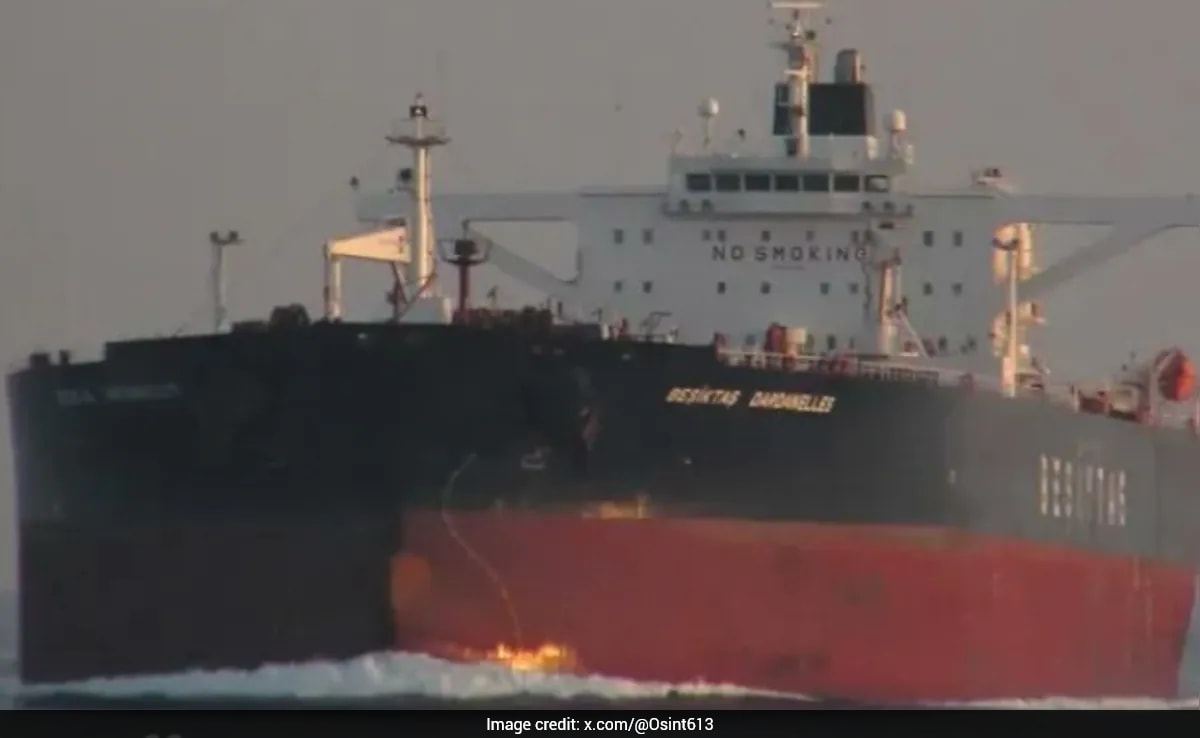
A Turkish-operated, Sierra Leone-flagged oil tanker loaded with Russian crude was attacked in the Black Sea early Thursday, suffering an engine-room explosion likely caused by an unmanned surface vehicle; local reports place the incident less than 30 km from the Bosphorus. The incident raises regional security risk, likely increasing short-term tanker war-risk premiums and potentially lifting freight rates and nearby crude price volatility; monitor insurance cost moves, Turkish maritime responses, and any disruptions to Black Sea crude flows.
The immediate market impulse is a rise in regional seaborne-risk premia and a compression of available tonnage for Black Sea-to-Mediterranean crude flows. Expect spot Aframax/Handy and product tanker rates servicing the Black Sea corridor to widen materially versus global averages for 2–8 weeks as owners reprice voyages, create longer ballast legs, and demand war-risk cover — this mechanically reduces effective shipping capacity even if physical export volumes don’t fall immediately.
Second-order, refiners and trading houses that rely on just-in-time Black Sea feedstock will face higher delivered costs and less ability to arbitrage across benchmarks; that pushes blending toward pipeline-connected crudes and raises local light/heavy differentials in the Mediterranean for the next 1–3 months. Simultaneously, the incident accelerates procurement cycles for maritime counter-ASV systems, remote surveillance, and naval escorts — a multiyear capex tailwind to defense integrators and specialized naval electronics vendors, not the crude oil producers themselves.
Key catalysts to trade around are (1) whether incidents cluster (systemic threat to Black Sea transits) versus remain isolated, (2) Turkish/NATO operational choices that can reopen secure transit corridors within days-weeks, and (3) insurance market repricing that either normalizes or hardens over quarters. Tail risk: a sustained effective closure of Black Sea corridors for months would remove a low-single-digit percent of global seaborne crude capacity and force broader benchmark re-routings, materially widening Brent spreads and utility for longer-dated call optionality.
AI-powered research, real-time alerts, and portfolio analytics for institutional investors.
Overall Sentiment
moderately negative
Sentiment Score
-0.55
