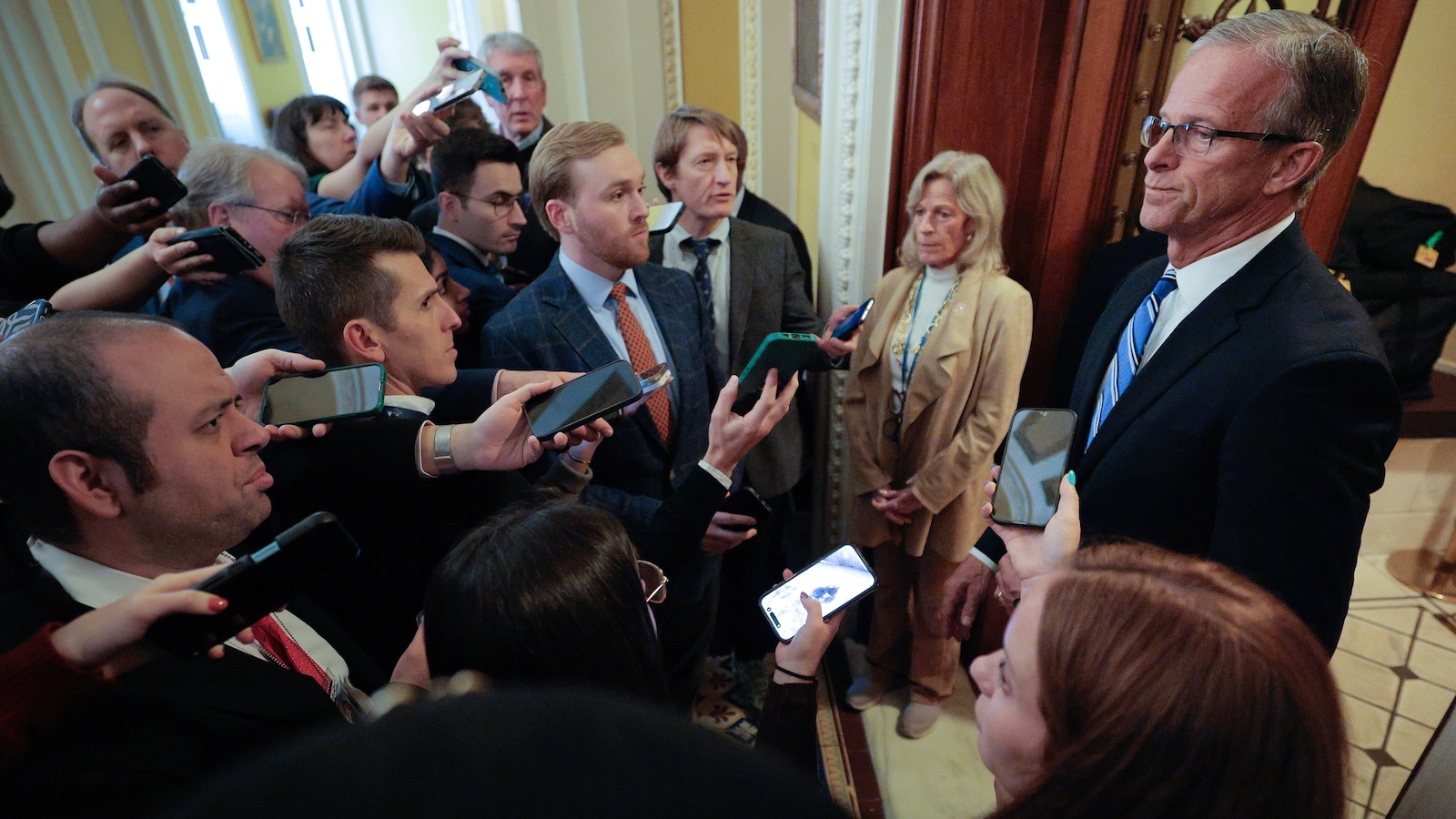
With a Friday deadline to fund the Department of Homeland Security, Senate Democrats rejected a GOP counterproposal and maintained a 10-item package of ICE reforms that would impose warrants for entry, ban face masks for agents, require body cameras and tighten use-of-force standards. Republicans have not disclosed detailed legislative text and say they will press for their own law-enforcement-friendly measures; leaders warn a failure to reach agreement could trigger a partial DHS shutdown affecting TSA, Coast Guard, CBP, Secret Service, CISA and FEMA (ICE operations are noted as separately funded). Lawmakers are discussing a short-term stopgap while negotiations continue, leaving elevated political and operational risk near-term for travel, security and related sectors.
Market structure: A near-term DHS funding impasse is a concentrated operational risk for travel, ports and federal contractors tied to DHS (TSA, CBP, Coast Guard, FEMA). Expect measurable revenue dislocation for airlines and airport services if TSA callouts or screening slowdowns occur—2–7% seat-capacity or on-time metrics swing over days could translate to 1–3% EPS downside for large carriers (AAL, UAL, DAL) in the coming month. Private-prison names (GEO, CXW) face policy/revenue compression risk longer term as ICE-specific reforms remain politically salient.
Risk assessment: Tail risks include a multi-week partial DHS shutdown (>10 days) that materially disrupts ports and coastal logistics, driving a short-term 5–10% move in freight-cost proxies and 10–30 bps downward move in U.S. Treasury yields as risk-off flows hit. Hidden dependencies: cargo dwell-time and retail inventory replenishment (WMT, COST) — even a 5% slip in throughput over two weeks raises inventory carrying costs ~1–2% for heavy importers. Catalysts: Thursday/Friday procedural votes, White House bargaining posture, and any high-profile enforcement incident that reignites public pressure.
Trade implications: Near-term defensive positioning favours short-dated downside protection in airlines and small-cap DHS contractors, and long short-duration Treasuries (2–10y) as flight-to-quality. Options trades (30–45 day put spreads) on airlines and a 1–2% tactical allocation to IEF/SHY provide asymmetric payoffs. Rotate out of high-DHS-exposure small-cap contractors into large diversified defense/cyber names (LMT, NOC, FTNT) for quarters-long stability.
Contrarian angles: Markets may underprice supply-chain spillovers — a >10-day lapse could push container rates and spot freight-indexes materially higher, benefiting owner-operators and select logistics winners (KEX, ZIM) while hurting retail/importers. Conversely, consensus overstates political risk to ICE-funded operations (ICE funded separately); private-prison downside is politically priced but likely to be a multi-quarter erosion, not immediate cash-flow collapse.
AI-powered research, real-time alerts, and portfolio analytics for institutional investors.
Request DemoOverall Sentiment
moderately negative
Sentiment Score
-0.35
