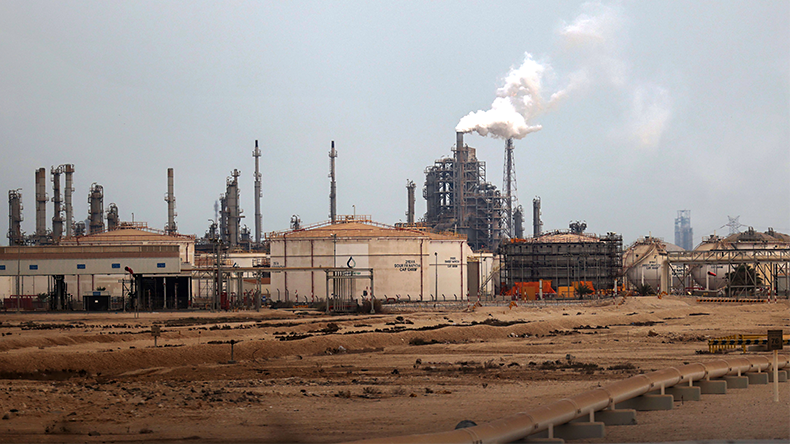
The Oxford Institute for Energy Studies warns a Strait of Hormuz shutdown of a year or longer is possible and would severely disrupt global LNG flows. Gas prices could rise to $21/MMBtu if the shutdown persists to 4Q26 and to $34/MMBtu for a full 12‑month closure, and lost Middle East Gulf export capacity may not be replaced until 2028. Longer interruptions to Qatari and UAE LNG would materially reshape global gas markets and supply chains.
A prolonged disruption in Gulf LNG flows will not only tighten seaborne supply but reprice the entire logistics chain: charter rates, turnaround times at idle FSRUs, and insurance premiums will amplify the price signal well beyond liquefaction economics. Expect the front-month gas curve to move materially higher relative to back months as buyers scramble for short-term cargoes; that steepness creates an exploitable calendar spread trade and raises the value of marginal cargo holders (US exporters, spot-linked cargoes, and flexible tolling contracts).
Second-order stress will hit European industrials and merchant gas retailers via credit lines and collateral calls before commodity fundamentals fully adjust — firms with short-term fixed-price retail exposure are asymmetric losers. Conversely, asset owners with uncontracted liquefaction and shipping capacity gain optionality: a single additional cargo allocation can compound EBITDA given extreme spot spreads, so equities with high leverage to incremental tonne-mile economics outperform integrated players with fixed long-term tolling.
Timing matters: market dislocations will be most acute in the first 1–3 months of a shock and again if the disruption persists past the rolling contracting window when buyers’ flexibility expires. Policy/tactical reversals — diplomatic reopening, coordinated gas releases, or rapid charter market expansion — are credible short-to-medium-term dampers and represent primary catalysts that could unwind positions. Monitor cargo nomination patterns, charter fixtures, and insurance rate moves as high-frequency indicators of tightening or relief.
AI-powered research, real-time alerts, and portfolio analytics for institutional investors.
Overall Sentiment
strongly negative
Sentiment Score
-0.60
