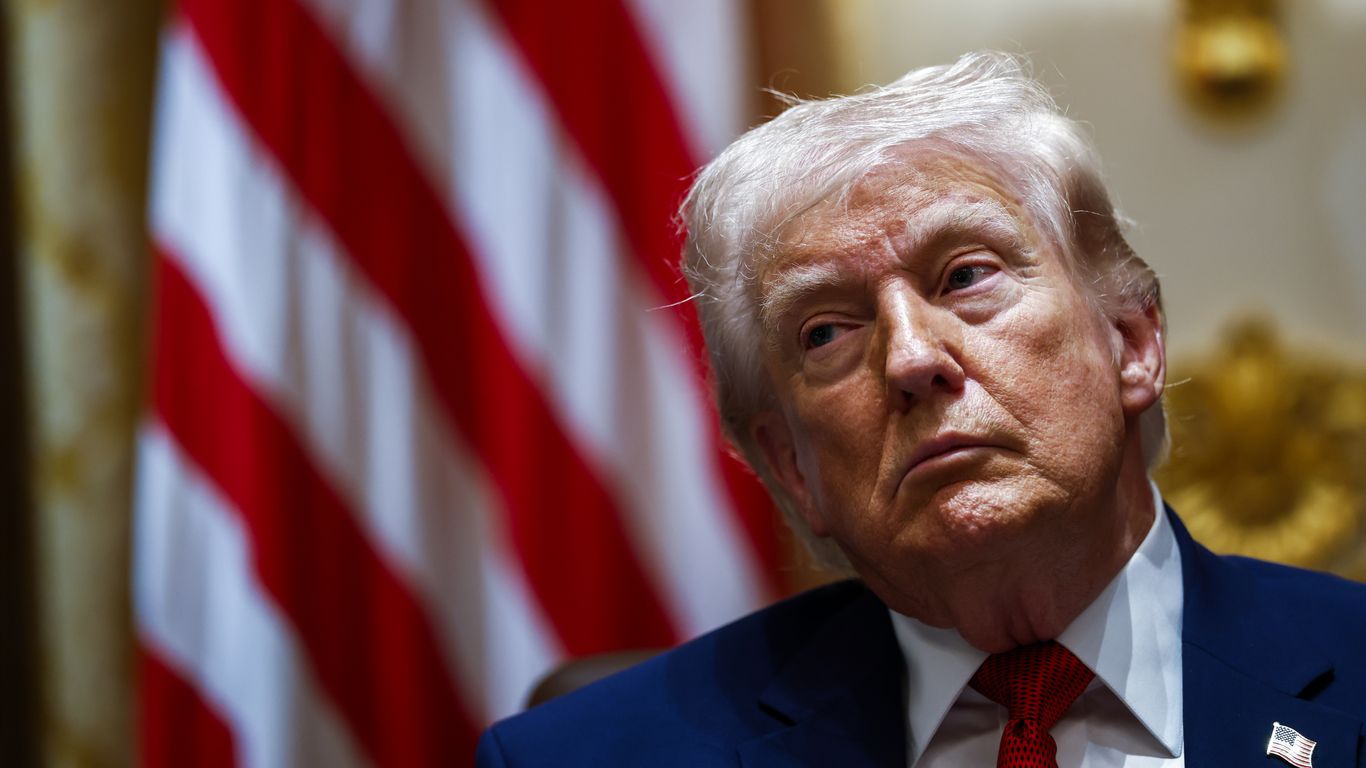
President Trump extended his pause on strikes against Iranian energy facilities by 10 days to Monday, April 6, 2026 at 8:00 PM ET. The post briefly pushed Brent crude around $107/bbl and followed the stock market’s worst single day of the war before a sharp rebound. Pakistan, Egypt and Turkey are mediating and the U.S. sent Iran a 15-point action list seeking a high-level meeting, but Tehran has not agreed; the Pentagon is reportedly preparing large-scale military options if talks fail. Elevated geopolitical risk leaves oil and equity volatility likely to spike again if negotiations stall.
Markets are treating geopolitical headlines as binary, short-lived shocks rather than regime changes; that creates a recurring pattern of sharp intraday moves followed by rapid reversals as positioning (short-gamma hedges, ETF rebalances, and CTAs) liquidates. The practical implication is that realized volatility will overshoot implied for short windows (days–weeks), creating cheap one-week and one-month options relative to three–six month tenors where risk premia should be priced higher.
A localized chokepoint or insurance-premium shock would transmit nonlinearly into tanker freight rates, refining margins and seasonal product allocations: a 10% sustained crude price jump typically generates 40–60% upside in tanker TCEs and can widen crude-to-product crack spreads by 20–40% in the first 30–45 days as refineries reoptimize. Upstream independents capture most marginal dollars quickly (low lifting costs), while integrated refiners suffer when feedstock logistics are impaired — this secular dispersion magnifies earnings cyclicality across the energy complex over 1–6 months.
Defense and aerospace equities are positively correlated with escalation risk but their equity reactions lag oil-driven macro moves; options are the preferred express trade for a directional, event-driven move because balance-sheet rotation and budget/tender timetables matter over quarters. Macro hedges (short-duration Treasuries, long USD, gold as tail hedge) remain cost-effective insurance if volatility spikes beyond a 20–25% realized band over a 2–6 week window, at which point flows into safe assets can compress risk assets rapidly.
AI-powered research, real-time alerts, and portfolio analytics for institutional investors.
Overall Sentiment
mixed
Sentiment Score
0.05
