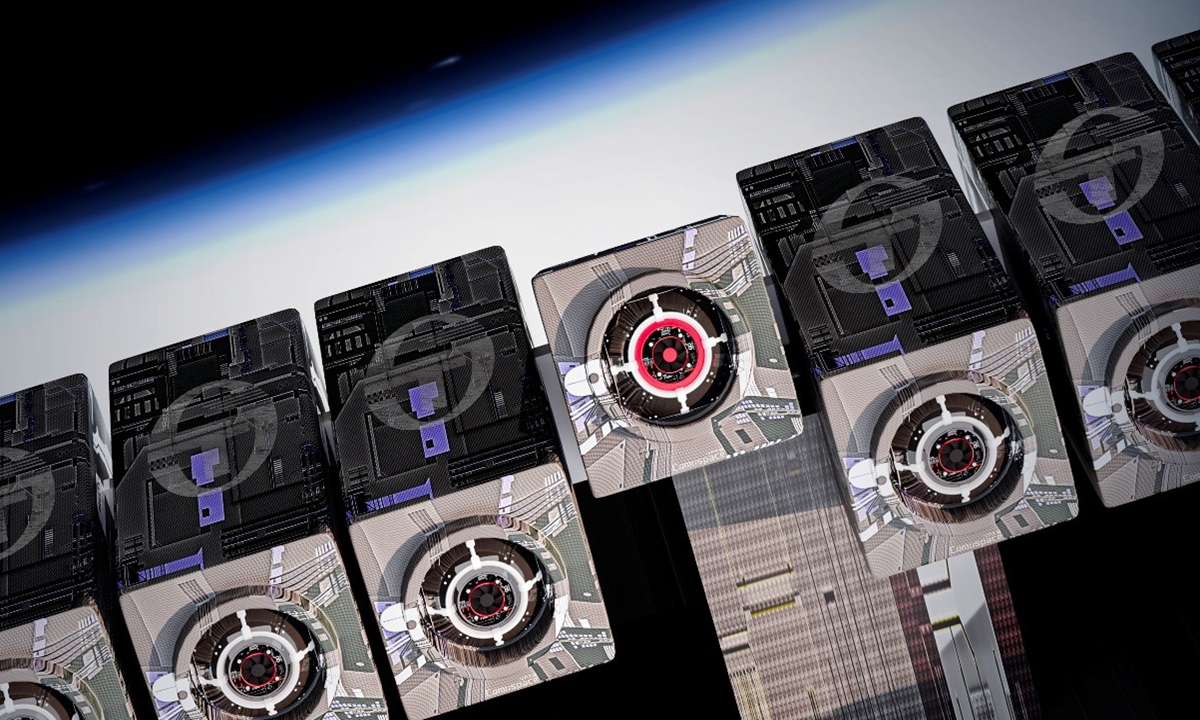
China says it has deployed its first homegrown AI-enabled satellite, Dongfang Huiyan Gaofen 01, carrying an onboard large vision-language model codenamed JigonGPT and a multi-GPU array architecture aimed at enabling on-orbit generative analysis and ultra-low-latency satellite-ground interaction. Program lead Han Yinhe contrasted this indigenous single-satellite, multi-GPU approach with U.S. startups using NVIDIA H100s, highlighted plans for a 2026 orbital demonstration of the multi-GPU supercomputing platform and tape-out/validation of radiation-hardened domestic space-grade chips, and framed the effort as a strategic contest over standards and national security in space-based computing.
Market structure: Space-based AI shifts value upstream to high-performance GPU makers, launch/constellation suppliers and specialized space-grade semiconductor fabs. Near-term winners: NVDA (existing H100 demand), SpaceX/launch contractors (rideshares), ASML/LRCX/AMAT (equipment cadence); losers: incremental demand for some ground colocation REIT capacity in latency-sensitive niches. Expect 5–15% reallocation of some edge/real‑time workloads to orbital solutions over 3–7 years if costs decline as Musk and Starcloud claim.
Risk assessment: Key tail risks include (a) rapid export‑control tightening (10–25% chance next 12 months) that fractures supply chains, (b) on-orbit failures or kinetic/geopolitical escalation that destroys assets (5–10% per year in stressed scenarios), and (c) China achieving a viable indigenous space GPU within 18–24 months, compressing pricing power for Nvidia in that market. Immediate market moves (days–weeks) will track headlines; structural impacts play out over quarters–years. Hidden dependency: radiation-hardened tape-out success rate and thermal/power constraints could delay commercial scale by 12–36 months.
Trade implications: Tactical: overweight NVDA via 3% portfolio long plus a 6‑month 10–20% OTM call spread to capture event-driven upside into next earnings; hedge with 0.5–1% short of select ground‑colocation REITs (e.g., EQIX) for 12–24 months. The asymmetric pair: long SOXX (2–3%) / short IYZ (defense‑heavy aerospace ETF) if commercialization favors commercial over defense primes in procurement cycles. Use LEAP calls on TSLA (1% notional) as optionality on Starlink monetization by 2026.
Contrarian angles: Consensus overweights Nvidia’s orbit monopoly—underappreciated is China’s integrated approach (space GPU + comms) which can undercut pricing and force faster obsolescence; current valuations underprice a 20–30% market-share shift in Asia over 3 years. Reaction is likely underdone in semicap equipment (ASML/LRCX) which sees multi-year demand tail; conversely, ground datacenter REITs may be overvalued if 2–5% of latency‑sensitive revenue migrates off‑planet by 2028. Historical parallel: GPS/space standards battle shows standard-setters capture outsized long-term value—identify firms leading standards work now.
AI-powered research, real-time alerts, and portfolio analytics for institutional investors.
Request DemoOverall Sentiment
neutral
Sentiment Score
0.12
Ticker Sentiment
