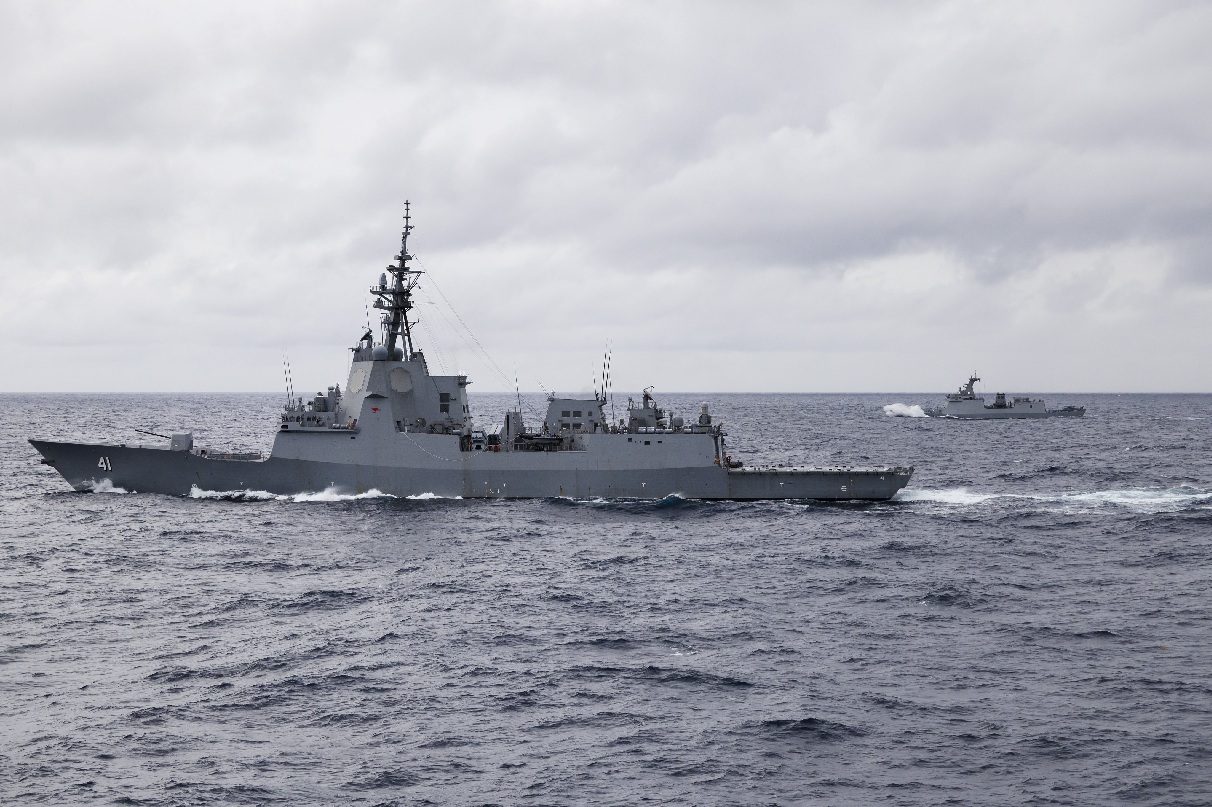
Australian, Canadian, and Philippine warships conducted joint naval drills in the South China Sea as part of Exercise Alon, the largest Australia-Philippines military exercise, amidst escalating regional tensions with China over its expansive maritime claims. These drills, involving over 3,600 personnel and following a recent collision near Scarborough Shoal, underscore Manila's strategic pivot towards closer defense ties with allies to counter Beijing's expanding presence. The exercises signal a collective commitment to upholding international law and freedom of navigation, highlighting heightened geopolitical risk and shifting alliances in this critical global shipping lane.
Joint naval drills in the South China Sea involving Australian, Canadian, and Philippine warships under Exercise Alon signify a deepening of strategic alliances aimed at countering China's expansive maritime claims. This military cooperation, involving over 3,600 personnel across naval, air, space, and cyber domains, occurs amid heightened regional friction, underscored by a recent collision between Chinese and Philippine vessels near the contested Scarborough Shoal. The Philippines is explicitly pursuing closer defense ties with Western partners to push back against China's presence, framing the exercises as a commitment to a 'rules-based international order' and 'freedom of navigation.' China's response, cautioning against targeting third parties and firmly asserting its sovereignty, highlights the escalating geopolitical tension. While a Chinese military researcher downplayed the immediate operational benefits for the Philippines, the drills serve as a potent political signal, increasing the risk of miscalculation in a critical global shipping lane and raising concerns about the potential invocation of the U.S.–Philippines Mutual Defense Treaty.
AI-powered research, real-time alerts, and portfolio analytics for institutional investors.
Request DemoOverall Sentiment
mixed
Sentiment Score
0.00
