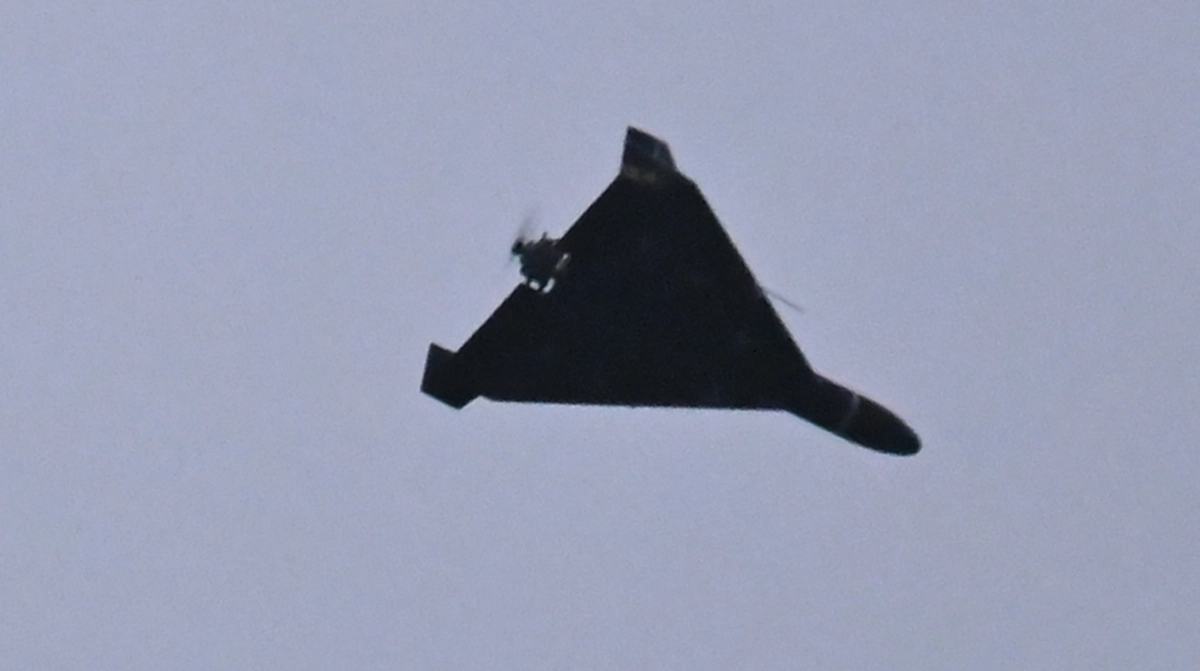
Chinese firms are continuing to supply engines, microchips and other Shahed drone components to Iran and Russia despite US sanctions, with shipments reportedly moving through Hong Kong shell companies and mainland intermediaries. The Wall Street Journal says Chinese customs data show hundreds of containers flowing to drone factories, while US officials and arms researchers report a discernible rise in Chinese-made parts in Shahed systems. The development underscores ongoing sanctions evasion risk and could intensify pressure on Western export-control enforcement.
The market implication is less about the immediate availability of drone parts and more about the durability of the sanctions regime itself. When a restricted supply chain becomes normalized through a permissive manufacturing base plus Hong Kong payment plumbing, enforcement shifts from prevention to friction, which usually means longer timelines and higher unit economics for Russia and Iran rather than a clean shutdown. That creates a persistent tailwind for attrition warfare capabilities and a negative read-through for any defense thesis premised on quick export-control efficacy. For defense and counter-UAS names, this is a constructive setup over 6-18 months because it raises the probability of sustained spend on interception, EW, hardened infrastructure, and domestic supply-chain localization. The second-order beneficiary is any U.S./allied supplier of critical components that can be onshored or trusted-sourced, because procurement teams will increasingly pay up for traceability rather than lowest cost. The losers are gray-market intermediaries, low-end commodity component makers exposed to reputational and counterparty risk, and logistics/payment rails tied to Hong Kong shell structures. The ticker-specific read is negative for LMB on a sentiment basis because the market may penalize any supplier name that screens into dual-use scrutiny, even if direct revenue exposure is de minimis. Expect headline risk to persist in bursts: days for sanction announcements, weeks for Treasury designations, and quarters for any real supply displacement. The contrarian point is that this may be less about a China-wide macro sanctions overhang and more about a fragmented small-factory ecosystem; that means broad China industrial shorts can be overstated if the true economic exposure is concentrated in a narrow set of component and logistics nodes. The bigger catalyst is a policy response that targets distributors, payment channels, and freight forwarding rather than end manufacturers. If Washington escalates secondary sanctions on Hong Kong entities or broadens export-control enforcement into a few visible Chinese contract manufacturers, the trade can move quickly in 1-2 weeks. Absent that, the flow likely persists, which argues for owning the defense/counter-UAS complex rather than trying to fade the supply chain issue itself.
AI-powered research, real-time alerts, and portfolio analytics for institutional investors.
Request DemoOverall Sentiment
moderately negative
Sentiment Score
-0.45
Ticker Sentiment
