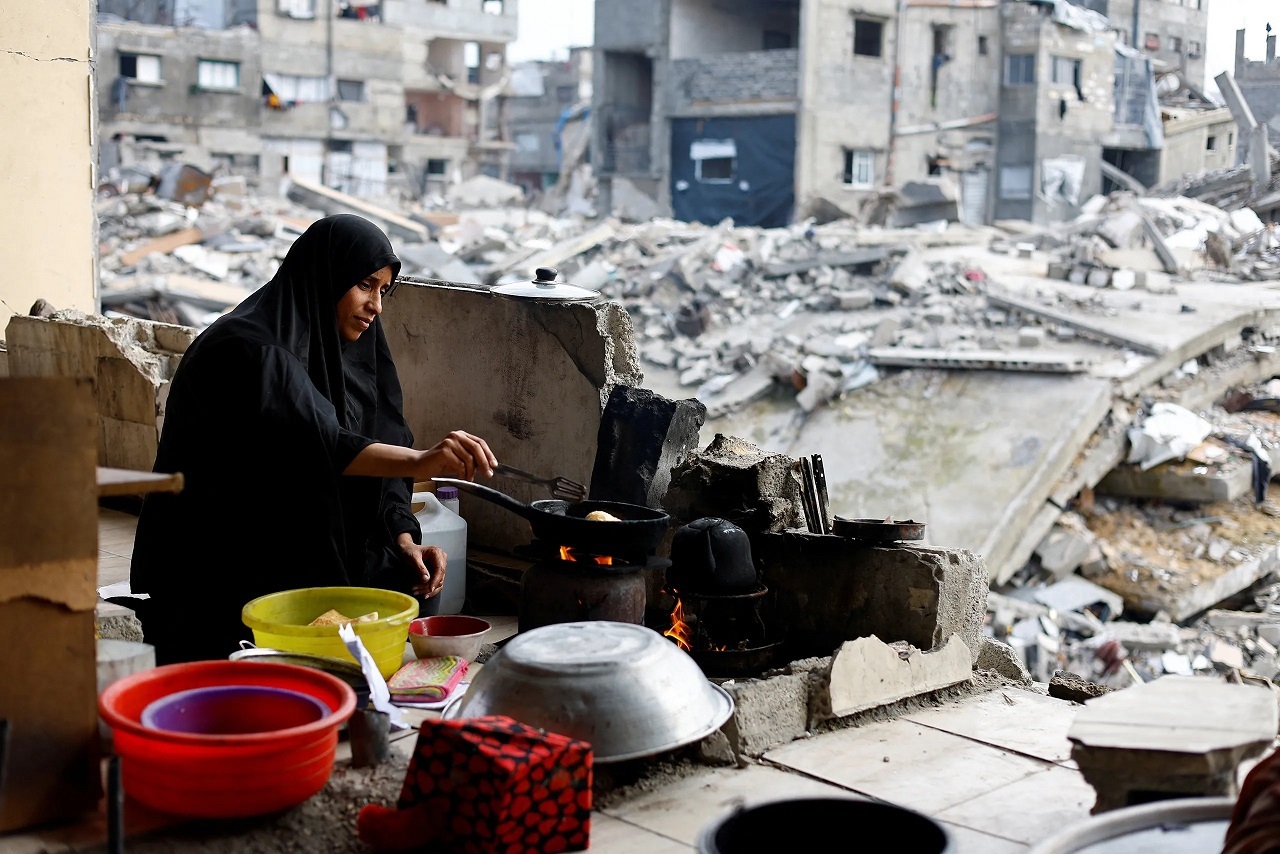
Gaza's economy has been devastated by prolonged conflict and blockade, with UNCTAD-backed figures showing GDP collapsed 83% in 2024 to $362 million and per-capita income falling to $161; unemployment in Gaza is around 80% (Palestine 50%), leaving over 550,000 people jobless. Aid access remains severely constrained (only two crossings open daily versus a 2,000-ton/day target), local authorities estimate $70 billion in economic losses and report 90% destruction across sectors, prompting calls to reopen crossings, restore supply chains, and prioritize reconstruction and SME support to rebuild industry, agriculture and housing. Investors should view near-term economic recovery as highly uncertain and contingent on major geopolitical developments, restoration of trade flows, and large-scale reconstruction funding.
Market structure: Immediate winners are defense and security contractors (Lockheed Martin LMT, Raytheon RTX, General Dynamics GD) from elevated procurement and regional deterrence spending; medium-term winners would be large multinationals in heavy construction/materials (CRH.L, HEI.DE, VMC, MLM) if reconstruction capital flows materialize. Direct losers are regional tourism & airline operators (reflected in JETS), Gaza/Palestinian SMEs and local banks; consumer demand in the enclave is collapsed, removing a small regional demand pool and concentrating purchasing power toward relief agencies.
Competitive dynamics & supply/demand: UN/NGO bottlenecks plus a $70bn damage estimate imply concentrated demand for cement, steel, electrical equipment and logistics — a plausible $8–20bn/yr reconstruction spend over 3–7 years if crossings and donor finance are unlocked, favoring vertically integrated global suppliers over local SMEs. Import restrictions and insurance/finance frictions can create temporary monopolies and pricing power for firms able to clear compliance and logistics hurdles, lifting margins for a select group of suppliers.
Cross-asset & risk transmission: Expect safe-haven flows (USD, gold GLD) and lower US Treasury yields on flight-to-quality initially, while EM sovereign spreads (EMBI) widen +100–300bps and regional FX come under pressure. Commodities have a 25–35% tail risk of a regional escalation that could add ~$8–12/bbl to Brent; implied vol in defense names and energy will spike, making options-based hedges cost-effective for short windows.
Catalysts & tail risks: Key positive catalysts are a donor conference with >$20bn in credible pledges and reopening of crossings within 30–180 days; negative tails include broader regional escalation, banking/channel sanctions, or insurer refusals that could postpone reconstruction for years. Hidden dependency: reconstruction is contingent on banking corridors and political guarantees — capital commitment without operational access yields stranded assets and long delays (timeline: days - humanitarian shocks; weeks–months - funding/permits; 1–5 years - reconstruction execution).
AI-powered research, real-time alerts, and portfolio analytics for institutional investors.
Request DemoOverall Sentiment
extremely negative
Sentiment Score
-0.90
