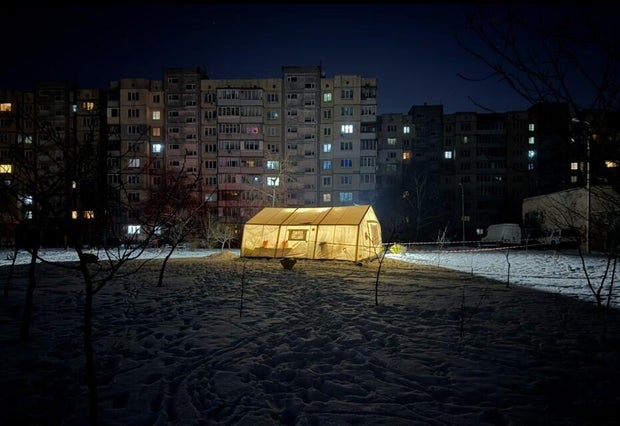
Russian strikes have severely degraded Kyiv's energy and public infrastructure, with Ukraine reporting 612 strikes on energy infrastructure in 2025 and the capital facing over 100 days of outages; roughly 3,000 residential buildings remain without heating and schools in Kyiv are closed into February. The attacks have damaged some 3,500 educational institutions nationwide and contributed to over 700,000 displaced children, while a split in authority between the mayor and a presidentially appointed military administrator complicates decisions on reopening public services — a dynamic that prolongs operational disruption and raises localized sovereign and infrastructure risk for investors with exposure to Ukrainian utilities, reconstruction, or aid-dependent sectors.
Market structure: Immediate winners are defense primes (Lockheed Martin LMT, Raytheon RTX, General Dynamics GD), generator/industrial names (Caterpillar CAT, Honeywell HON) and LNG/European gas suppliers that can backstop heating shortfalls. Losers are Ukrainian sovereign credit, local utilities, small municipal contractors and insurance underwriters; expect elevated volatility in power and gas spreads (near-term move +10–30% plausible if strikes persist >2 weeks). Cross-asset: safe-haven bids into USD and gold, wider CDS and sovereign spreads for Ukraine, and higher implied vol for defense and energy names.
Risk assessment: Tail risks include strategic strikes on major pipelines or a wider regional escalation that could push European gas +40%+ and force multi-month shut-ins; cyberattacks on grids are a plausible low-probability, high-impact vector. Time horizons: immediate (days–weeks) = energy/kitchen-sink demand for diesel/generators; short-term (1–6 months) = government emergency procurements and defense order flow; long-term (1–3 years) = reconstruction capex in construction, education and resilient infrastructure. Hidden dependencies: logistical fuel supply, donor funding cadence, and politicized municipal vs. central authority decisions; catalysts include winter weather, US/EU aid votes and Russian operational tempo.
Trade implications: Direct long: establish 3–5% portfolio exposure to large-cap defense (split LMT/RTX/GD) over 3–12 months, and 1–2% to CAT/HON for genset demand. Buy 3–6 month call spreads (10–20% OTM buy / 30–40% OTM sell) on RTX or LMT to express rising procurement with limited premium. Short/hedge: buy protection (puts or collars) on Ukraine-exposed EM/Europe equities and increase cash by 1–3% until escalation baseline (strikes/week) normalizes below 50.
Contrarian angles: Consensus overweights headline defense equities; underappreciated alpha lies in mid-cap specialty contractors, microgrid players and European utilities with quick-start peaker assets (look at VINCI, HOCHTIEF for reconstruction exposure). Historical parallel: post-2014 procurement cycles show initial defense rallies can plateau while supplier and construction revenues compound over 12–36 months. Unintended consequences: sanctions or supply-chain limits could compress margins for Western suppliers despite higher top-line demand.
AI-powered research, real-time alerts, and portfolio analytics for institutional investors.
Request DemoOverall Sentiment
moderately negative
Sentiment Score
-0.60
