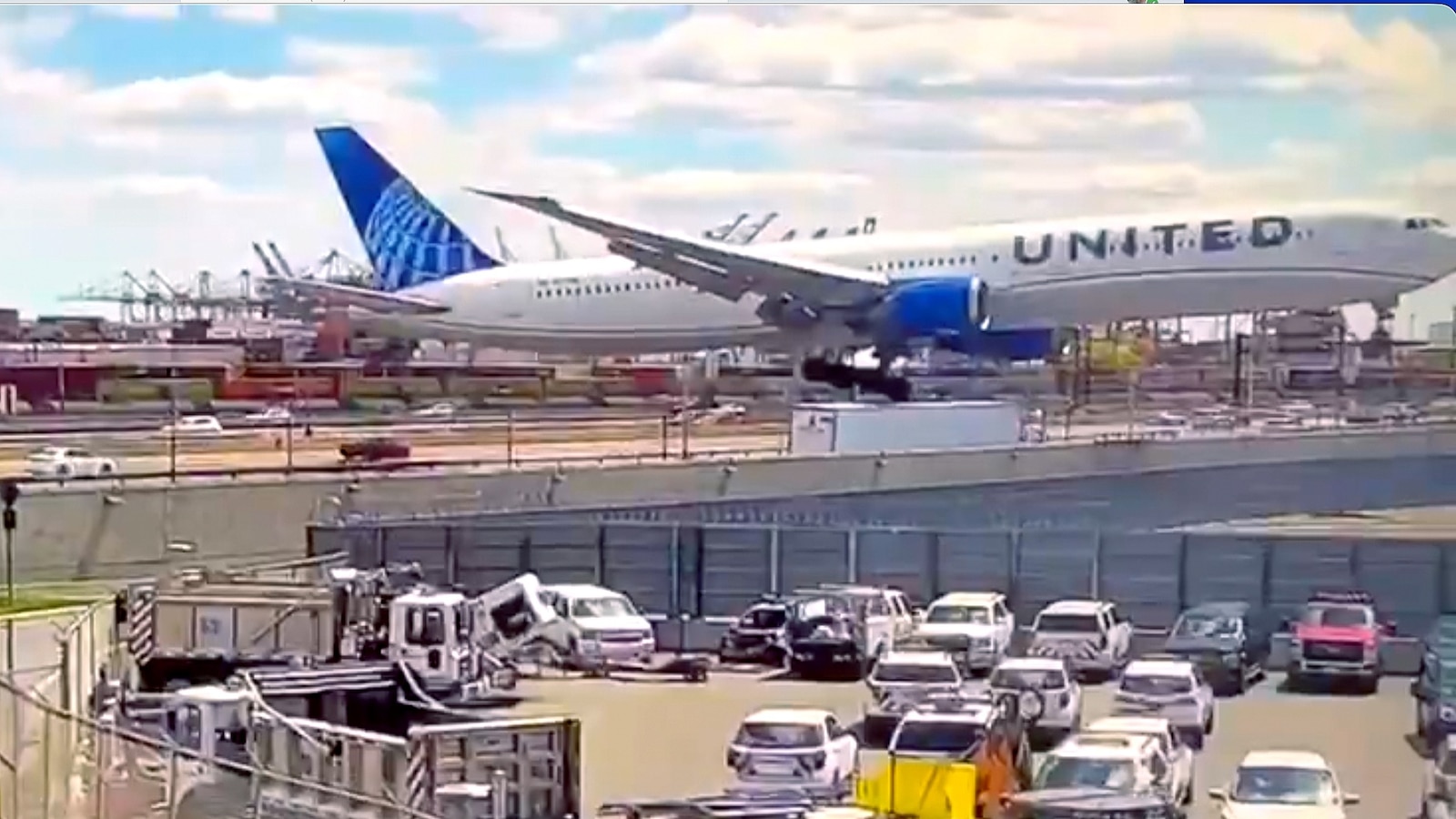
A United Airlines Boeing 767 carrying 221 passengers and 10 crew was involved in a landing incident at Newark on May 3, striking a pole and coming close to a tractor-trailer during final approach. The FAA and NTSB are investigating, and United said the aircraft landed safely with no reported injuries among passengers or crew, though the plane sustained damage and the crew was removed from service. One truck driver sustained non-life-threatening injuries, and the investigation will review flight operations, weather, human performance and air traffic control.
This is less a one-day headline risk than a process risk for UAL: the market will focus on whether the event looks like a one-off or evidence of a broader Newark operating-control problem. In the near term, the overhang is reputational and regulatory, but the bigger issue is operational friction—any mandated procedural changes, crew retraining, or airport coordination review can create small but persistent cost and schedule drag at one of United’s most strategically important hubs. The second-order effect is that Newark reliability becomes a competitive variable for network share. If customers or corporate travel managers start assigning a higher probability of delay/irregular operations, premium demand can migrate toward legacy competitors with less exposed hub complexity, while low-cost carriers may benefit at the margin on short-haul substitution. The direct financial hit from this incident is likely immaterial; the risk is that it becomes a catalyst for a higher scrutiny regime that compresses on-time performance and raises IRROPS-related expense over the next 1-3 quarters. On Boeing, the equity read-through is muted unless investigators find an aircraft-specific or systems-related failure that broadens into a fleet issue. For now, this is more about operator/process than platform, so any knee-jerk short in BA is likely a fade unless the recorder data shows a mechanical contribution. The contrarian point is that initial headline damage to UAL may be overdone if the plane landed safely and the investigation centers on runway geometry or ground-traffic coordination rather than airline negligence; that would cap litigation risk and allow the stock to recover once the facts normalize. The tradeable edge is to express a short-dated, event-driven bearish view on UAL only if the investigation rhetoric escalates beyond a routine review. Otherwise, the better setup is relative-value: short UAL versus a less Newark-exposed legacy carrier on any strength, while avoiding an outright BA short until the NTSB signals aircraft involvement. Monitor whether the FAA imposes operational restrictions or if there is a second Newark incident within 30-60 days; that would turn this from headline noise into a measurable hub-quality problem.
AI-powered research, real-time alerts, and portfolio analytics for institutional investors.
Request DemoOverall Sentiment
mildly negative
Sentiment Score
-0.15
Ticker Sentiment
