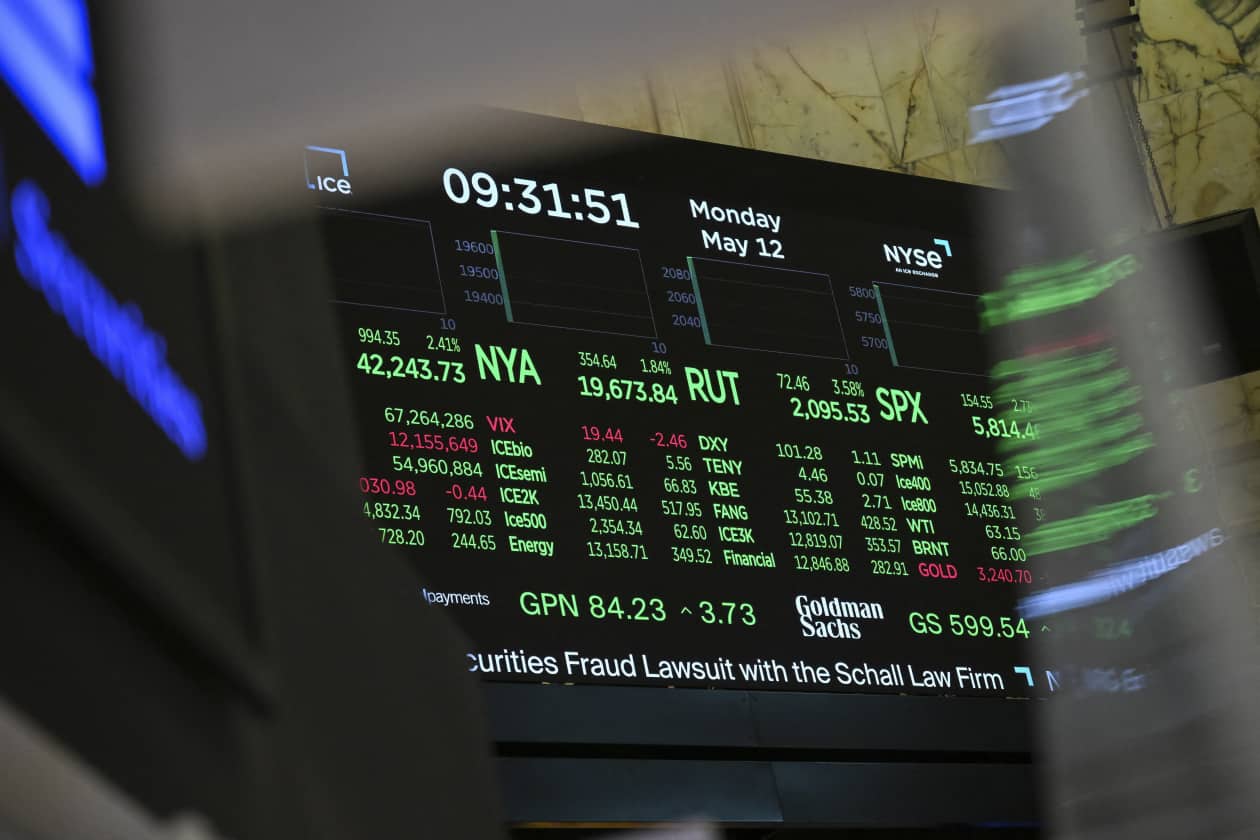
Goldman Sachs is maintaining its 5600 target for the S&P 500 over the next 12 months, despite rising 10-year Treasury yields, currently at 4.43%, driven by inflation and term premia concerns. The firm believes that the drivers and speed of interest rate adjustments are more critical for equities than the absolute rate, with growth-driven yield increases being less problematic than those caused by inflation or fiscal worries. Goldman suggests focusing on companies with strong balance sheets, as small-cap stocks are more vulnerable to bond market volatility due to their higher proportion of floating-rate debt.
Goldman Sachs maintains its 12-month S&P 500 target of 6500, projecting approximately 10% upside, despite the recent increase in 10-year U.S. Treasury yields to 4.43% from 4% in late April, a move attributed to concerns over the inflationary impact of tariffs and rising term premia. The firm forecasts 10-year yields to stabilize around 4.5% by year-end and edge up to 4.55% in 2026, emphasizing that the underlying drivers and the speed of interest rate adjustments are more significant for equity performance than the absolute rate levels. Strategists led by David Kostin highlight that equities are more resilient to yield increases driven by positive growth expectations compared to those spurred by inflation or fiscal worries, and can better absorb gradual rises; a rapid, two-standard-deviation monthly yield increase, however, could trigger a market correction. While noting increased client focus on the yield-stock market relationship since tariff disputes escalated on April 2nd, Goldman Sachs observes no definitive correlation. The S&P 500's 12-month forward price-earnings multiple, currently assessed near fair value, is expected to remain largely unchanged, partly due to its constituents generally holding fixed-rate debt with longer maturities. This contrasts with small-cap stocks, which are considered more vulnerable to bond market volatility due to their greater exposure to floating-rate, shorter-maturity debt. Consequently, Goldman Sachs reiterates its guidance for investors to emphasize companies with strong balance sheets.
AI-powered research, real-time alerts, and portfolio analytics for institutional investors.
Overall Sentiment
mildly positive
Sentiment Score
0.35
Ticker Sentiment
