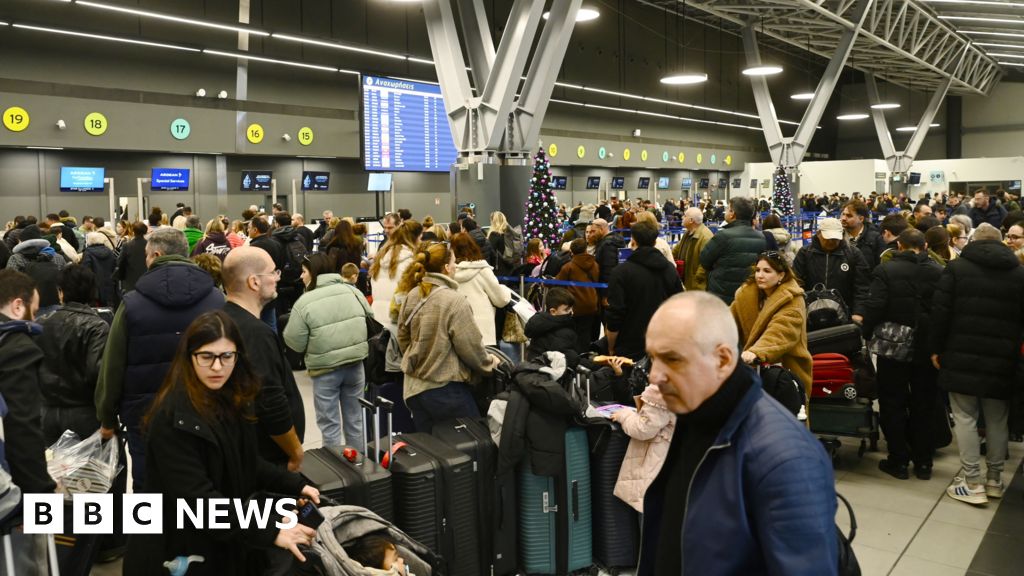
A communications failure in Greek air traffic control forced a temporary closure of Greek airspace, leaving thousands of passengers stranded and disrupting more than 90 flights at Athens International alone while Thessaloniki closed entirely. Authorities say all radio frequencies were suddenly lost and an initial investigation points to a failed antenna near the Gerania Mountains; inbound flights are being diverted (many to Turkey) and Italy, Turkey and Cyprus are assisting. The incident creates short-term operational and cost pressures for carriers and airports, with potential localized revenue and schedule impacts ahead of a busy travel period, but is unlikely to be a large systemic market-moving event.
Market structure: Immediate losers are Europe-exposed airlines and hub-dependent carriers (LHA.DE, IAG.L, RYA.L) from cancelled inbound flights and potential missed bookings in the next 7–14 days; winners are ATC/defense/cyber suppliers (HO.PA, IDR.MC, LDO.MI) and travel insurers (ALV.DE) who may see demand for upgrades or claims. Competitive dynamics favor point-to-point low-cost carriers that can re-route and maintain schedules versus hub carriers that suffer cascading delays; expect near-term pricing power erosion for legacy carriers and possible compensation/ancillary cost pressure of ~1–3% revenue hit for affected routes this month. Cross-asset: expect a transient drop in jet-fuel demand (WTI/Brent down small basis points intraday), potential small widening of Greek short-term spreads if disruption persists >48h, and higher implied volatility for airline equities/options for 2–6 weeks.
Risk assessment: Tail risk includes a confirmed cyberattack or multi-day ATC outage leading to regulatory mandates and industry capex of €500m+ across EU over 12–24 months; insurer loss reserves could increase if class-action suits follow. Immediate window (0–7 days) sees cancellations/downgrades to earnings guidance; short term (1–3 months) could compress airline margins; long term (12–36 months) could re-rate ATC vendors and defense/cyber contractors. Hidden dependency: single-antenna/single-vendor topology and limited redundancy; catalyst timeline: official Eurocontrol/Greek report in 7–30 days, EU procurement announcements in 3–12 months.
Trade implications: Take tactical long exposure to ATC/cyber names and short select airlines. Example: 1–2% notional long HO.PA via 6-month 5–10% OTM call spread to capture procurement upside; 1%–2% short LHA.DE or IAG.L via cash/short or buy 1–3 month puts to capture near-term guidance risk if shares gap down >3%. Pair trade: long IDR.MC (systems vendor) vs short AENA.MC (airport operator) for 3–12 months if headlines drive vendor rerates. If IV for airlines rises >30%, sell credit spreads or buy protective puts (30–90 day tenor). Enter within 48–72h on market reaction; if no material move, wait for report (7–30 days).
Contrarian angles: Markets likely overpricing immediate cyber fear — preliminary Greek security line points to antenna failure, so a >5% drop in airport/airline stocks may be overdone and mean-revert within 2–6 weeks (2019 ATC strike precedent). Procurement wins for vendors will be lumpy and realized after 6–18 months, so avoid paying up for immediate multiples; congestion could instead boost Mediterranean tourism bookings later, creating a short-term buying window for leisure hospitality names if airlines stabilize. Watch for unintended consequence: rushed procurement favors incumbents with certification (Thales, Indra), not smaller cyber plays.
AI-powered research, real-time alerts, and portfolio analytics for institutional investors.
Request DemoOverall Sentiment
moderately negative
Sentiment Score
-0.35
