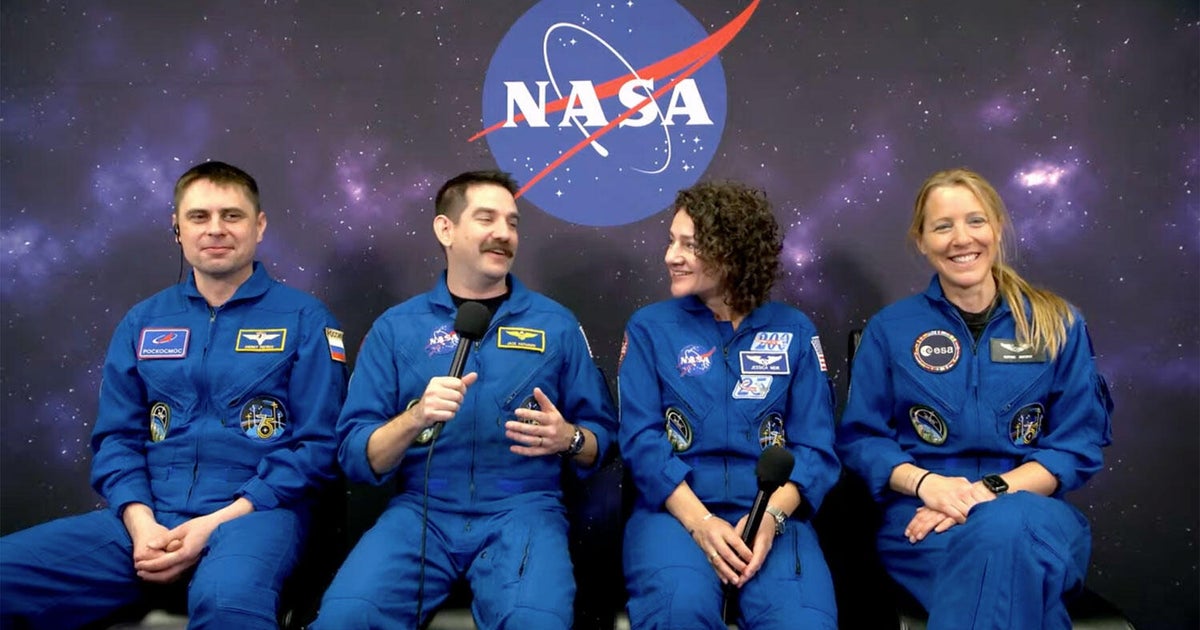
Crew 12 — commander Jessica Meir, Jack Hathaway, ESA astronaut Sophie Adenot and cosmonaut Andrey Fedyaev — is scheduled to launch on a SpaceX Falcon 9 from Cape Canaveral at 6:01 a.m. EST Wednesday with a planned docking to the ISS Thursday at 10:30 a.m., moved forward after NASA's Artemis II was delayed by a hydrogen leak. The flight restores the station to seven long-duration crew members after Crew 11 returned early on Jan. 15 due to an undisclosed medical issue, allowing resumption of a full slate of experiments and two-person NASA spacewalk capability; operationally this is positive for ISS mission cadence but is unlikely to move financial markets materially.
Market structure: Restoring a seven-person ISS crew is a small but real demand signal for LEO services (crew transfers, experiments, two-person EVAs) that favors launch and LEO-ops providers and suppliers — think Rocket Lab (RKLB), Maxar (MAXR), and Axiom Space (AXSM) — while it accentuates SpaceX’s de facto scheduling advantage and pricing power as the primary crew carrier. Boeing (BA) and other late entrants remain disadvantaged on reputational and schedule risk, constraining their market share recovery over the next 6–24 months. Cross-asset impact is limited but measurable: aerospace credit spreads should remain tight for primes (LMT, NOC, RTX) while small-cap launchers retain equity volatility and higher implied options premia.
Risk assessment: Tail risks include a Falcon 9 or Crew Dragon anomaly (<5% probability per historical record but catastrophic for sentiment), a geopolitical rupture with Russia disrupting station operations, or tightened FAA/NASA safety regulation that raises launch costs by 10–25%. Immediate risks (days) are operational (launch scrub); short-term (weeks–months) are schedule cascades and insurance cost normalization; long-term (years) are programmatic funding shifts and LEO commercialization cadence. Hidden dependency: many public suppliers’ revenue is tied to government milestones — watch NASA funding notices and contract awards in the next 30–90 days as catalysts.
Trade implications: Tactical trades: small-cap launchers and LEO operators are the direct plays — establish sized, hedged exposure to RKLB and AXSM while avoiding concentrated exposure to BA. Use options to cap downside: 3–6 month call spreads on RKLB and 9–12 month ATM calls on MAXR after a successful crew insertion. Rotate modest capital from cyclical commercial aerospace into defense primes (LMT, NOC) for steadier cashflows over 12–36 months.
Contrarian angles: Consensus understates concentration risk around SpaceX — a single-provider ecosystem means one anomaly could reprice much of the sector; don’t extrapolate incremental ISS activity into runaway revenues for all launchers. Historical parallel: post-Shuttle era initially depressed demand, then concentrated winners emerged — expect consolidation and selective winners, not broad sector gains. Monitor FAA mishap reports and NASA contract solicitations (next 30–90 days) as over/under-reaction triggers.
AI-powered research, real-time alerts, and portfolio analytics for institutional investors.
Request DemoOverall Sentiment
mildly positive
Sentiment Score
0.25
