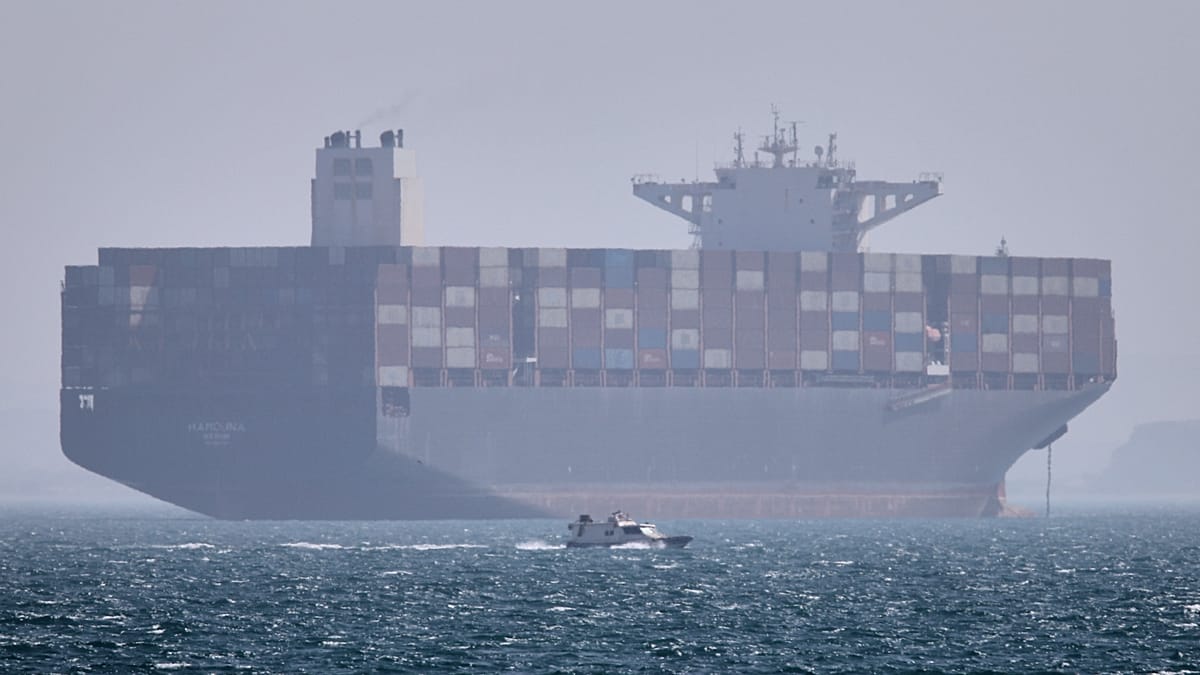
A vessel was seized 38 nautical miles northeast of Fujairah and is being taken toward Iranian waters, adding to escalating disruptions around the Strait of Hormuz. The article highlights ongoing seizures, drone strikes, and blockade risks in a corridor that carries about one-fifth of global oil and LNG shipments. This raises significant geopolitical and shipping risk premium for energy markets and regional logistics.
The market is still treating Hormuz risk as a headline premium, but the more important second-order effect is optionality pricing on every route that depends on Middle East connectivity. The direct near-term beneficiaries are not just tanker owners; it is also any non-Gulf export chain that can be re-routed, reinsured, or repriced faster than Gulf supply can move, including Red Sea-linked alternatives, Singapore/STS intermediaries, and non-Middle East LNG destinations that gain relative security value. The immediate losers are refiners and industrials with high Gulf exposure, but the real P&L sensitivity is in freight rates and insurance, where a small increase in seizure frequency can cause a nonlinear jump in voyage economics within days. The bigger issue is that this shifts the conflict from episodic disruption to a quasi-regulatory toll model: even without a full closure, higher friction raises the floor on delivered crude and LNG prices. That is bearish for global risk assets because it is an energy-input shock without the usual OPEC release valve; the market cannot rely on spare capacity if the constraint is transit integrity rather than supply. The setup also pressures Asian importers most, because they bear both the volume risk and the working-capital burden from longer voyages, delayed discharge, and elevated inventory buffers. The tail risk is a rapid escalation into selective interdiction of shipping services, which would hit container and product tanker rates first, then bleed into petrochemicals, fertilizers, and airlines through higher feedstock and jet costs. The reversal path is diplomatic: any credible enforcement mechanism or third-party escort regime that materially lowers capture probability would compress the risk premium quickly, but that likely takes weeks to organize and can be undone by one high-profile incident. Near term, the skew remains asymmetric to the upside for energy and defense-linked names and to the downside for transport-heavy cyclicals. Consensus is underpricing the persistence of friction because markets anchor on whether Hormuz is 'open' rather than on the cost of passing through it. Even a narrow passage that requires tacit compliance, delays, or informal payments is economically similar to a tax on seaborne energy, and taxes tend to be sticky once embedded in logistics behavior. The overdone piece may be expecting a pure crude rally; the cleaner trade is in volatility, freight, and margin compression rather than directional oil beta alone.
AI-powered research, real-time alerts, and portfolio analytics for institutional investors.
Request DemoOverall Sentiment
strongly negative
Sentiment Score
-0.65
