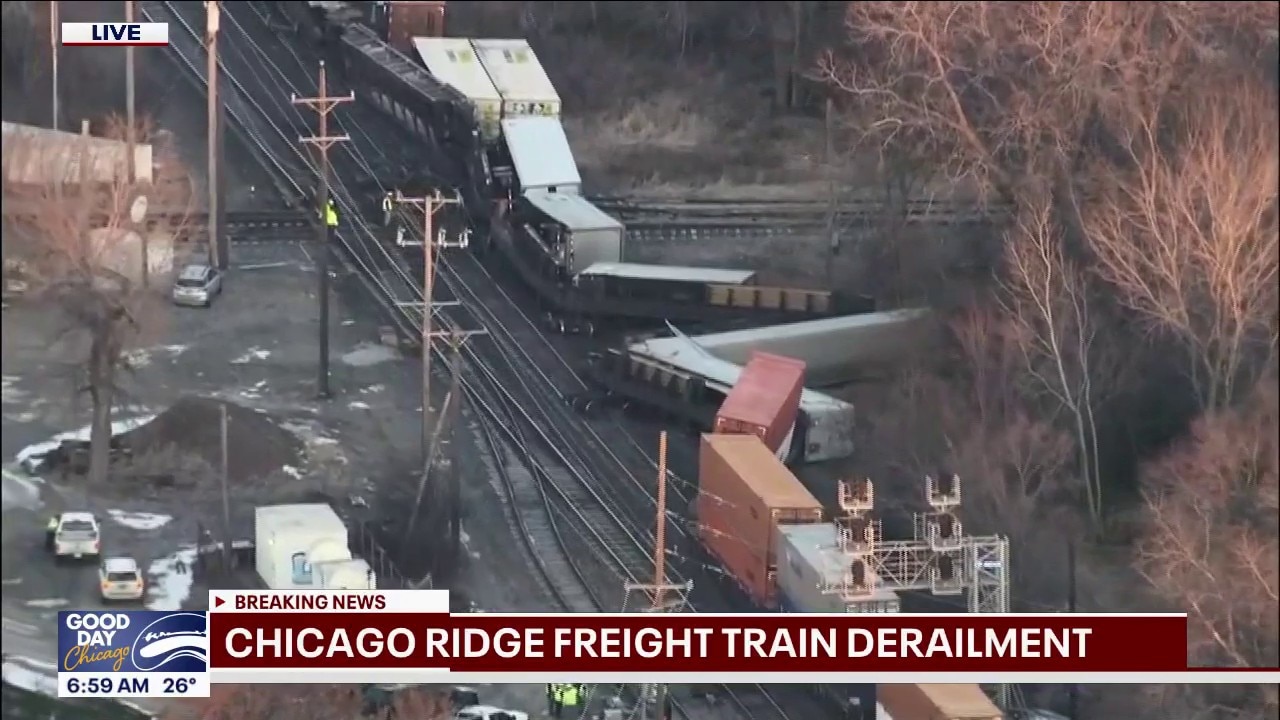
A freight train derailment in Chicago Ridge between Ridgeland Avenue and Central Avenue forced Metra to cancel Southwest Service trains in both directions after the agency was notified around 4:45 a.m.; authorities reported no hazardous materials or public danger. The involved freight train exceeds 9,000 feet and will require specialized equipment and freight-partner crews for rerailing and investigation, prompting road closures (Ridgeland Ave between Southwest Hwy and Washington St; Central Ave at the tracks between 107th St and Pleasant Ave) and significant local traffic delays. Operational disruption is localized and public-safety focused, posing minimal systemic market risk though it could cause short-term commuter and local freight delays.
Market structure: This is a localized shock that benefits OTR trucking and 3PLs in the Chicago metro while imposing immediate operational costs on the rail corridor owners and Metra. If the outage exceeds 48–72 hours expect regional truckload spot rates to rise 5–15% and short-term container dwell at intermodal ramps to spike; a >7‑day closure would shave ~0.5–1.0% off quarterly volumes for customers dependent on this routing. National Class I rail market share is unlikely to shift materially unless outages cluster.
Risk assessment: Tail risks include a multi‑day closure, discovery of hazmat (ruled out here but a latent risk), or an FRA investigation that increases fines/capex; these would pressure rail margins and raise insurance costs. Time horizons: immediate (days) = traffic delays and local rate pressure; short term (weeks/months) = modal substitution and equipment reallocation costs; long term (quarters) = possible regulatory/capital spending if incident frequency rises. Watch for second‑order effects: intermodal hub backlogs, driver spot capacity repricing, and chassis/container shortages.
Trade implications: Tactical trades favor truck carriers and regional logistics over railroads for the next 1–4 weeks. Implement small, event‑driven positions (detailed below) sized to capture a transient 5–15% rate move while limiting exposure if the corridor reopens within 48–72 hours. Use option spreads to cap downside and cost of carry for short-dated plays.
Contrarian angle: The market often overreacts to single derailments; if rails sell off >3–5% without follow‑up systemic evidence, that presents a buy window for high‑quality rail names (UNP/CSX) on a 3–6 month horizon given entrenched pricing power and revenue resilience. Conversely, repeated incidents or an adverse FRA ruling within 30 days should trigger material de‑risking of rail exposure.
AI-powered research, real-time alerts, and portfolio analytics for institutional investors.
Request DemoOverall Sentiment
mildly negative
Sentiment Score
-0.25
