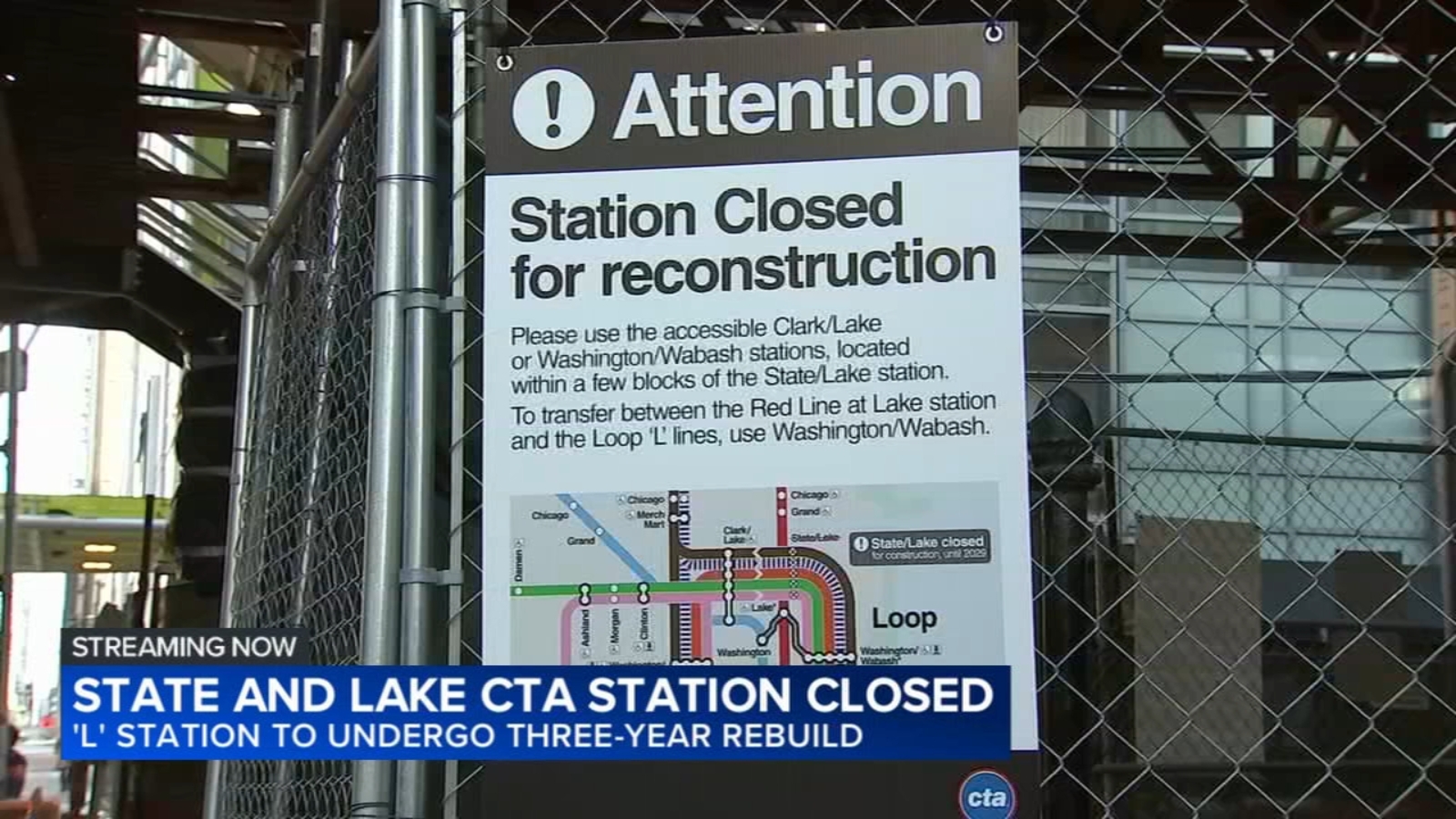
The CTA has closed the 130-year-old State/Lake elevated station in Chicago's Loop to demolish and rebuild it as part of a multi-year overhaul that began immediately and is expected to conclude by 2029. The station — the system's fifth-highest by ridership — will be bypassed by Brown, Green, Orange, Pink and Purple Line trains while upgrades including elevators for ADA accessibility and widened platforms are installed, with riders redirected to nearby Clark/Lake and Washington/Wabash. The work is positioned as a safety and visibility improvement but will cause sustained commuter disruption and generate local construction activity; market implications are limited to municipal contracting and localized ridership shifts.
Market structure: Winners are contractors, equipment rental (United Rentals - URI) and elevator/vertical-transport firms (Otis - OTIS) and broader infrastructure suppliers; they capture multi-year contract flows tied to a 3-year, Loop-wide rebuild that displaces “tens of thousands” of daily riders and concentrates demand into alternate stations. Losers are downtown retail and some office landlords in the Loop (near-term foot-traffic decline for 3 years), parking operators and local small-business revenues; expect a measurable 5–15% drop in pedestrian-dependent sales corridors in immediate months unless mitigations are introduced.
Risk assessment: Tail risks include major cost overruns (>20%) or contractor bankruptcy that force Chicago to reallocate municipal credit, pressuring city muni yields (+25–75bp) within 6–18 months; supply-chain spikes in steel/elevators could push project costs and timelines by 6–12 months. Immediate (days-weeks): commuter pattern volatility and local retail shocks; short-term (months): revenue flow shifts for downtown services; long-term (post-2029): accessibility gains likely lift property values and ridership by low-single-digit percents.
Trade implications: Tactical plays favor small, time-limited exposure to suppliers: buy PAVE (infrastructure ETF) and targeted equities OTIS and URI for 6–36 month holds to capture installation/rental cycles; underweight downtown-focused office REITs (VNO) for the next 12–36 months and rotate into industrial/logistics REITs (PLD). Use 6–12 month call spreads on OTIS/URI to cap premium outlay and pair with short positions in downtown retail landlords to hedge execution risk.
AI-powered research, real-time alerts, and portfolio analytics for institutional investors.
Request DemoOverall Sentiment
neutral
Sentiment Score
0.00
Contrarian angle: Consensus focuses on disruption; the overlooked return is permanent asset uplifts — ADA compliance + wider platforms increase long-term ridership and adjacent property yields after completion (2029+). If procurement shows fixed-price, lump-sum contracts in next 60 days, that signals limited capex upside for suppliers and argues closing short-term equity positions; conversely, cost-plus awards would amplify supplier earnings — monitor contract type and Chicago budget votes within 30–60 days.
