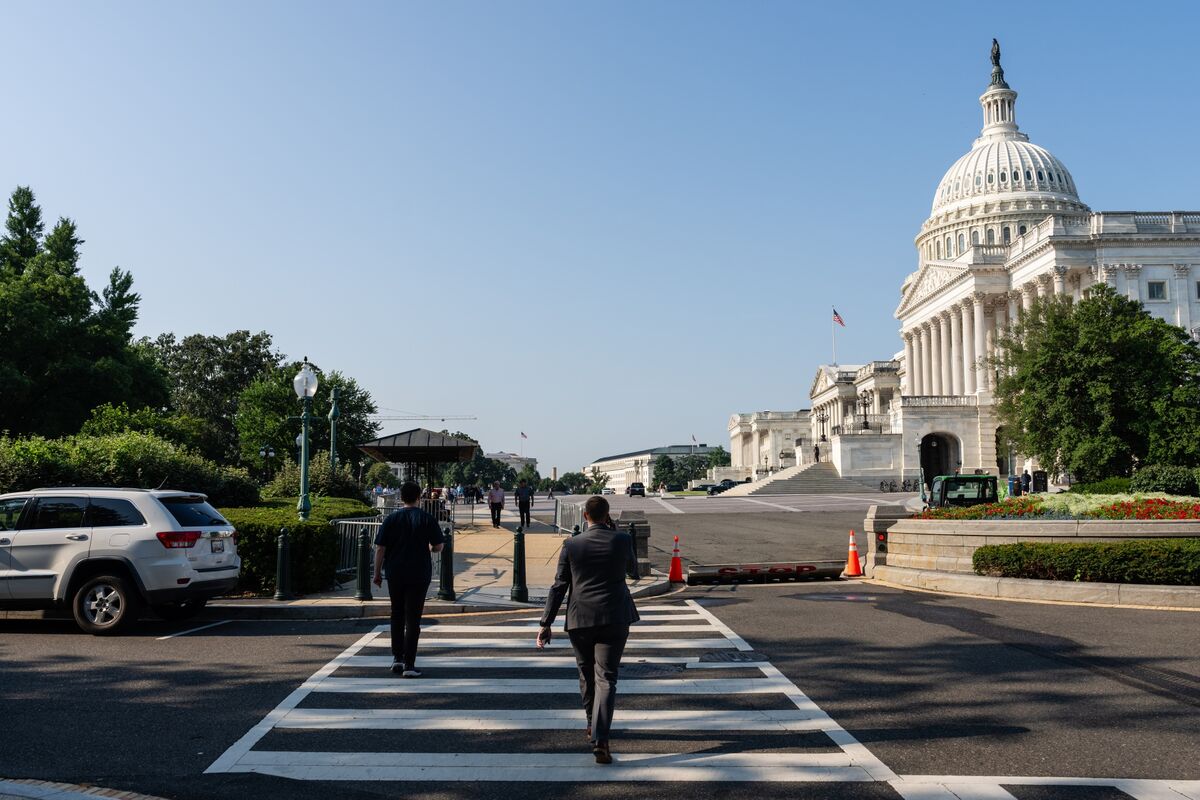
President Trump has rejected Democratic demands for renewing healthcare subsidies and ending Medicaid cuts, stating that a planned meeting with congressional leaders would be unproductive. This impasse significantly elevates the risk of a U.S. government shutdown by October 1, introducing market uncertainty and potential impacts on healthcare-related sectors and broader economic stability.
The probability of a U.S. government shutdown by the October 1 deadline has materially increased following President Trump's public rejection of Democratic fiscal demands. The core of the dispute involves healthcare policy, specifically the renewal of subsidies and the reversal of Medicaid cuts, which the President labeled "unserious and ridiculous." His subsequent cancellation of a planned negotiation meeting with congressional leaders signals a significant breakdown in bipartisan talks, injecting considerable political and economic uncertainty into the market. This development is viewed as strongly negative (sentiment score: -0.6) with a moderate-to-high market impact score (0.6), reflecting investor concern over potential disruptions to government operations, federal spending, and broader economic stability. The impasse places sectors directly tied to government funding and healthcare policy, such as managed care and hospital operators, under particular scrutiny.
AI-powered research, real-time alerts, and portfolio analytics for institutional investors.
Request DemoOverall Sentiment
strongly negative
Sentiment Score
-0.60
