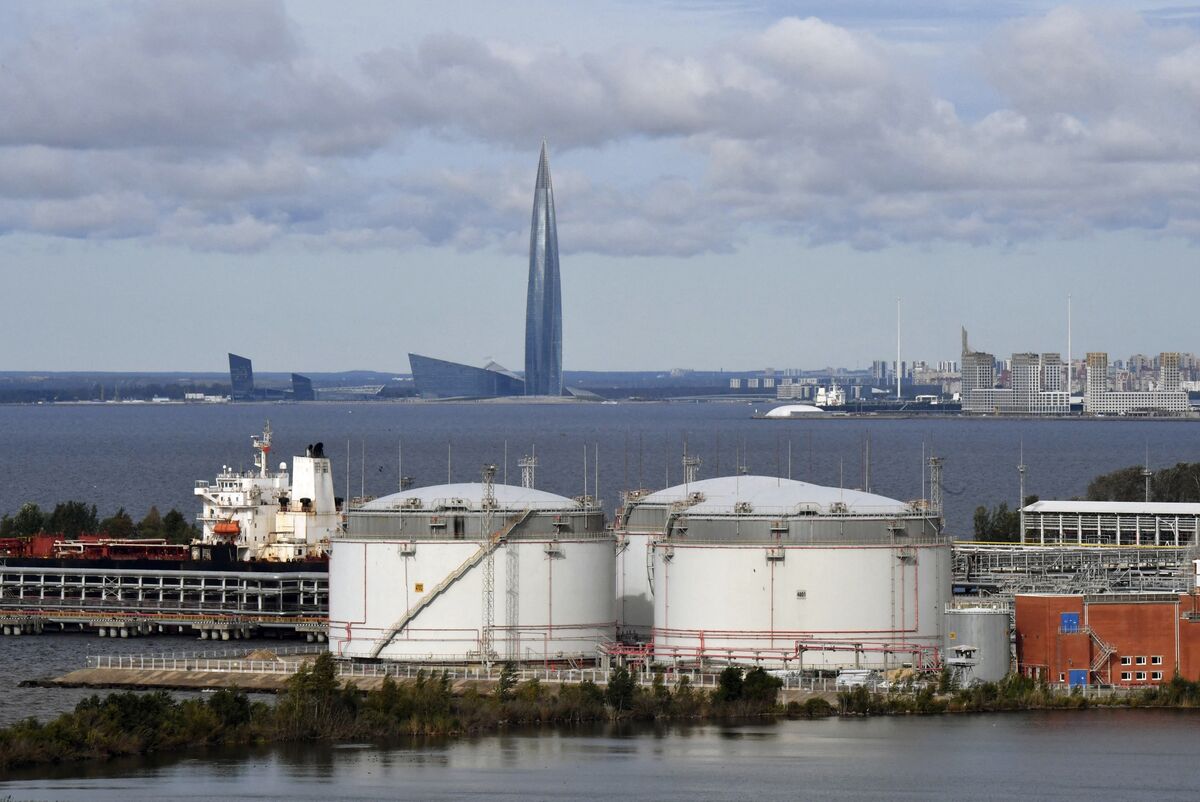
Russia’s Urals crude discount widened to $23.9 a barrel below Dated Brent on Thursday and Friday, the first increase since the Iran war began. The move reflects shifting expectations for the Middle East conflict and changing appetite for Russian barrels after the Strait of Hormuz disruption boosted demand. The report points to renewed volatility in crude differentials rather than a clear directional price shock.
The key signal is not the absolute level of the discount but the fact that it widened as geopolitical risk premium elsewhere started to unwind. That implies Russian crude is becoming the residual clearing barrel again: when Gulf supply fear fades, buyers regain leverage and demand a deeper concession to absorb sanctions/frictional risk. In the near term, that is bearish for marginal seaborne crude economics because it reduces the urgency for substitution and weakens the bid for non-sanctioned Atlantic Basin grades.
Second-order, this pressures the more fragile end of the shadow fleet/arbitrage chain. Wider discounts can compress financing and shipping economics, raising the hurdle for intermediaries that depend on high voyage utilization and opaque insurance structures; that is a medium-term stress point if prices stay rangebound rather than spiking. The main beneficiaries are refiners with access to discounted feedstock and traders positioned to capture spread volatility, while exporters dependent on benchmark-linked realizations lose pricing power.
The consensus risk is assuming this is just a noise move tied to headlines. The more important read-through is that the market is signaling lower probability of a durable Middle East supply shock, which removes the justification for paying up for replacement barrels and could flatten prompt spreads over the next 1-4 weeks. If diplomatic de-escalation continues, the discount could widen further before volumes even adjust, creating a short-lived but tradable dislocation in regional crude differentials.
The contrarian view is that a widening Urals discount may actually be a late-cycle stress indicator for sanctioned supply, not a sign of abundance. If Russia has to keep clearing barrels at larger discounts, that can presage future production discipline problems, especially if logistics or buyer concentration tighten over 2-3 months. So the move is tactically bearish for crude, but it may be bullish for volatility if it forces the market to reprice latent sanction/supply fragility.
AI-powered research, real-time alerts, and portfolio analytics for institutional investors.
Request DemoOverall Sentiment
neutral
Sentiment Score
-0.05
