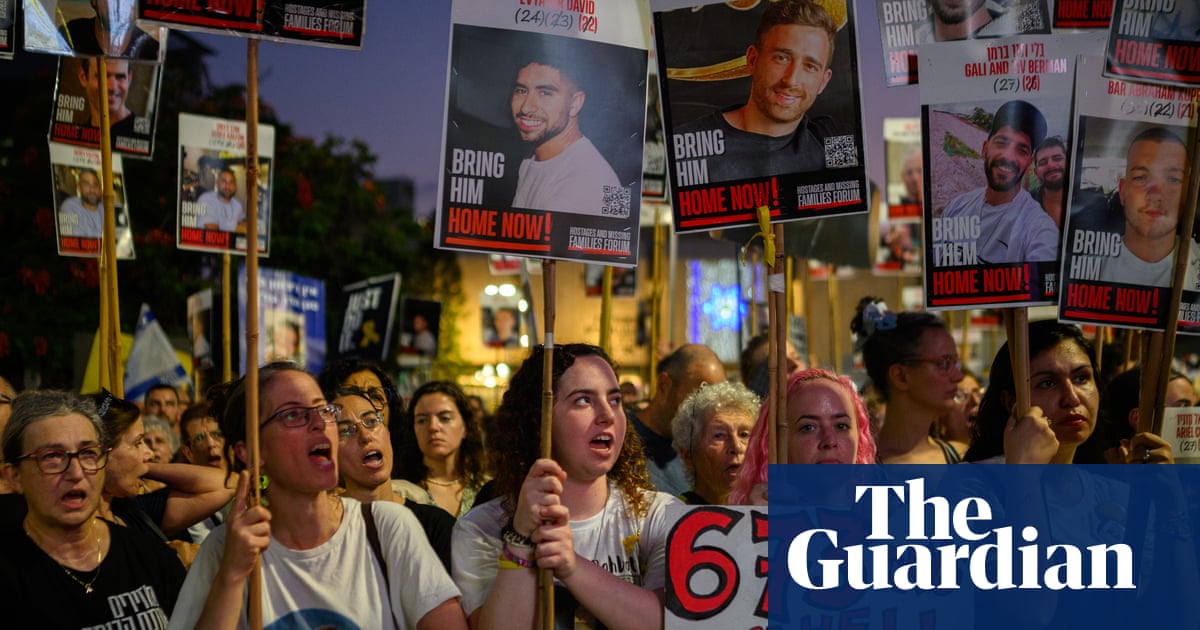
Israel's government plans to escalate the Gaza war by seizing Gaza City, a move that has triggered significant domestic opposition, including a protest of over 100,000 in Tel Aviv demanding an immediate end to the conflict and the release of hostages. This decision faces warnings from the military that it could endanger remaining captives and has drawn criticism from international allies, underscoring the growing internal and external pressures on Prime Minister Netanyahu regarding the conflict's direction and the critical issue of hostage recovery.
The Israeli government's decision to expand its military operation by seizing Gaza City marks a significant escalation in the conflict, creating a tangible increase in geopolitical risk. This move is generating substantial internal friction, evidenced by a large-scale protest of over 100,000 people in Tel Aviv and public opinion polls showing a majority of Israelis favor a ceasefire to secure the release of hostages. Critically, the government's strategy diverges from warnings issued by its own military, which has cautioned that an escalation could endanger the lives of the estimated 20 hostages still believed to be alive. The situation is further complicated by pressure from far-right coalition partners advocating for a total takeover of Gaza, creating policy uncertainty and highlighting the political instability facing the Netanyahu government. This combination of widespread domestic dissent, international criticism, and internal political division points to a highly volatile and unpredictable period ahead for the region.
AI-powered research, real-time alerts, and portfolio analytics for institutional investors.
Overall Sentiment
moderately negative
Sentiment Score
-0.50
Ticker Sentiment
