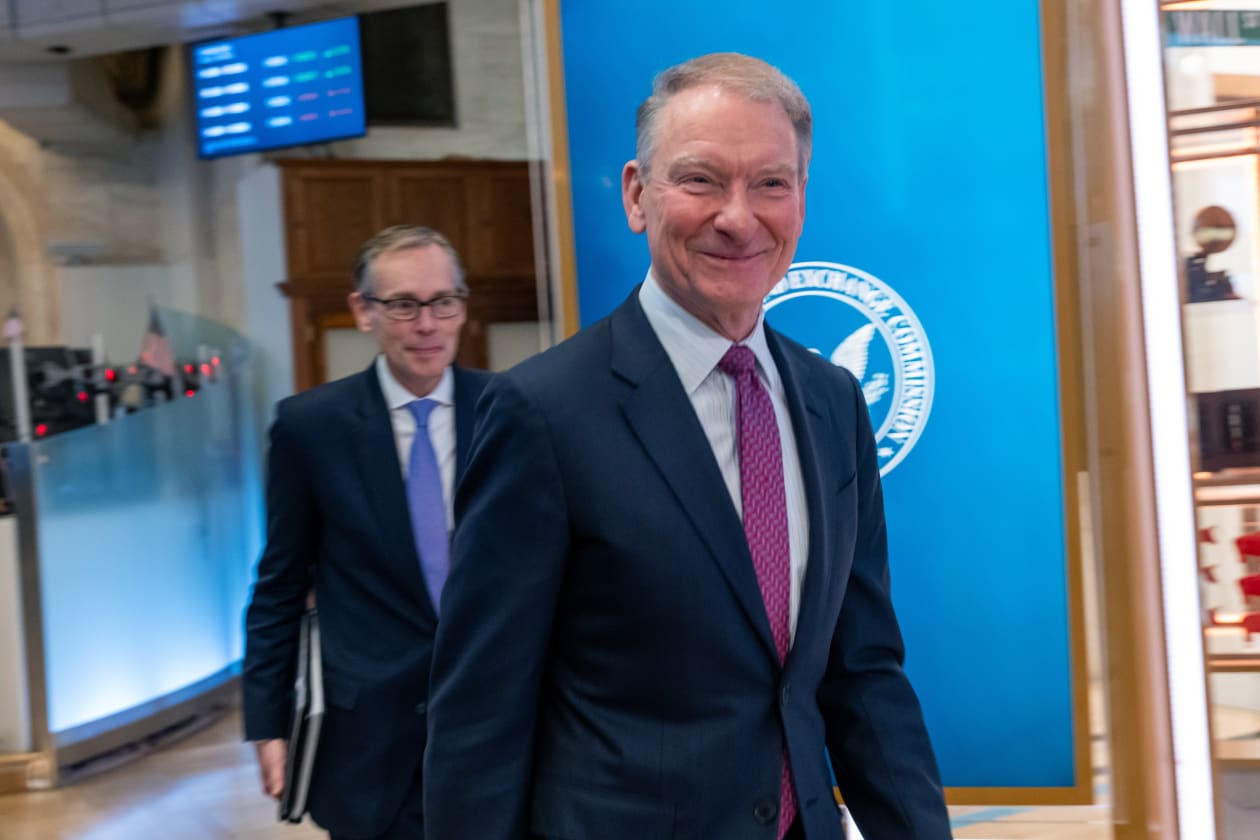
U.S. public listings have fallen roughly 40% from their 1990s peak even as household exposure to the U.S. stock market is at record levels per Federal Reserve data. SEC Chair Paul Atkins warned that companies are staying private longer and venture capitalists are capturing returns that would otherwise accrue to public shareholders, and proposed loosening rules to revive IPO activity and broaden public markets.
Market structure: Fewer IPOs tilt the winners toward public alternative-asset managers (Blackstone BX, KKR KKR, Ares ARES) and private-credit platforms that capture carry/fees; expect fee pools to grow by a mid-single-digit percentage annually if listing velocity stays down. Losers are broad small-cap/new-issue ecosystems (Russell 2000/IWM, boutique IPO underwriters) as the supply of new high-growth listed names – a key engine for small-cap returns – shrinks. Lower new-issue supply tightens public-equity float, likely concentrating liquidity in large caps and increasing private-asset valuations by 10-30% over 12–36 months under current fundraising trends.
Risk assessment: Two tail scenarios matter — (A) SEC rule loosening triggers an IPO wave within 6–12 months, compressing private market exit value; (B) looser rules increase governance/fraud risk, sparking regulatory backlash and a rerating of newly public names. Near-term (days) impact is negligible; watch 30–180 day windows for rule proposals and 12–36 months for structural shifts in AUM and fee revenues. Hidden dependencies: interest rates (higher rates reduce IPO exits), VC dry powder (> $300bn sustains private valuations), and corporate tax changes could flip incentives quickly.
Trade implications: Favor long positions in large listed alternative managers (BX, KKR, ARES) and rotate into financials/private-credit exposure over 6–12 months while trimming small-cap/new-issue beta (IWM, VB). Implement pair trades (long BX/KKR vs short IWM) and use options to define risk: 9–12 month calls 20–30% OTM on BX/KKR and 3–6 month put spreads on IWM to hedge a small-cap underperformance. Rebalance if IPO filing cadence (Form S‑1 filings) rises >50% quarter-over-quarter or VC dry powder declines >20% in 12 months.
Contrarian angles: The consensus assumes regulatory loosening will automatically revive IPOs; it underestimates company-level choice (private valuations + governance costs) that may keep listings low despite lighter rules. Historical parallel: post-2008 private-capital growth increased AUM but produced lumpy exits and higher tail volatility on eventual IPOs; so steer clear of large concentrated bets without optionality. Unintended consequence: a rush to relax rules could raise fraud incidences, elevating implied vol for new issues and creating shortable event-risk opportunities.
AI-powered research, real-time alerts, and portfolio analytics for institutional investors.
Request DemoOverall Sentiment
neutral
Sentiment Score
-0.15
