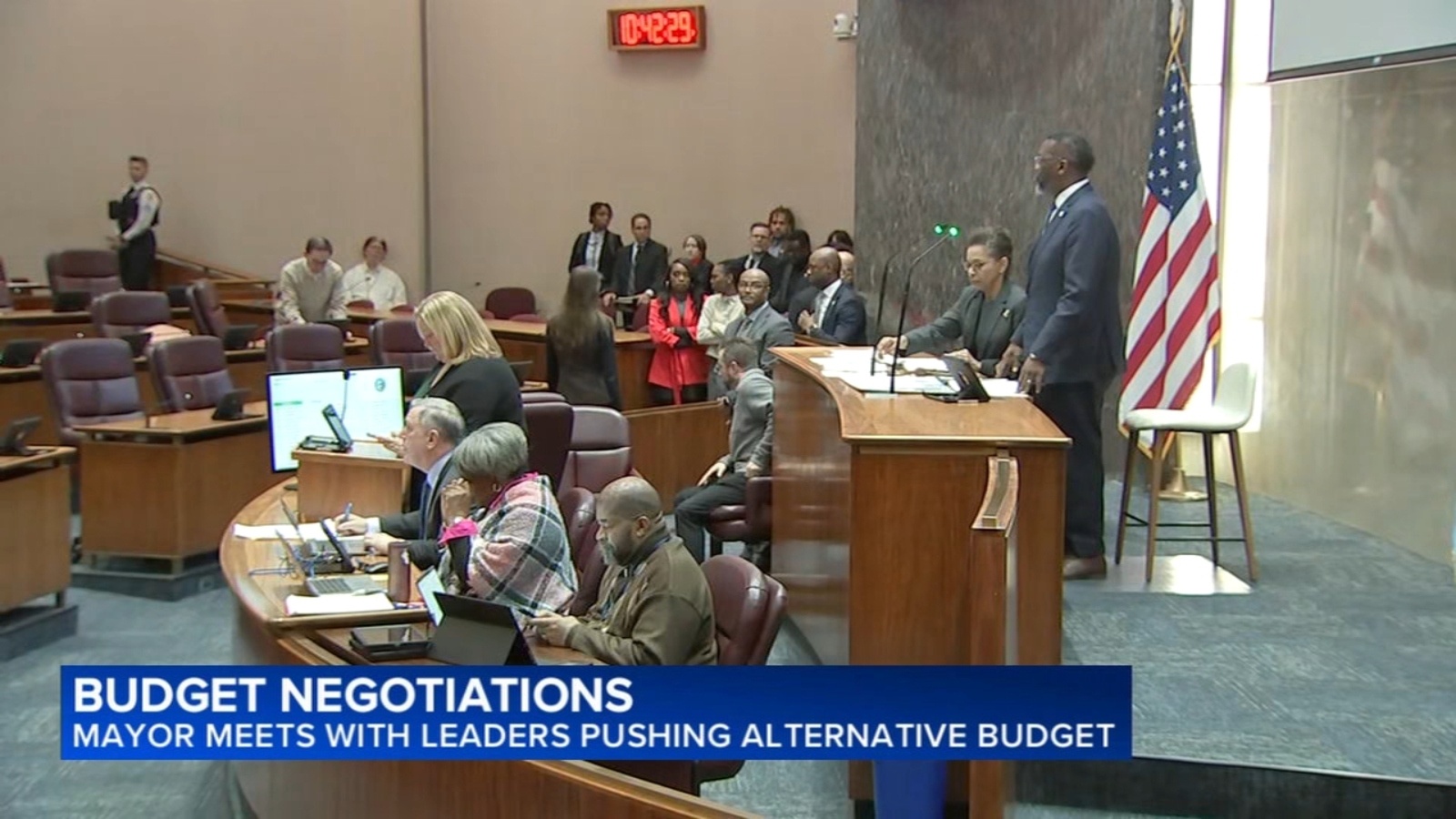
Mayor Brandon Johnson met with 11 alderpersons pushing an alternative FY26 budget after a council floor session failed for lack of quorum when 30 members did not show; the aldermanic group removed a proposed garbage-fee hike and restored summer youth jobs to the mayor’s level and plans to advance a “balanced” alternative starting Tuesday. The central impasse remains the mayor’s proposed corporate head tax targeting roughly 175 large firms—alderpersons insist that is a red line and asked whether the mayor would veto a no-head-tax budget, a question he declined to answer—while the city budget director says the alternative plan’s forecasts lack supporting data. With a Dec. 30 deadline looming and no agreed stopgap, the political standoff raises the prospect of an unprecedented municipal shutdown or unpaid essential workers, creating operational and fiscal uncertainty for the city and for companies that could face the head tax.
Mayor Brandon Johnson met with 11 alderpersons pushing an alternative FY26 budget after a city council floor session failed for lack of quorum when 30 members did not show; the aldermanic group removed a proposed garbage-fee hike and restored summer youth jobs to the mayor’s level and plans to present a balanced alternative starting Tuesday. Those concessions were acknowledged by the mayor as progress but did not produce a definitive agreement and the opposing group says their plan has been vetted conservatively.
The primary impasse is the mayor’s proposed corporate head tax targeting roughly 175 of the largest companies in Chicago; alderpersons characterize opposition to the head tax as a red line and asked whether the mayor would veto a no-head-tax budget, a question he declined to answer. City Budget Director Annette Guzman and the mayor’s team have publicly called the alternative budget forecasts exaggerated or unsupported, creating a credibility dispute over baseline assumptions.
With a Dec. 30 deadline and no stopgap, Corporation Counsel warned that essential workers could be unpaid and a municipal shutdown is a possibility, producing tangible operational and fiscal uncertainty for the city and for companies potentially subject to the head tax. The outcome will determine near-term municipal spending, corporate cost exposure and political risk; investors should watch published fiscal analyses, formal legislative language and the vote timeline closely.
AI-powered research, real-time alerts, and portfolio analytics for institutional investors.
Request DemoOverall Sentiment
moderately negative
Sentiment Score
-0.40
