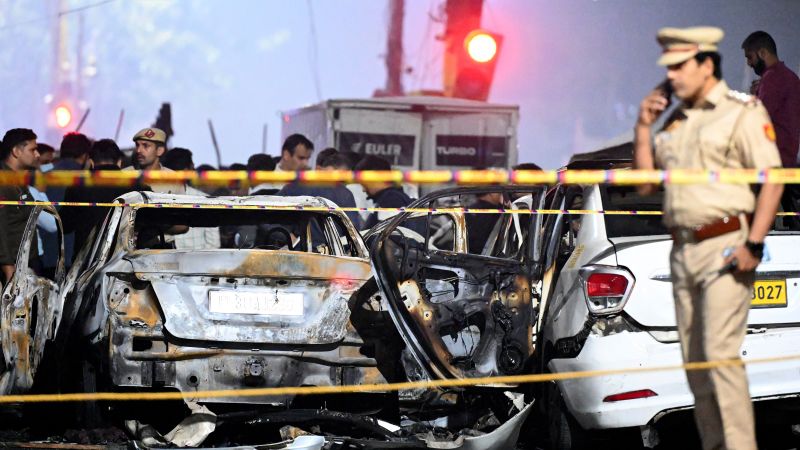
India's National Investigation Agency said it arrested a man believed to have helped plan last week's car bombing near Delhi's Red Fort that killed at least 10 people and injured more than 30; the suspect is a resident of India-administered Kashmir in whose name the vehicle was registered. Investigators identified the alleged suicide bomber as a resident of Pulwama who died when the car exploded at a traffic light, seized another linked vehicle and noted the bomber had worked as an assistant professor at Al Falah University, which says its connection to the individuals was only through employment; the NIA has interviewed more than 70 witnesses and is continuing its search. The blast, which set multiple vehicles alight in a major tourist and commercial hub, is a rare high-casualty attack in central Delhi and is likely to prompt heightened security measures and could have short-term implications for local tourism, commerce and investor risk sentiment.
A vehicle-borne explosion near Delhi’s Red Fort at approximately 6:42 p.m. local time killed at least 10 people and injured more than 30, according to investigators; emergency services received the first call at 6:55 p.m. The blast occurred in a densely trafficked tourist and commercial area where footage showed multiple vehicles ablaze and extensive street-level damage, and authorities report at least six vehicles and three autorickshaws were set on fire.
India’s National Investigation Agency (NIA) has arrested a suspect described as a resident of India-administered Kashmir in whose name the car was registered and identified the alleged suicide bomber as a Pulwama resident who died at the scene; investigators seized a second vehicle and have interviewed more than 70 witnesses. The alleged bomber was reported to have worked as an assistant professor at Al Falah University in Faridabad, a point the university says only reflected employment relationships, and the NIA continues to search for additional accomplices.
The incident is characterized as a rare, high-casualty attack in a city of over 30 million and is likely to trigger heightened security measures and localized disruption to tourism, retail and transport. Market signal outputs show strongly negative sentiment (−0.7) with a modest market-impact score (0.25), implying short-term risk aversion and potential for transient volatility rather than systemic market dislocation.
AI-powered research, real-time alerts, and portfolio analytics for institutional investors.
Request DemoOverall Sentiment
strongly negative
Sentiment Score
-0.70
