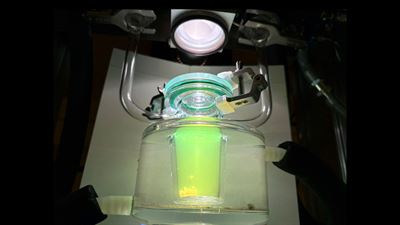
Researchers at Chalmers University report a laboratory-scale, platinum-free photocatalytic route to produce hydrogen using conjugated polymer nanoparticles; the team observed that one gram of polymer produced 30 litres of hydrogen in one hour under simulated sunlight (study published in Advanced Materials). The approach could materially reduce dependence on scarce, geopolitically concentrated platinum and cut solar-hydrogen costs if it scales, but the process currently relies on a sacrificial antioxidant (vitamin C) and has not yet demonstrated overall water splitting, so commercial and market implications remain conditional on further development.
Market structure: A credible platinum-free photocatalyst shifts pricing power away from PGM (platinum group metal) suppliers and raises upside for solar-integrated hydrogen producers and specialty polymer makers. If adopted at scale it could compress the catalyst capex component by ~40–80% and shave 5–25% off LCOH for solar-driven hydrogen (range depends on scale and whether full water splitting is achieved). Commodities impact: downward pressure on platinum prices (PPLT, miners) over 12–36 months; limited near-term macro effect on bonds/FX but increased capex for renewables could support IG muni/utility credit where green projects expand.
Risk assessment: Main tail risks are technical (durability, quantum efficiency decay), supply-chain (specialty monomer bottlenecks), and IP/standard-essential patent fights that could delay commercialization by 3–7 years. Time horizons: immediate market noise negligible (days); meaningful industrial validation and partnerships likely in 6–24 months; commercial deployment 3–7 years. Key hidden dependency: current experiments use sacrificial agents (vitamin C) — full water splitting without additives is the gating factor; monitor independent replications and stability tests.
Trade implications: Favor small, staged exposure to beneficiaries and targeted hedges on platinum/miners. Use equity longs in large renewables/utility integrators (to capture hydrogen demand elasticity) and selective longs in specialty-chemicals suppliers of conjugated polymers; offset with small shorts or put protection on platinum ETFs/miners (PPLT, SBSW). Deploy option structures (long-dated calls on innovators; puts on PGM exposure) to reflect multi-year binary outcomes and asymmetric upside.
Contrarian angles: Consensus will likely over-hype immediate disruption — lab-to-plant scale-up historically fails >50% of the time for novel photocatalysts — so public markets should not yet price out platinum miners. Conversely, if a 12–24 month commercial partnership or industrial demo appears, the market will under-react initially; that’s the asymmetric entry point. Historical parallel: early solar PV material breakthroughs created long lead times before cost curves moved; expect the same here and position for optionality rather than binary conviction.
AI-powered research, real-time alerts, and portfolio analytics for institutional investors.
Request DemoOverall Sentiment
mildly positive
Sentiment Score
0.35
