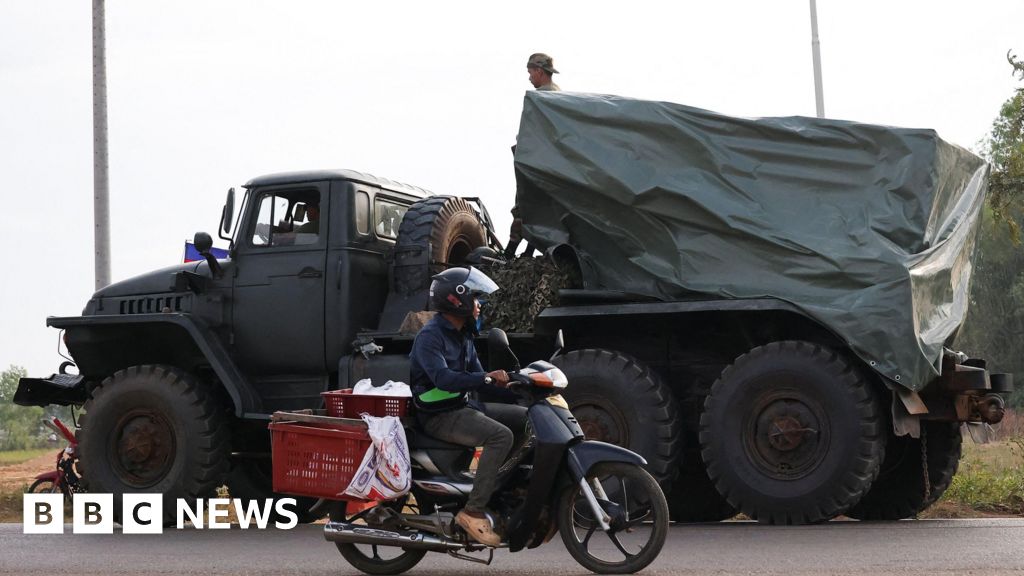
The US has urged Thailand and Cambodia to “cease hostilities immediately” after border clashes extended into a third day with at least 10 dead and massive displacement—Thai authorities say more than 400,000 people were evacuated and Cambodia reports 100,000 moved to shelters—following air strikes and artillery exchanges across multiple provinces. Washington (Secretary of State Marco Rubio) referenced de‑escalatory measures from a ceasefire brokered in October by President Trump, while the UN and several governments issued travel warnings and Cambodia announced it was withdrawing from the Thailand‑hosted Southeast Asian Games; the fighting revives a century‑old territorial dispute and poses near‑term risks to regional stability, civilian infrastructure and cross‑border movement.
The United States has publicly urged Thailand and Cambodia to "cease hostilities immediately" after border clashes extended into a third day, with at least 10 confirmed dead (seven Cambodian, three Thai) and mass displacement—Thai authorities report more than 400,000 people evacuated while Cambodian officials say 100,000 were moved to shelters. Fighting has included air strikes and artillery across multiple provinces (six in north-eastern Thailand and five in Cambodia), and Phnom Penh has withdrawn from the Southeast Asian Games hosted in Thailand, signaling non-economic disruptions to regional events and travel.
The incident revives a century-old, 800km territorial dispute and follows earlier escalations in July that left dozens dead; both countries previously signed an October ceasefire brokered by President Trump and Malaysian Prime Minister Anwar Ibrahim, and Secretary of State Marco Rubio referenced those de-escalatory measures. The UN has called for restraint and several governments (UK, US, Japan) have issued travel warnings for border areas, increasing near-term geopolitical and civilian-risk visibility.
Market signals in the dataset show a moderately negative sentiment score (-0.5) and a market impact score of 0.33, indicating a risk-off tone but limited immediate systemic market disruption. The most direct near-term investor implications are concentrated hit to travel & leisure and localized infrastructure activity, with potential second-order effects for regional logistics, insurers and defense-related exposure depending on escalation or diplomatic progress.
AI-powered research, real-time alerts, and portfolio analytics for institutional investors.
Request DemoOverall Sentiment
moderately negative
Sentiment Score
-0.50
