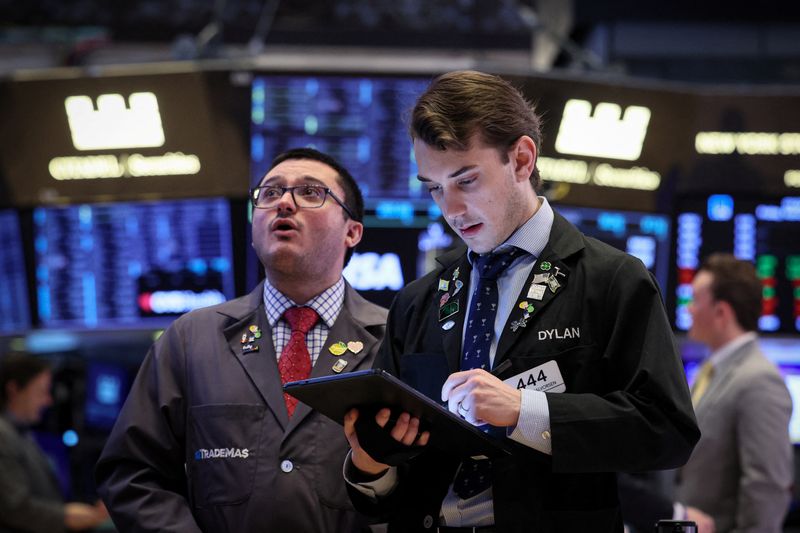
U.S. stock futures rose after Trump said he would indefinitely extend the U.S.-Iran ceasefire, with S&P 500 futures up 0.5%, Nasdaq 100 futures up 0.6%, and Dow futures up 0.5%. The move eased immediate geopolitical risk, though oil prices remained elevated near recent highs due to Middle East supply concerns, including the Strait of Hormuz. March retail sales also rose 1.7% month-over-month, while AT&T, Boeing, GE Vernova, CME Group, and Moody's are set to report earnings Wednesday.
The immediate read-through is a relief rally, but the bigger market effect is a reset in volatility pricing rather than a durable risk-on regime. If escalation odds compress even modestly, the premium embedded in crude, defense, and select safe-haven hedges can bleed quickly; that matters more than the equity index bounce because the market has already partially repriced a geopolitical tail risk. The next 1-2 sessions should be driven by whether energy holds its bid or starts to mean-revert as traders fade the most crowded protection.
The second-order winner is not broad cyclicals, but duration-sensitive pockets that benefit if oil backs off and real yields stop moving higher. Airlines, transports, chemicals, and consumer discretionary all gain from any sustained giveback in energy, while integrateds and upstream names face the risk that a ceasefire extension deflates the “supply shock” narrative faster than their valuation models imply. If crude loses 5-8% from current elevated levels, the market will likely treat it as a disinflationary impulse first and a growth impulse second.
For the named earnings, the setup is asymmetric: low market expectations mean any operational miss is more punishable than a beat is rewarded, especially in a tape that is already de-risking ahead of prints. The key catalyst is not top-line demand, but margin guidance and management commentary on fuel, freight, and procurement costs; those will reveal whether the energy move is already filtering into corporate behavior. Over the next few weeks, the more important question is whether this ceasefire is merely a pause that keeps a volatility floor under commodities, or whether it meaningfully reduces the probability of a sustained inflation impulse.
Consensus may be overestimating how bullish the ceasefire is for equities and underestimating how fast crude can unwind if the diplomatic path stays frozen but non-violent. That creates a trap: traders may keep hedging a war premium that the spot market no longer wants to price. The contrarian view is to fade the knee-jerk defensives and look for names levered to lower input costs, while keeping a tight stop in case one headline revives the geopolitics bid.
AI-powered research, real-time alerts, and portfolio analytics for institutional investors.
Request TrialOverall Sentiment
mildly positive
Sentiment Score
0.15
Ticker Sentiment
