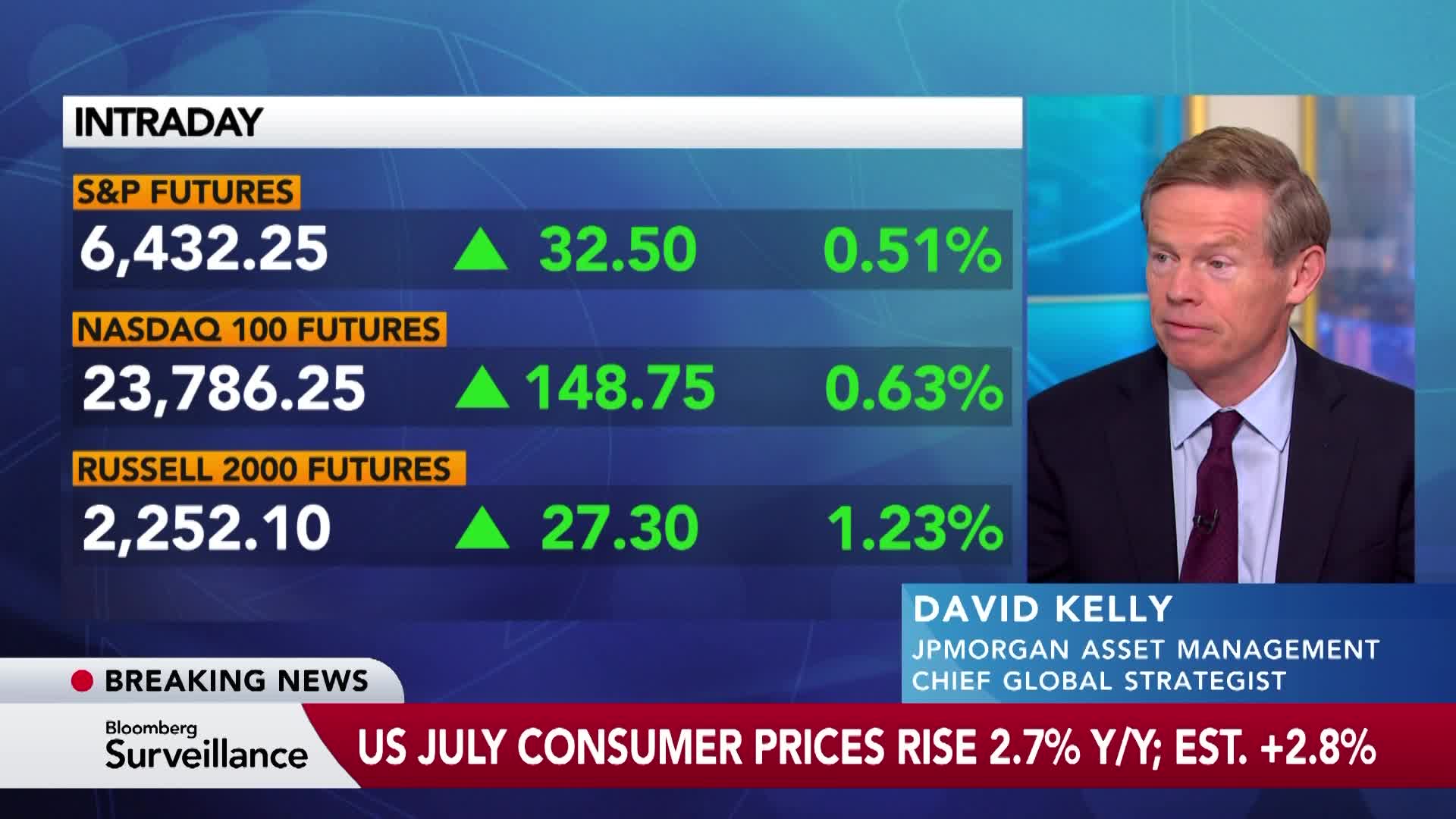
US core CPI accelerated at its fastest pace since January, contributing to market instability. This inflationary pressure has led a record number of investors, as noted by BofA, to perceive equities as overvalued, reflecting broader concerns about inflation expectations.
Recent market data indicates a significant deterioration in investor sentiment driven by accelerating inflationary pressures. The US Core Consumer Price Index (CPI) has increased at its most rapid pace since January, a key data point that is fueling market instability and causing what has been described as 'wobbly' conditions. This macroeconomic headwind is directly impacting investor perception of equity values. A Bank of America survey corroborates this, revealing that a record number of investors now consider stocks to be overvalued. The confluence of rising core inflation and peak bearishness on valuations suggests a fragile market environment where participants are increasingly risk-averse.
AI-powered research, real-time alerts, and portfolio analytics for institutional investors.
Request DemoOverall Sentiment
strongly negative
Sentiment Score
-0.60
Ticker Sentiment
