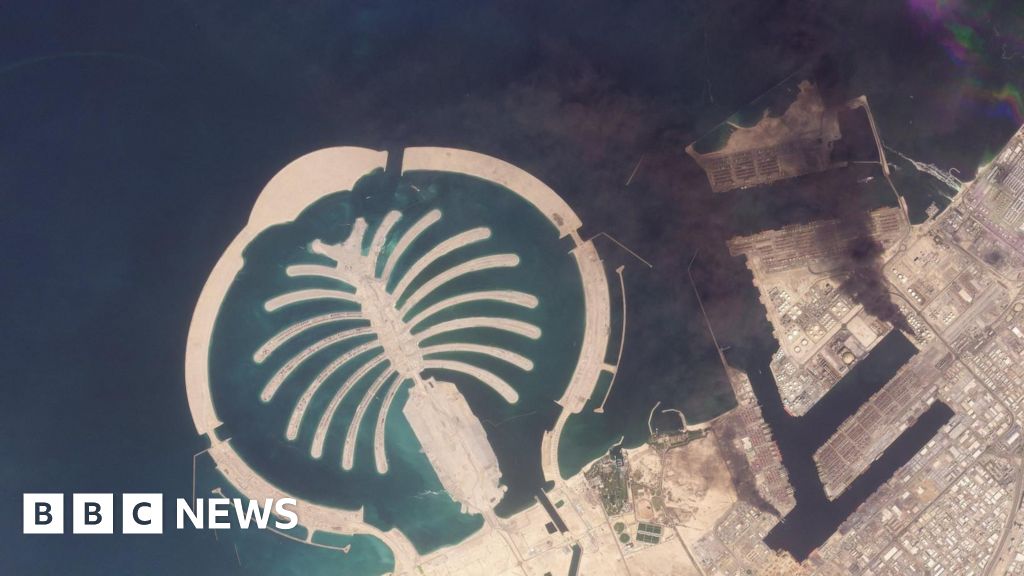
Iran has launched hundreds of missiles and drones at Gulf states, striking US military bases, civilian areas and energy infrastructure and causing casualties and disruption to trade, travel and the oil & gas sector. The six-member Gulf Cooperation Council held an emergency session pledging to defend territories and warning attacks "cannot go unanswered," while Gulf leaders consider defensive and potentially retaliatory options. The strikes raise tangible risks of energy supply disruption and could push Gulf states closer to the US or into more active military cooperation, creating a high-risk, volatile backdrop for energy markets, regional assets and travel/tourism exposures.
Market structure: Direct winners are Gulf oil exporters, global oil majors (XOM, CVX) and defence contractors (LMT, NOC, RTX) via higher energy prices and defence spending; losers are airlines, airport operators and tourism/leisure (JETS, AAL, LUV, hotels in UAE) plus regional banks with Gulf exposure. A disrupted Strait-of-Hormuz scenario (5-20% seaborne oil outage) would plausibly lift Brent by $10–$50/bbl in weeks, raise shipping/insurance costs 20–100% on affected routes, push gold and USD up and EM FX down. Options and credit spreads will widen—expect oil vol (OVX) to spike and Gulf sovereign CDS to widen 50–200bps on serious hits.
Risk assessment: Tail risks include (1) closure of the Strait or major Aramco strike (low-probability, high-impact), (2) GCC entry into kinetic operations, (3) cyberattacks on energy grids; any triggers could cause >30% swing in oil and >100bps sovereign spread moves. Immediate (days) is volatility spikes and localized outages; short-term (weeks–months) is production re-routing and insurance cost pass-through; long-term (quarters–years) could be strategic realignment of GCC-US defence posture and capex into air-defence and redundancy in logistics. Hidden dependencies: shipping insurance, rerouting via Africa, and OPEC+ political response can either amplify or offset shocks. Key catalysts: a successful strike on export infrastructure, GCC authorization for US strikes, or rapid diplomatic de-escalation.
Trade implications: Tactical: buy energy exposure and defence, hedge travel/tourism and EM credit. Prefer 1–4% portfolio allocations: core long XOM/CVX (scale 2–4% over 2–6 weeks) and 3–6 month Brent call spreads, paired with short/put exposure to JETS or large-cap airlines (2–3%). Use options to cap downside: buy 90–180 day Brent calls (or call spreads) and 30–90 day put spreads on travel names. Rotate out of rate-sensitive growth into commodities and quality cyclicals; take profits if Brent rallies >30% or a clear ceasefire occurs within 30–60 days.
Contrarian angles: The market may be overpricing a persistent supply shock—recall the 2019 Abqaiq attack where Brent spiked ~20% then retraced within weeks after rapid mitigation. Gulf states have strong incentives to preserve production; if outages remain limited, mean reversion is likely within 1–3 months. Beware crowded longs in small-cap defence/energy explorers; prefer majors with balance sheets. An unintended consequence: prolonged higher oil could accelerate non-OPEC supply and demand destruction, capping long-term upside—avoid leveraged commodity longs beyond 6 months.
AI-powered research, real-time alerts, and portfolio analytics for institutional investors.
Request TrialOverall Sentiment
strongly negative
Sentiment Score
-0.65
